Cleaning a food scale takes about five minutes, and storing it correctly prevents the most common cause of failure: cracked screens or damaged load cells. You need a damp microfiber cloth, mild dish soap, and a dry storage spot away from heavy objects. The process is simple, but skipping steps leads to sticky buttons, inaccurate readings, or water damage inside the electronics.
Knowing how to clean and store a food scale properly keeps your measurements accurate for years. This guide covers daily wipe-downs, deep cleaning for stubborn messes, battery removal, and the exact storage positions that protect the weighing sensors.
Supplies That Won't Damage the Load Cell
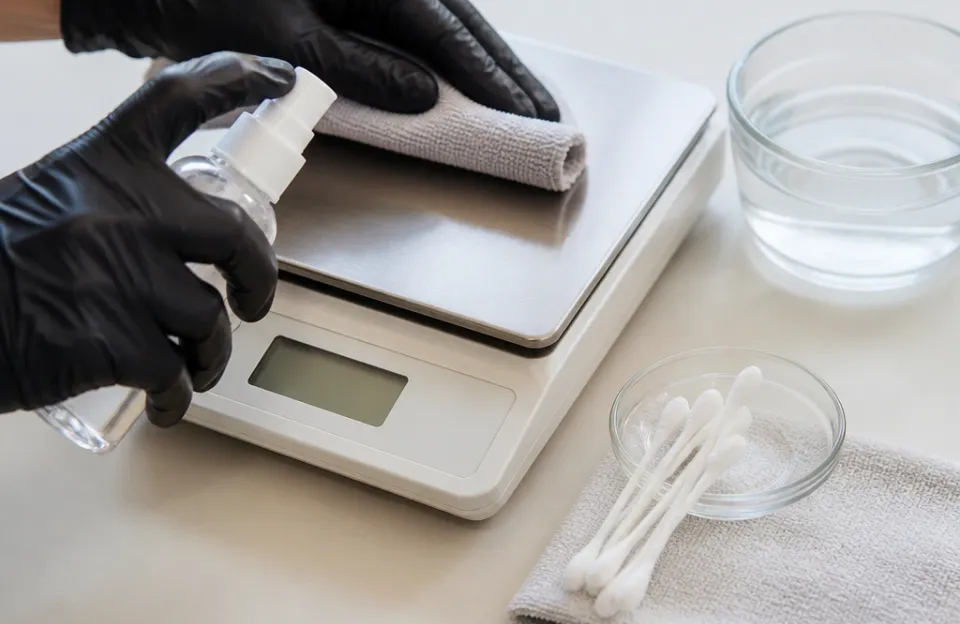
You don't need specialized cleaning products for a kitchen scale. Standard household items work fine as long as you avoid anything abrasive or heavily saturated.
- Microfiber cloths: Two are ideal. One slightly damp for washing, one completely dry for finishing.
- Mild dish soap: A single drop mixed into water cuts through cooking oils without leaving a chemical residue.
- Cotton swabs: These reach crumbs trapped around button edges or under removable platforms.
- Isopropyl alcohol (70%): Useful for sanitizing the surface after handling raw meat, since it evaporates quickly and doesn't pool.
- Soft-bristled brush: A clean, dry toothbrush works well for dislodging dried flour or sugar from crevices.
Avoid paper towels on glossy displays. They leave micro-scratches over time. Never use bleach, ammonia, or abrasive scouring pads.
Harsh chemicals degrade the plastic housing and can seep into seams, damaging the internal circuitry. If you're working near heat sources or managing multiple prep tools, keeping your workspace organized matters. Proper care of your weighing equipment goes hand in hand with maintaining other countertop appliances to prevent cross-contamination during busy cooking sessions.
Wiping Down the Weighing Platform After Each Use
Daily maintenance prevents buildup that requires scrubbing later. Wipe the scale immediately after you finish measuring ingredients. Don't wait until the next day.
Dried dough, melted sugar, and spilled oils bond to the surface quickly.
Turn the scale off first. An active screen responds to the pressure of your wiping hand, causing numbers to flash wildly or triggering error codes. Powering down also protects the display if any moisture sneaks into the button gaps.
Dampen your microfiber cloth with plain water. Wring it out until it feels barely moist. Wipe the entire platform in smooth strokes.
Pay attention to the edges where the weighing tray meets the base. Crumbs love to hide there. Follow up immediately with the dry cloth.
Leaving moisture on the surface invites mineral deposits from hard water, which look like cloudy spots on dark plastic.
If you weighed raw poultry or ground beef, skip plain water. Put a drop of dish soap on the damp cloth instead. Wipe the surface thoroughly, then rinse the cloth, wring it out, and wipe again to remove the soap.
Finish by drying everything completely. Sanitizing after handling raw proteins aligns with FDA food safety guidelines for preventing cross-contamination on kitchen surfaces.
Removing Dried Dough and Sticky Residue Safely
Sometimes a quick wipe isn't enough. Flour mixed with water turns into paste. Honey dries into cement.
When you face stuck-on messes, patience beats force. Pressing hard on the platform bends the load cell underneath, permanently ruining the calibration.
Soak a corner of your microfiber cloth in warm water. Lay the wet fabric flat against the dried spill. Leave it there for three to five minutes.
The moisture softens the residue without requiring you to pour water directly onto the scale. Once the mess loosens, gently push it off with the cloth.
For sugary spills that resist warm water, use a cotton swab dipped in isopropyl alcohol. Rub the sticky spot lightly. Alcohol breaks down sugar syrups effectively and evaporates within seconds, minimizing liquid exposure.
Never use a knife, spatula, or fingernail to chip away hardened food. Scratching the platform creates grooves where bacteria accumulate. It also alters the weight distribution slightly.
If you frequently measure sticky baking ingredients, consider placing a small silicone mat or parchment paper on the scale before weighing. Tare the scale to zero with the liner in place, and cleanup becomes trivial. Precision matters here just as much as when you're checking temperatures; whether you're verifying weights or reading internal temps, accuracy depends entirely on well-maintained equipment.
Cleaning the Buttons and Display Screen
Buttons collect grease from your fingertips. Over weeks, this oil attracts dust and flour, creating a grimy ring around each key. Sticky buttons fail to register presses or get stuck in the depressed position.
Dip a cotton swab in isopropyl alcohol. Squeeze out the excess so it's damp, not dripping. Trace the outline of every button.
The alcohol dissolves the finger oils instantly. Use the dry end of the swab to absorb the dissolved grime. Repeat until the swab comes away clean.
The display screen requires a gentler touch. Use only the dry microfiber cloth for routine dusting. If fingerprints obscure the numbers, breathe lightly on the glass to create a tiny amount of condensation, then buff it clear with the cloth.
Avoid spraying any cleaner directly at the screen. Liquid runs down the glass and pools in the bottom bezel, shorting out the LCD connections.
| Cleaning Area | Recommended Tool | Safe Liquid | What to Avoid |
|---|---|---|---|
| Weighing Platform | Microfiber cloth | Warm water, mild soap | Submerging, abrasive pads |
| Sticky Spills | Cloth compress, swab | Isopropyl alcohol | Scraping with metal tools |
| Buttons & Edges | Cotton swabs | Isopropyl alcohol | Soaking, heavy pressure |
| Display Screen | Dry microfiber | Breath condensation only | Glass cleaners, sprays |
| Removable Trays | Sponge or cloth | Dish soap and water | Dishwasher heat cycles |
Handling Removable Trays and Silicone Mats
Many modern scales have a detachable stainless steel or plastic platform that lifts off the sensor base. This design makes cleaning significantly easier. Lift the tray straight up.
Don't twist or pry it, as twisting stresses the central pin connecting it to the load cell.
Wash removable trays in the sink with warm water and dish soap. Treat them like regular dishes. Dry them completely before snapping them back onto the scale.
Placing a wet tray back on the base traps moisture against the sensor housing, promoting rust on metal components or mold on plastic ones.
Silicone mats or bowls used for taring should be washed separately. Check the underside of these mats for trapped crumbs before placing them back on the scale. A stray sesame seed caught between the mat and the platform causes fluctuating readings because the weight shifts as the seed compresses.
If your scale lacks a removable tray, you must clean it in place. Rely on the damp cloth method described earlier. Never carry the whole unit to the sink and run it under the faucet.
Even scales labeled "water-resistant" aren't designed for direct stream exposure. Water resistance ratings typically cover accidental splashes, not intentional washing.
Drying the Scale Completely Before Storage
Moisture is the primary enemy of digital electronics. Storing a damp scale inside a closed cabinet guarantees corrosion. After every cleaning session, verify the device is bone dry.
Wipe the visible surfaces with your dry microfiber cloth. Then let the scale sit out on the counter for ten to fifteen minutes. Air circulation evaporates microscopic moisture hiding in button gaps or beneath the platform rim.
If you suspect water got inside the battery compartment or under the display, don't turn it on. Remove the batteries immediately. Place the scale in a dry area with good airflow.
Some people put wet electronics in a container of uncooked rice to draw out moisture, but rice dust can clog the sensor gaps on a scale. Silica gel packets are a cleaner alternative. Toss a few packets into a sealed bag with the scale overnight if you accidentally soaked it.
Never use a hair dryer on high heat to speed up drying. Excessive heat warps plastic housings and damages the adhesive holding the LCD screen in place. Room temperature air is sufficient.
Taking Out Batteries for Long-Term Storage
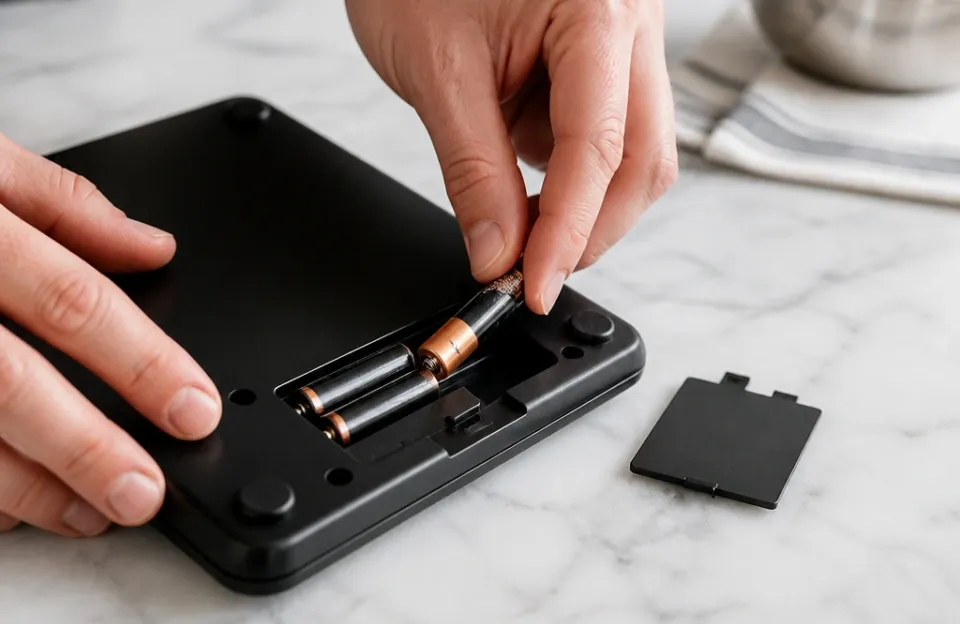
If you won't use the scale for more than two weeks, remove the batteries. Alkaline batteries leak potassium hydroxide when they discharge fully or sit unused for extended periods. This white, crusty acid eats through copper contacts and destroys the battery compartment.
Pop the cover off the back. Take the batteries out. Wipe the metal springs and contact plates with a dry cotton swab to remove any existing oxidation.
Store the batteries separately in a drawer. Don't leave them resting next to the scale where they might roll into a gap.
Rechargeable scales require different handling. Lithium-ion batteries degrade faster when stored at zero percent or one hundred percent charge. If you plan to store a rechargeable model for a month or longer, charge it to roughly fifty percent before turning it off and putting it away.
Check the manufacturer's manual for specific storage voltage recommendations, as battery chemistry varies. Regular upkeep of your rechargeable devices applies across all your kitchen gadgets, including wireless thermometers that rely on similar lithium cells.
Where to Place the Scale to Protect the Sensors
How you store a food scale determines how long it stays accurate. The load cell is a thin piece of metal engineered to flex slightly under weight. Strain gauges attached to this metal measure the flex and convert it into a digital number.
Constant pressure ruins this mechanism.
Never stack heavy pots, cutting boards, or canned goods on top of a stored scale. Even five pounds of continuous resting weight compresses the load cell over time, leading to a permanent zero-point drift. Your scale will start reading 0.2 ounces before you even put anything on it.
Store the scale upright if the design allows it. Many slim models slide vertically into the gap between books or stand in a magazine holder. Standing it up removes all pressure from the platform.
If you must lay it flat, place it on an empty shelf where nothing will rest on top of it.
Keep it away from heat sources. Storing a scale directly above the stove or next to a radiator exposes the plastic to thermal expansion cycles. Heat also degrades the adhesive bonding the rubber feet to the base.
Without stable feet, the scale wobbles, producing inconsistent readings.
Avoid humid environments. The cabinet directly above a dishwasher or next to a boiling kettle fills with steam. Moisture penetrates the seams.
A dry pantry shelf or a dedicated kitchen drawer works best. Just make sure the drawer doesn't slam shut violently, jarring the internal components. If you organize your tools in drawers, keep delicate measuring instruments separated from heavier items like cast iron or large mixing bowls.
Preventing Calibration Drift During Storage
Calibration drift happens when the scale loses its reference point for zero. Rough handling during storage accelerates this problem. Dropping a scale even six inches onto a hard counter can bend the load cell bracket.
Always pick the scale up with two hands if it's wide. Grabbing a large platform scale by one corner twists the chassis. Plastic bodies flex when lifted unevenly, transferring torque directly to the sensor.
Before you weigh ingredients after a long storage period, test the scale. Turn it on and let it settle at zero. Place a known weight on it.
A standard unopened packet of butter weighs exactly four ounces or 113 grams. A new roll of coins has a verifiable weight. If the reading matches, your storage method worked.
If it's off by several grams, the scale needs recalibration. Most digital models have a calibration mode triggered by holding specific buttons, detailed in the user manual. Consistent accuracy relies on proper handling, whether you are verifying a gram measurement or using a fast-reading probe to check dinner.
Fixing Cloudy Displays and Sticky Keys
Even with careful cleaning, problems occasionally arise. Knowing how to fix them saves you from buying a replacement prematurely.
A cloudy display usually means moisture trapped behind the glass or a buildup of cooking oils on the outside. Try cleaning the exterior thoroughly with isopropyl alcohol first. If the cloudiness remains inside the screen, the seal has failed.
You can sometimes clear internal condensation by removing the batteries and leaving the scale in a warm, dry room for forty-eight hours. Don't apply direct heat.
Sticky keys that won't bounce back indicate syrup or oil has seeped beneath the silicone membrane. Dip a cotton swab in warm soapy water and trace the edge of the stuck button repeatedly. Press the button gently while doing this to work the soap underneath.
Follow up with an alcohol-dipped swab to displace the water. If the button remains stuck after drying, the membrane is likely torn, and the keypad needs professional replacement.
Erratic jumping numbers when the platform is empty often point to debris under the weighing tray. Remove the tray and inspect the central sensor pin. Blow away any flour or dust.
Check the rubber feet on the bottom of the scale. If one foot is missing or compressed, the scale sits unevenly, confusing the sensor. Replacement rubber bumper dots from a hardware store solve this cheaply.
Frequently asked questions
Can I wash my food scale under running water?
No. Unless the manufacturer explicitly rates the entire unit as IPX7 waterproof, running water will enter the seams and destroy the circuit board. Even waterproof models shouldn't be submerged intentionally.
Always use a damp cloth wrung out thoroughly to wipe the surface clean.
How do I sanitize a food scale without ruining the electronics?
Use seventy percent isopropyl alcohol applied to a cloth or cotton swab. Alcohol kills bacteria and evaporates almost instantly, preventing liquid from pooling near sensitive components. Avoid bleach solutions, which corrode metal parts and degrade plastic over time.
Should I leave the batteries in the scale when I put it away?
Remove them if you won't use the scale for more than two weeks. Batteries left inside unused devices eventually leak corrosive acid, destroying the contact springs. For rechargeable models, store them at roughly half charge rather than completely full or empty.
Why does my scale show a weight when nothing is on it?
This happens when the load cell has been compressed during storage or the scale was bumped. Turn it off, place it on a perfectly flat surface, and turn it back on to let it find zero. If the phantom weight persists, check for crumbs wedged under the weighing platform or recalibrate the device according to the manual.
Is it safe to store a food scale standing vertically?
Yes, vertical storage is often the best option. Standing the scale on its edge removes all resting pressure from the load cell, preserving its calibration. Just make sure it's wedged securely so it won't fall over and crack the display screen.
Do I need special cleaner for the stainless steel platform?
Standard dish soap and water work perfectly for stainless steel trays. Avoid steel wool or harsh scouring powders, which scratch the surface and create pockets where food particles stick. If the steel looks dull after repeated use, a light rub with mineral oil restores the shine.
Keeping Your Measurements Accurate Long Term
Learning how to clean and store a food scale properly takes less effort than replacing a broken one. The rules are straightforward. Keep liquids away from the seams, never stack heavy items on the platform, and pull the batteries out before putting it away for the season.
A well-maintained scale gives you consistent results whether you're portioning meals or measuring flour for bread. Treat the load cell with respect, wipe up spills immediately, and the device will last for years. Pair this habit with regular checks of your other precision tools, like durable thermometer probes, to keep your entire kitchen setup reliable.