The short answer: buy a leave-in probe thermometer if you roast, smoke, or slow-cook large cuts and want continuous temperature monitoring without opening the oven. Buy an instant-read thermometer if you mostly sear, pan-fry, or grill thin cuts and individual pieces that need a quick spot check. If your cooking spans both, owning one of each covers the widest range of methods, though no single model or brand is the right fit for every kitchen.
How the Two Thermometer Styles Actually Work
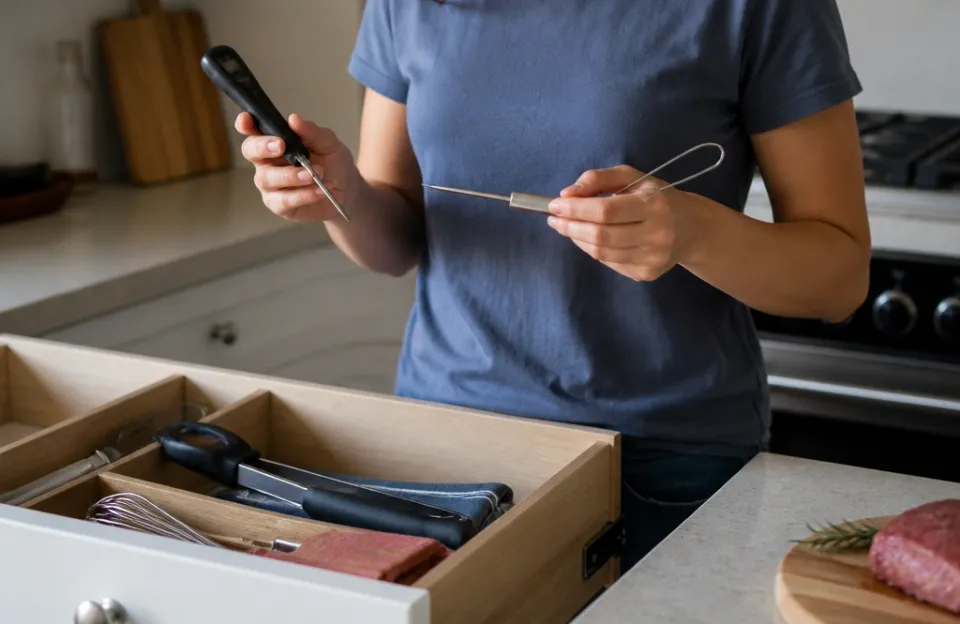
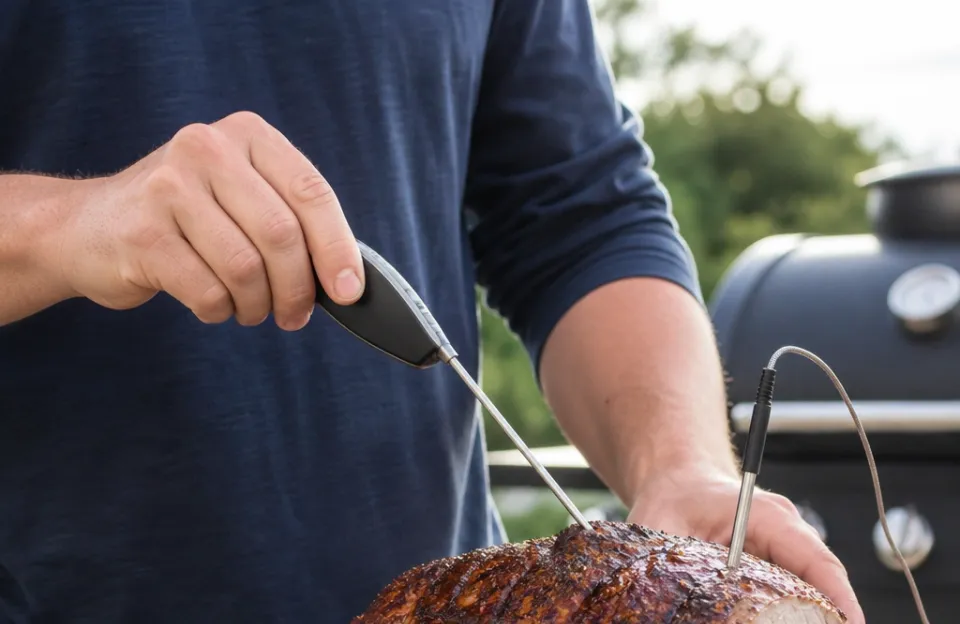
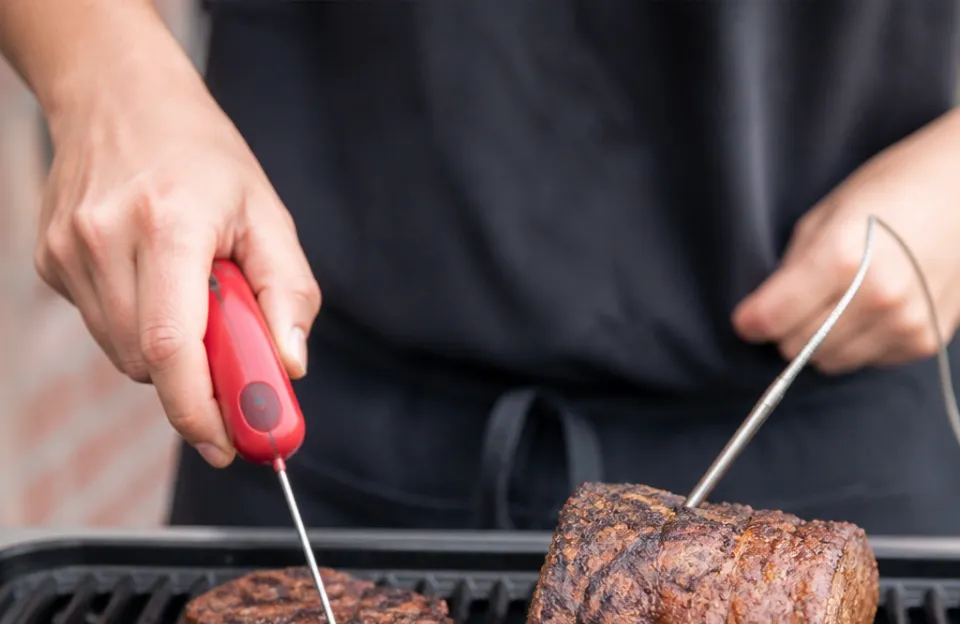
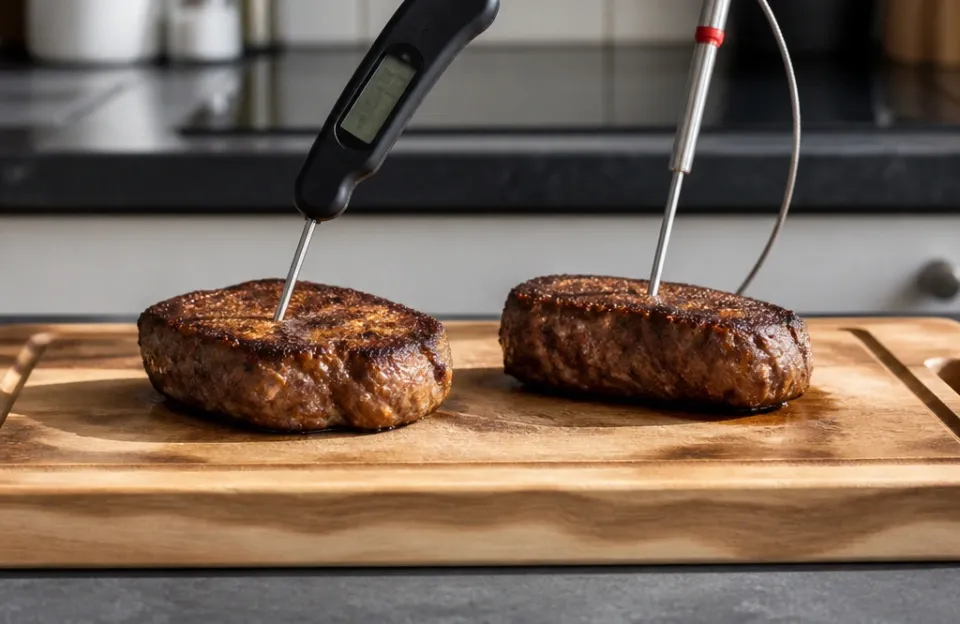
An instant-read thermometer is a handheld device. You insert the probe into the food, wait for the reading to stabilize, then remove it. The probe does not stay in the food during cooking. This design suits quick checks: you open the oven or lift the grill lid, take a reading, and close it again.
A leave-in probe thermometer works differently. The probe stays inside the food for the entire cook, with a cable or wireless transmitter carrying temperature data to a display unit outside the oven or grill. You monitor the reading continuously without repeatedly opening the cooking chamber.
Both styles rely on placing the sensor in the thickest part of the food, away from bone, fat, or gristle. That placement rule applies equally whether you are using a handheld instant-read or a leave-in probe.
Speed and Response Time
Instant-read thermometers are built for speed. Response time varies by model, and some are marketed with a one-second response time, which matters when you are checking multiple thin pieces, such as chicken thighs on a hot grill, and do not want to leave the lid open. Most food thermometers, including instant-read models, give an accurate reading within 2 to 4 degrees F.
Leave-in thermometers are built for patience, not speed. They track temperature over the entire cook, so the response time of any single reading matters less than the stability of the continuous stream. You are not waiting for a number to settle; you are watching a curve climb toward your target.
The practical implication: for a thin cut that you will flip once and pull at 145 degrees F, an instant-read is the simpler tool because you only need a spot check. For a large cut that will cook for many hours, a leave-in probe gives you information an instant-read cannot: the rate of temperature change and the stall, without opening the smoker.
Where Each Tool Belongs in the Kitchen
The choice becomes clearer when you match the thermometer to the cooking method.
| Cooking method | Better fit | Why |
|---|---|---|
| Searing steak in a cast-iron pan | Instant-read | Quick spot check; probe does not stay in the pan |
| Pan-frying chicken breasts | Instant-read | Check each piece individually; thin cuts need side insertion |
| Grilling burgers or sausages | Instant-read | Multiple pieces, each needs its own check |
| Roasting a whole chicken or turkey | Leave-in | Continuous monitoring of the thickest part of the breast and thigh |
| Smoking brisket or pork shoulder | Leave-in | Long cook; no opening the smoker to check |
| Slow-cooking a pot roast | Leave-in | Monitor without lifting the lid |
| Checking a casserole or egg dish | Instant-read | Spot check in several places for even doneness |
A fast-grilling instant-read model handles weeknight dinners easily when you are cooking several pieces at once. For longer cooks, a wireless setup sends data straight to your phone or a countertop receiver, so you can walk away from the grill.
Which Thermometer Type Is Better for Thin Cuts?
Thin cuts such as cutlets, thin steaks, and fish fillets are where instant-read thermometers earn their keep. The probe is narrow enough to insert through the side of the food until it reaches the center, which is what the USDA recommends for thin foods. A leave-in probe can work for thin cuts, but the probe and cable may be awkward to position in a shallow piece of meat, and the cable can interfere with flipping or moving the food.
Which Thermometer Type Is Better for Smoking Brisket?
For a long smoke, a leave-in probe is the practical choice. You need to track the internal temperature for hours without opening the smoker, and you may want to monitor the stall, the period when evaporative cooling slows the temperature climb. A leave-in probe with a wireless connection sends data straight to your phone or a countertop receiver, so you can monitor the cook without staying beside the smoker.
Oven, Grill, and Smoker Safety
This is where buying decisions go wrong most often, because the two thermometer types have very different heat limits.
An instant-read thermometer is generally not designed to stay inside a closed oven or under a grill lid during active cooking. Some manufacturers rate specific instant-read models for short oven exposure, but that varies by model, and you should check the manual before assuming yours is one of them.
A leave-in probe thermometer is designed to stay in the food during cooking, but the cable and probe have maximum temperature ratings that vary by manufacturer. Route the cable away from heating elements and flames according to the manufacturer’s instructions, and check the stated probe and cable ratings for your model.
For smokers and grills, the same rule applies: check the manufacturer’s stated maximum temperature for the probe and cable, and keep the cable away from direct flames. A probe rated for oven use may not be rated for direct flame contact, so follow the exact model manual and stated probe and cable ratings.
Accuracy and Sensor Placement
Both thermometer types can give accurate readings, but only if the sensor is placed correctly and the device is within its accuracy tolerance. Most food thermometers give an accurate reading within 2 to 4 degrees F. That tolerance range matters for food safety: a thermometer reading a few degrees low could lead you to pull meat before it has actually reached the safe minimum internal temperature.
Placement is the more common source of error. Insert the probe into the thickest part of the food, away from bone, fat, or gristle. For thin foods, insert through the side until the probe reaches the center. For roasts, place the probe midway into the thickest part, avoiding bone, fat, and gristle. For large or irregularly shaped foods, check the temperature in several places to confirm even doneness.
A precise digital sensor helps, and a dual-probe configuration lets you monitor two spots at once, such as the breast and thigh of a whole turkey. Checking more than one spot is useful for large or irregularly shaped foods, where a single reading may not represent the whole piece.
If you want to verify your thermometer’s accuracy, the USDA references a calibration method in its food thermometer guidance. The specific ice-point and boiling-point procedures vary by model, so check your manual for the manufacturer’s recommended method.
Safe Minimum Internal Temperatures
Whatever thermometer you choose, the reading is only useful if you know the target. Safe minimum internal temperatures for meat and poultry are set by the USDA and published on FoodSafety.gov as safe minimum internal temperatures. Key targets include:
| Food | Safe minimum internal temperature | Rest time |
|---|---|---|
| Beef, bison, veal, goat, and lamb steaks, roasts, chops | 145 degrees F (63 degrees C) | 3 minutes |
| Ground meat and sausage | 160 degrees F (71 degrees C) | None |
| Poultry, including whole birds, breasts, legs, thighs, wings, ground poultry, giblets, and stuffing | 165 degrees F (74 degrees C) | None |
| Pork steaks, roasts, and chops | 145 degrees F (63 degrees C) | 3 minutes |
| Fish | 145 degrees F (63 degrees C) or until flesh is no longer translucent and separates easily with a fork | None |
Some meats need a rest time after cooking because it allows the innermost parts and juices to become fully and safely cooked. A leave-in thermometer is convenient here because you can leave the probe in during the rest and watch the temperature continue to rise or hold.
Always check each piece of food to ensure it has reached the safe internal temperature, because size, quantity, and distribution cause pieces to reach temperature at different times. Color and grill marks are not indicators that food is safe to eat. A hamburger cooked to 160 degrees F, as measured with a food thermometer, is safe regardless of color.
Durability and Maintenance Differences
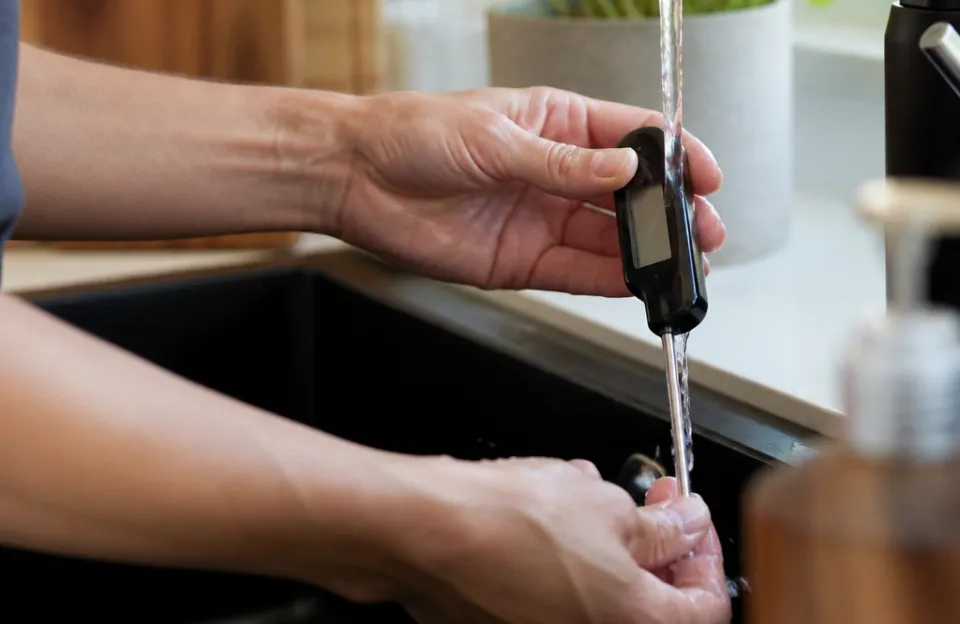
Instant-read thermometers are generally simpler to maintain. The probe is attached to the body, so there is no cable to route, no separate probe to store, and no wire to clean. You wipe the probe with a damp cloth or wash it according to the manufacturer’s instructions.
Leave-in thermometers have more parts to care for. The probe, the cable, and the base unit all need attention, and some manufacturers sell replacement probes. Follow the manufacturer’s instructions for cleaning, storage, and cable routing, since wear and failure points vary by model.
Cleaning a leave-in probe is also more involved. The probe and cable must be cleaned after each use, and the manufacturer’s instructions may specify whether the probe is waterproof or whether only the tip can be submerged. The base unit should not be immersed unless the manufacturer states it is waterproof.
If you own a leave-in thermometer, a replacement probe is worth keeping on hand if your model supports one.
Wired Versus Wireless Leave-in Models
If you decide a leave-in thermometer fits your cooking, the next choice is wired or wireless. A wired leave-in thermometer has a cable running from the probe inside the oven or grill to a display unit outside. A wireless leave-in thermometer transmits data from a transmitter to a separate receiver or your phone, with no cable crossing the oven door or grill lid.
The buying considerations differ. A wired model uses a cable running from the probe to a display unit, while a wireless model transmits data to a separate receiver or your phone. The specific setup, range, and reliability of wired versus wireless models vary by product and are not comparable from general guidance alone, so check the manufacturer’s specifications for any model you consider.
For most home cooks, the practical question is whether you need to monitor the cook from another room. If you are staying in the kitchen, a wired model may be sufficient. If you want to check on a long cook without staying beside the oven or grill, a wireless model may be worth the added setup.
Picking the Right Style for Your Dinner
Here is a conditional recommendation framework based on cooking habits, not brand loyalty. Before buying any model, check the product page or manual for stated accuracy, minimum insertion depth, probe and cable temperature limits, calibration procedure, warranty, replacement-probe availability, and wireless range where applicable.
Buy an instant-read thermometer if: You sear, pan-fry, or grill most nights. You cook thin cuts, burgers, sausages, or individual pieces that need quick spot checks. You want a single tool that stores easily in a drawer and has no cables or batteries to manage. You are willing to check the manufacturer’s oven-safe rating if you want to use it near heat.
Buy a leave-in probe thermometer if: You roast whole birds, smoke brisket or pork shoulder, or slow-cook large cuts. You want continuous monitoring without opening the oven or grill. You are willing to route and care for a cable, or manage a wireless transmitter. You want to track the stall or the rate of temperature change during a long cook.
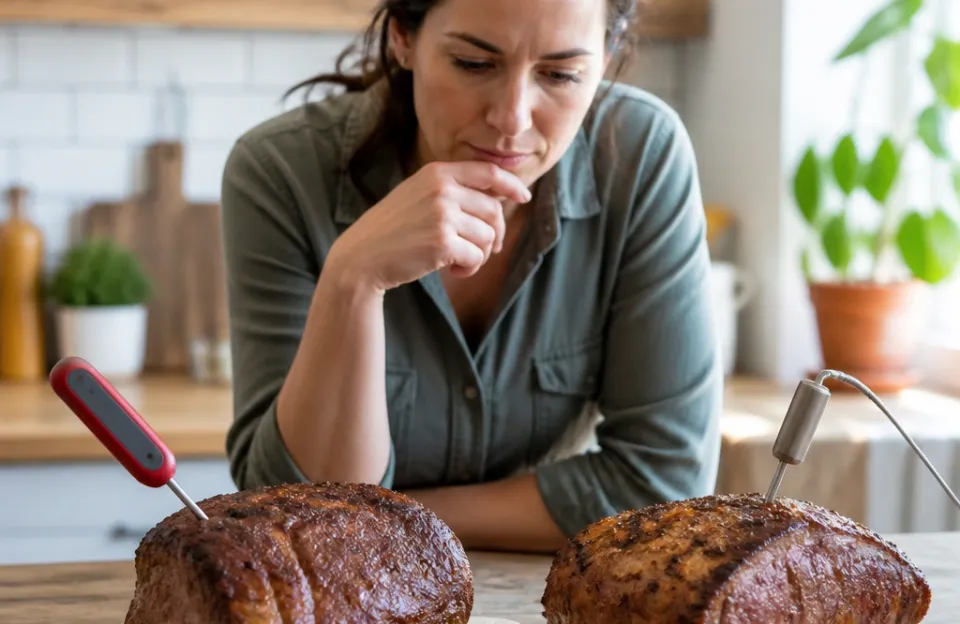
Buy both if: Your cooking spans quick weeknight searing and weekend smoking or roasting. An instant-read is awkward for a long brisket cook, and a leave-in probe is more than a single chicken breast needs. Owning one of each covers the widest range of methods, though it costs more and takes more drawer space.
A fast-grilling instant-read model handles weeknight dinners easily. A leave-in probe with a wireless connection solves the long-cook problem by sending data straight to your phone or a countertop receiver.
Frequently Asked Questions
Can I Leave an Instant-Read Thermometer in the Oven?
Generally, no, unless the manufacturer explicitly states that your specific model is rated for oven use. The probe may tolerate brief heat, but the body and display are not designed to stay in a closed oven. Check your manual before assuming it is oven-safe.
Why Does My Leave-in Thermometer Read Higher Than My Instant-Read?
A few possibilities: the probes are placed in different spots, one is closer to bone or fat, or one thermometer is outside its accuracy tolerance. Most food thermometers are accurate within 2 to 4 degrees F, so a small difference is normal. A large difference suggests a placement issue or a thermometer that needs calibration.
Do I Need to Calibrate a New Thermometer?
Check the manufacturer’s instructions. The USDA references calibration in its food thermometer guidance, and the method varies by model. Some manufacturers calibrate at the factory and recommend periodic checks; others provide a calibration procedure in the manual.
Can I Use a Leave-in Probe on a Grill?
Yes, if the manufacturer rates the probe and cable for grill temperatures. Route the cable away from direct flames and hot surfaces, and check the maximum temperature rating before use.
Is a Wireless Leave-in Thermometer Worth It?
It depends on whether you need to monitor the cook from another room. A wireless model adds setup and battery management, but it solves the problem of checking a long cook without staying in the kitchen.
Deciding What Goes in Your Kitchen Drawer
The decision comes down to your cooking habits, not a single best thermometer. If you cook thin cuts and individual pieces most nights, an instant-read thermometer is the simpler tool. If you roast, smoke, or slow-cook large cuts, a leave-in probe thermometer gives you continuous monitoring that an instant-read cannot match. If you do both, owning one of each is the most practical solution, even though it costs more and takes more drawer space.
Whichever you choose, the thermometer is only useful if you use it correctly: place the probe in the thickest part of the food, away from bone and fat, check each piece, and verify the reading against the safe minimum internal temperature for that food. That habit matters more than the price of the thermometer.