For many basket-style air fryers, a practical manual preheat takes about three to five minutes at the cooking temperature, but that is a starting range rather than a universal rule. Smaller models may need only two to three minutes, while larger oven-style air fryers may need closer to five. Some air fryers preheat automatically, and some manufacturers say you can start cooking without preheating at all. Your model’s manual is the best source for the exact recommendation.
Why Preheating Matters for Air Frying
An air fryer circulates hot air at high speed around your food, much like a compact convection oven. Preheating can improve repeatability and help some foods start browning quickly, but many foods can also be cooked from a cold start. The effect tends to be largest for foods where crispness is the goal and the cook time is short.
When you put food into a cold air fryer, the appliance and the food heat up together. That slower start is why some recipes call for a preheated basket: the food begins cooking in a stable hot environment instead of a gradually warming one.
The Typical Time Range for Preheating
Most manufacturers recommend a preheat time of three to five minutes, though several factors influence how long your specific appliance takes. For many compact basket-style air fryers that allow manual preheating, about three to five minutes is a practical starting range at either 350°F or 400°F.
- Appliance size: Smaller air fryers may need only two to three minutes, while larger oven-style models may want the full five. Oven-style air fryers may need longer to preheat than compact basket models.
- Target temperature: A higher target temperature generally takes longer to reach than a lower one. The time depends on the appliance’s heating system, chamber size, starting temperature and whether it has a dedicated preheat function.
- Starting conditions: A cold kitchen, a cold basket or a cold appliance can all extend the warm-up. The time depends partly on the starting temperature of the appliance and its surroundings.
- Model features: Some air fryers have a dedicated preheat function, while others rely on a manual warm-up. Some models preheat to a fixed temperature regardless of the cook setting, so check the manual.
Does Your Air Fryer Need a Preheat Step?
Many newer air fryers include a preheat button or setting. When you use it, the machine runs to temperature and usually beeps or signals when it is ready, taking the guesswork out. If your air fryer tells you to add food, follow that prompt instead of running a second manual warm-up.
Not every recipe or model requires preheating. Some manufacturers say you can start cooking without preheating, and preheating is most useful when a recipe explicitly calls for it or when you want a hot cooking surface from the start. Check your specific air fryer manual for model-specific recommendations, since preheat guidance varies by brand and design.
When to Preheat and When to Skip It
Different foods respond differently to the starting temperature of the air fryer.
| Food Category | Should You Preheat? | Why? |
|---|---|---|
| Frozen snacks (fries, nuggets) | Yes | A hot start helps crisp the surface rather than letting moisture collect. |
| Fresh proteins (chicken, steak) | Often | A hot surface helps browning from the first minute. |
| Vegetables | Optional | Many vegetables roast well from a cold start; preheat if you want faster browning. |
| Reheating leftovers | Usually no | A cold start is gentler and reduces the risk of drying the edges. |
| Baked goods | Check the recipe | Follow the recipe or manual, since air-fryer baking guidance varies by model. |
Preheating is useful when a recipe explicitly calls for it or when you want a hot cooking surface from the start. For low-and-slow cooking, delicate fish or anything you are watching closely, preheating may buy you little and can even work against you.
How to Preheat Your Air Fryer Manually
If your model has no preheat button, a manual warm-up is straightforward. Follow your manual first, because basket placement and timing vary by model.
- Check the manual for basket placement. Most machines preheat with the basket installed, and the basket should be left in place unless the manual says otherwise.
- Set the temperature. Choose your target cooking temperature.
- Run the empty appliance. A common manual method is to run the empty appliance for three to five minutes, then add food and start the cooking timer. Smaller air fryers may need only two to three minutes, while larger oven-style models may want the full five.
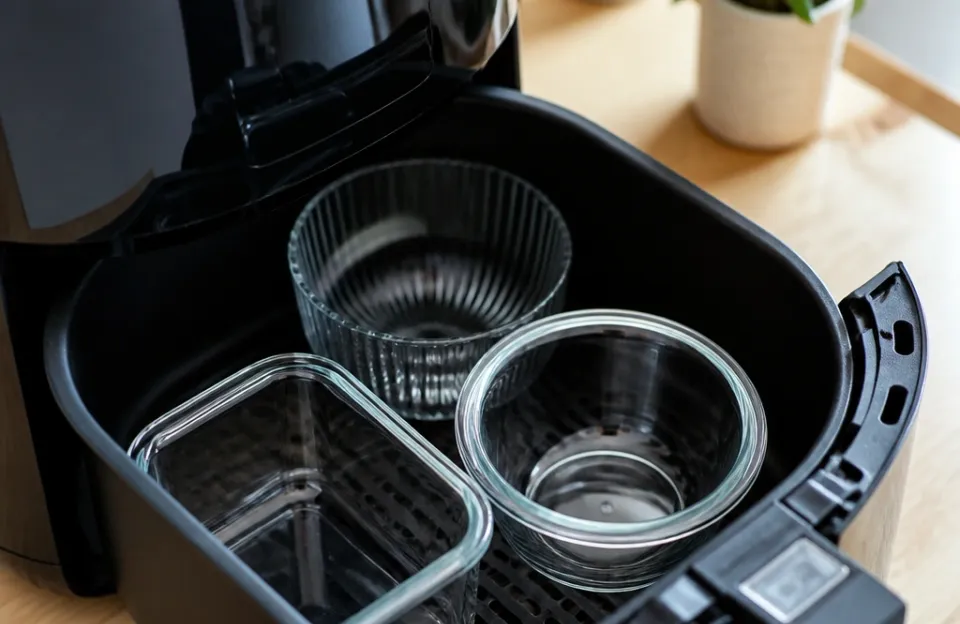
- Keep loose items out. Keep loose parchment paper, lightweight liners and other unsecured items out of an empty running air fryer, because the fan can lift them toward the heating element.
- Add food carefully. The basket and rack may be hot after preheating, so use tongs or oven-safe utensils when appropriate. Then set the cooking timer for your recipe.
A Note on Oil and Liquids
Do not add oil, water or other liquids to an empty basket during preheating. Add oil and seasoning to the food itself, following your manual’s guidance on coatings and accessories.
How to Tell When Preheating Is Done
Models with a preheat function usually signal when the cycle ends. On models without that feature, the timer is your guide. Keep in mind that on many models the display simply shows the temperature you selected rather than a confirmed reading of the air inside the cooking chamber. A preheat time does not guarantee the appliance has reached the precise temperature on the screen. If your manual calls for a specific preheat duration, use that rather than guessing.
What Happens If You Forget to Preheat?
Forgetting to preheat is common, and in most cases the food still cooks fine. The main difference is texture: food that starts in a cold basket spends its first minutes warming up along with the appliance. If you skip preheating, check the food toward the end of cooking and extend the time as needed. There is no verified universal figure for how much extra time to add, so judge by browning and doneness rather than a fixed number.
Food Safety Reminders for Air Frying
Preheating is not a food-safety step. Safe cooking depends on reaching the right internal temperature. Foods generally require 5 to 25 minutes of cooking at a temperature range of 350°F to 400°F, and when available you should follow the manufacturer’s instructions on food packages. Each air fryer will have varying cooking times due to the size and power of the appliance, but the safe internal temperature is always the same, so use a food thermometer to confirm that meat and poultry are fully cooked.
Safe minimum internal temperatures include 165°F for all poultry, and 145°F for fish. Also avoid overfilling the air frying basket, which can cause uneven cooking and undercooking. For specific doneness temperatures, see the USDA’s safe minimum internal temperature chart.
Common Misconceptions About Preheating
One common belief is that preheating wastes a lot of electricity. Because air fryers are small appliances and the preheat is short, the energy use is modest, though it is not zero. Another misconception is that food will burn if you do not add it the instant the preheat ends. A preheated basket stays hot for a while, so a short delay is usually not a problem. A third is that preheating is always required. It is not required for every recipe or model, and many foods cook well from a cold start.
The Bottom Line
Preheating an air fryer for roughly three to five minutes is a practical habit for frozen snacks, breaded foods and anything you want browned quickly. Smaller baskets may need less time and larger oven-style models may need more. For reheating, slow cooking or recipes that do not call for it, you can usually skip the preheat. Check your manual, keep loose liners out of an empty basket, and use a thermometer to confirm doneness. For a practical cooking-time example, see this guide to air frying fresh French fries and how that timing changes with a hot start.