You spent forty dollars on a prime rib roast, timed the oven perfectly, and pulled it out when the crust looked golden brown. But when you slice into the center, it is either gray and overcooked or cold and purple. That sinking feeling is exactly why home cooks eventually look for a reliable tool to take the guesswork out of the kitchen. In 2026, CDN (Component Design Northwest) remains one of the most frequently recommended names in independent testing circles, offering high accuracy and durable builds at a budget-friendly price point.
Consumer Reports and independent kitchen testers consistently highlight CDN for rapid temperature readouts and thin probes that do not drain juices from the meat. While these thermometers often lack the Bluetooth connectivity of premium brands, they rank as top-tier value picks for sheer reliability. If you want professional-grade precision without paying a professional price tag, understanding what makes CDN stand out is your first step toward better cooking. You can also read our guide on where to place a meat thermometer in meat chicken turkey in meat chicken turkey.
Why CDN Meat Thermometers Rank Well in Consumer Testing
Independent testing groups focus on three main pillars: speed, accuracy, and out-of-the-box ease of use. CDN thermometers hit the sweet spot because they avoid over-complicating the interface. When you are standing over a hot grill or managing a steaming Thanksgiving turkey, you do not want to scroll through a phone app just to see if the thigh has reached a safe temperature. You need a number, and you need it fast.
Most CDN models rely on thermistor technology. This provides a digital readout that is accurate within one to two degrees Fahrenheit. High-end professional thermocouple thermometers are faster—often reading in two seconds—but they typically cost four times as much. For the average home cook, a CDN thermometer delivers nearly identical precision without the heavy financial commitment. In practice, the difference between a three-second and a six-second read time rarely changes the outcome of your dinner.
The Pro-Accurate Difference Explained
You will see the "Pro-Accurate" label on many CDN products. This is not just marketing terminology; it refers directly to the factory calibration of the sensor. A major factor in long-term testing scores is whether a tool can be recalibrated at home. If you drop your thermometer or it starts giving odd readings after a year of heavy use, many CDN models allow you to reset the baseline using an ice-water bath. This longevity is a primary reason they stay on best-of lists year after year.
If you have ever dealt with drifting numbers on a cheap dial gauge, you know how frustrating inaccurate tools can be. Understanding why sensors give inconsistent readings helps explain why CDN’s sealed thermistor design holds up so well under stress.
Durability and Water Resistance
Kitchens are messy environments. A thermometer gets splashed with grease, wiped down with damp cloths, and occasionally dropped on a tile floor. Independent lab tests regularly check if steam or moisture can leak into the screen housing and ruin the circuitry.
CDN typically uses high-grade plastic casings and buttons that are sealed against moisture. While most of their standard instant-reads are not fully submersible like a diver's watch, they handle the realities of a busy kitchen significantly better than generic grocery-store brands. A common mistake is assuming "water-resistant" means "dishwasher-safe." Always hand-wash the probe to protect the internal seals.
Top CDN Models Evaluated for 2026
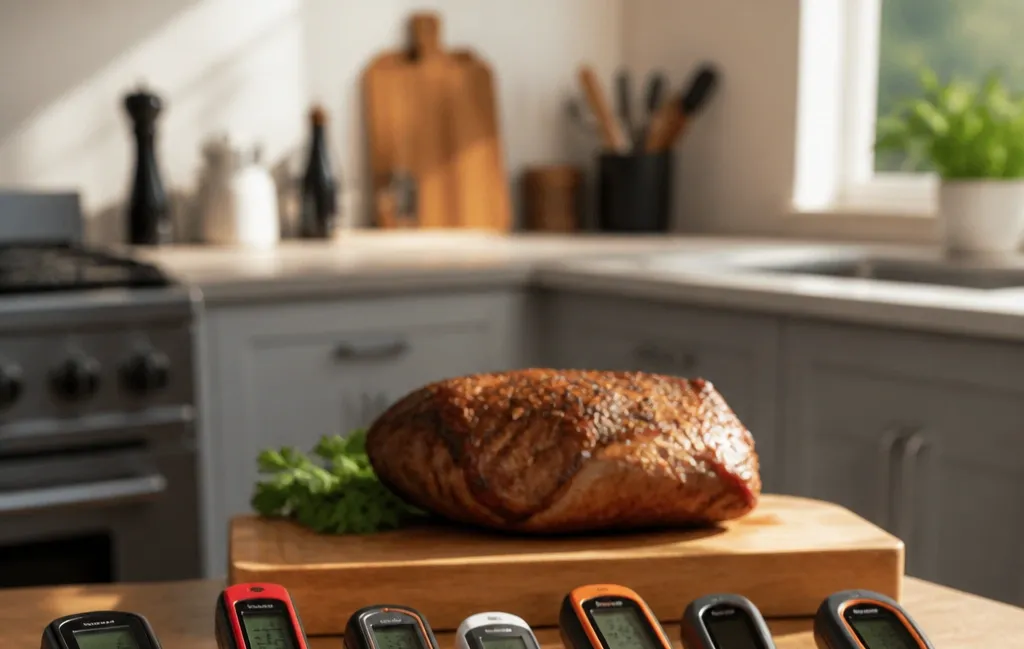
When evaluating the best CDN meat thermometer based on consumer reports criteria, three distinct categories emerge: folding instant-reads, pocket thermometers, and leave-in probe systems. Each serves a specific culinary purpose.
CDN DT450X ProAccurate Folding Thermometer
The DT450X is arguably CDN’s most recognized model. It features a folding probe that tucks safely into the handle, protecting the sharp tip during storage. The stainless steel stem is thin enough to pierce a delicate fish fillet without tearing the flesh, yet sturdy enough to push through a thick pork shoulder. Read times hover around four to six seconds, which is excellent for a thermistor-based unit. The display is large, and the auto-shutoff feature engages when you fold the probe closed, preserving battery life.
CDN IRT380 ProAccurate Infrared and Probe Combo
For cooks who want versatility, this hybrid model offers both surface infrared scanning and a traditional insertion probe. While the infrared function cannot measure internal doneness, it is incredibly useful for checking pan temperatures before searing a steak or verifying that your pizza stone is properly preheated. Once the pan is ready, you switch to the fold-out probe to check the meat itself.
CDN PTC14 Leave-In Probe Thermometer
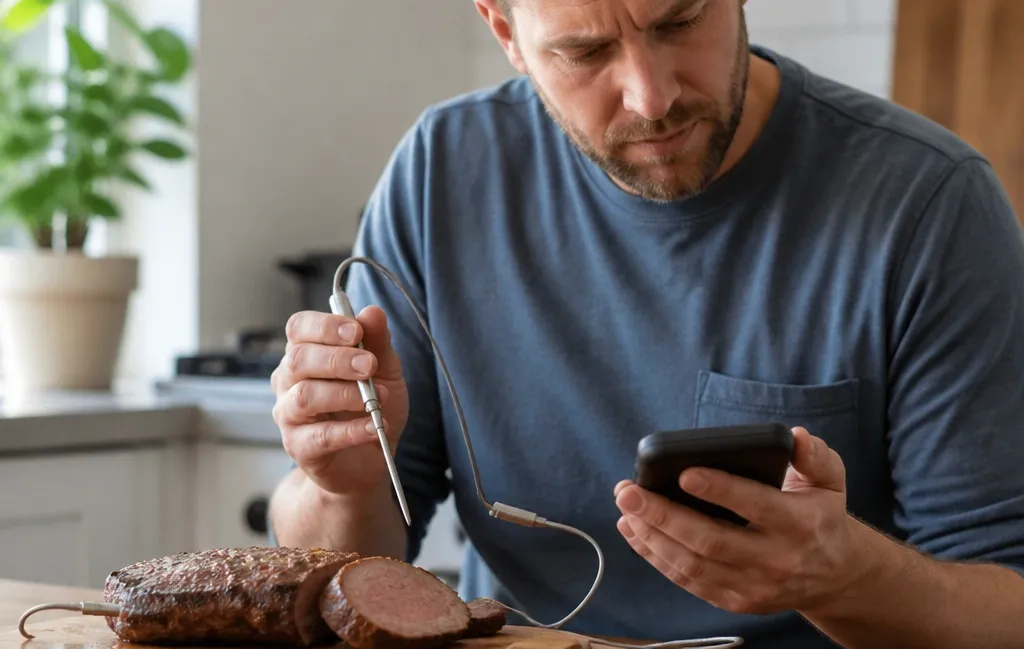
Leave-in models feature a heat-resistant wire connecting the probe inside the oven to a base unit resting on the counter. These are the "set it and forget it" tools. You program the target temperature, and the unit beeps when the meat reaches that goal. This style is the gold standard for long-smoked briskets, slow-roasted pork shoulders, or baking bread.
If you are currently weighing different wireless setups, comparing reliable dual-probe options can help you decide if a dedicated CDN leave-in model fits your workflow.
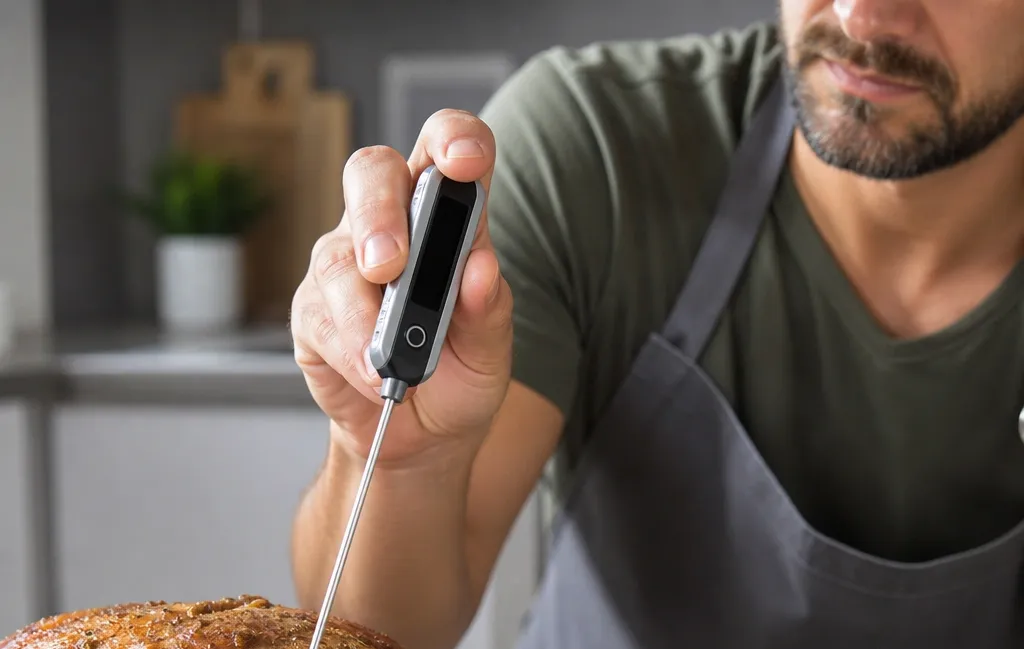
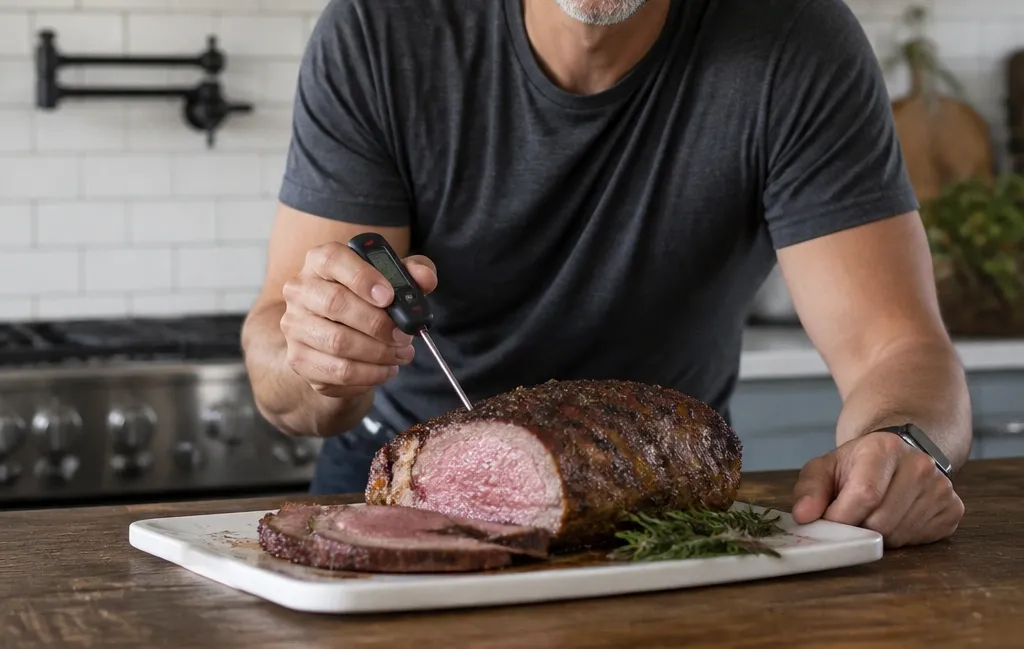
A typical folding instant-read CDN thermometer ready for use on cooked poultry.
How to Use Your CDN Thermometer for Best Results

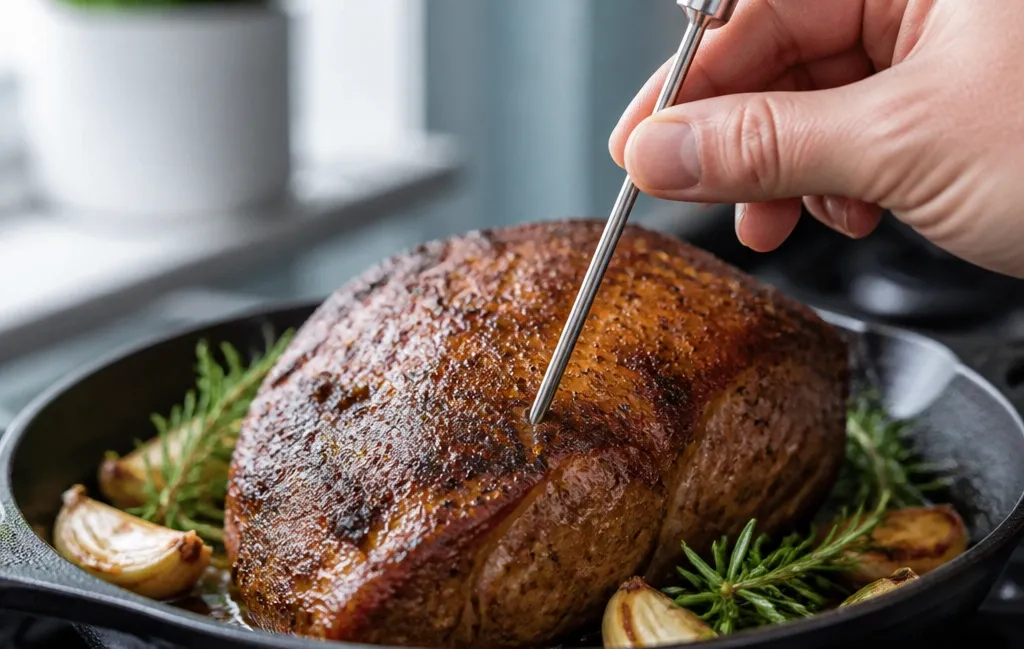
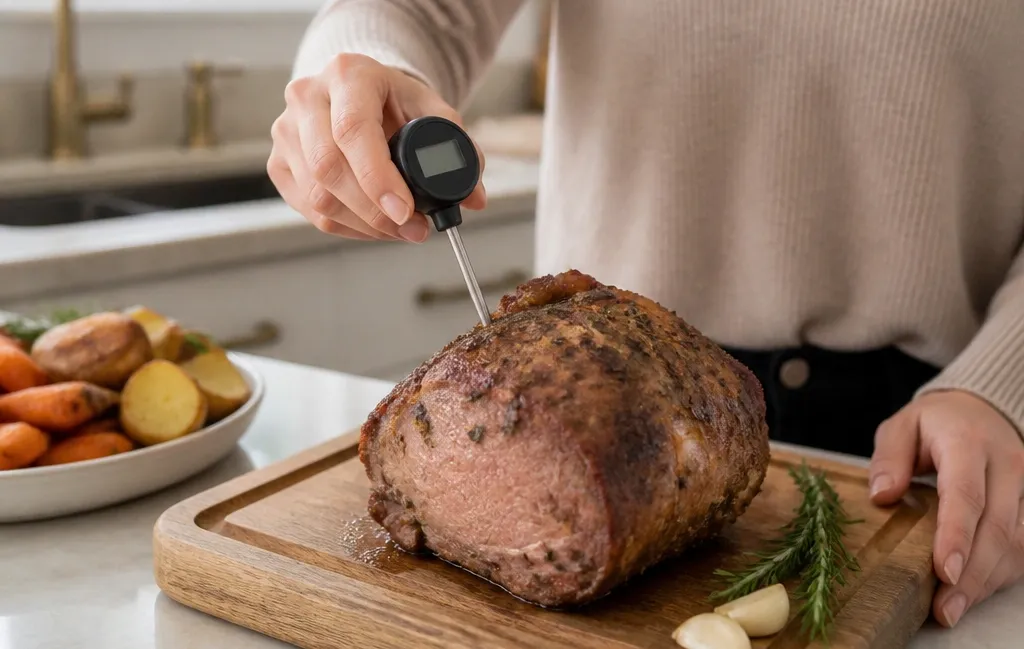
Even the highest-rated thermometer fails if used incorrectly. Accuracy depends heavily on probe placement. If you hit a bone, a pocket of fat, or the roasting pan itself, the reading will be wrong, potentially leading to dangerous undercooking.
- Target the thermal center: Always aim for the thickest part of the meat. In a whole chicken, this is usually the inner thigh, angling the probe carefully to avoid touching the bone. In a steak, insert it horizontally into the dead center.
- Account for carryover cooking: Meat continues to cook after you remove it from the heat source. If you want a final resting temperature of 145°F for pork, pull the meat off the grill when your CDN reads about 140°F. The residual heat will push it the rest of the way.
- Prevent cross-contamination: Wipe the probe with an alcohol swab or hot soapy water every time you check raw or undercooked meat. Never put a probe back into the drawer immediately after pulling it out of a raw chicken breast.
- Calibrate regularly: If you suspect your readings are off, perform an ice bath test. Fill a glass with crushed ice and just enough water to fill the gaps. Stir, wait one minute, and insert the probe without touching the glass. It should read exactly 32°F (0°C). If it deviates by more than two degrees, use the calibration nut or button on your CDN model to adjust it.
Knowing the proper technique for inserting probes applies universally across brands and ensures you never second-guess your dinner.
Factors That Change Thermometer Accuracy
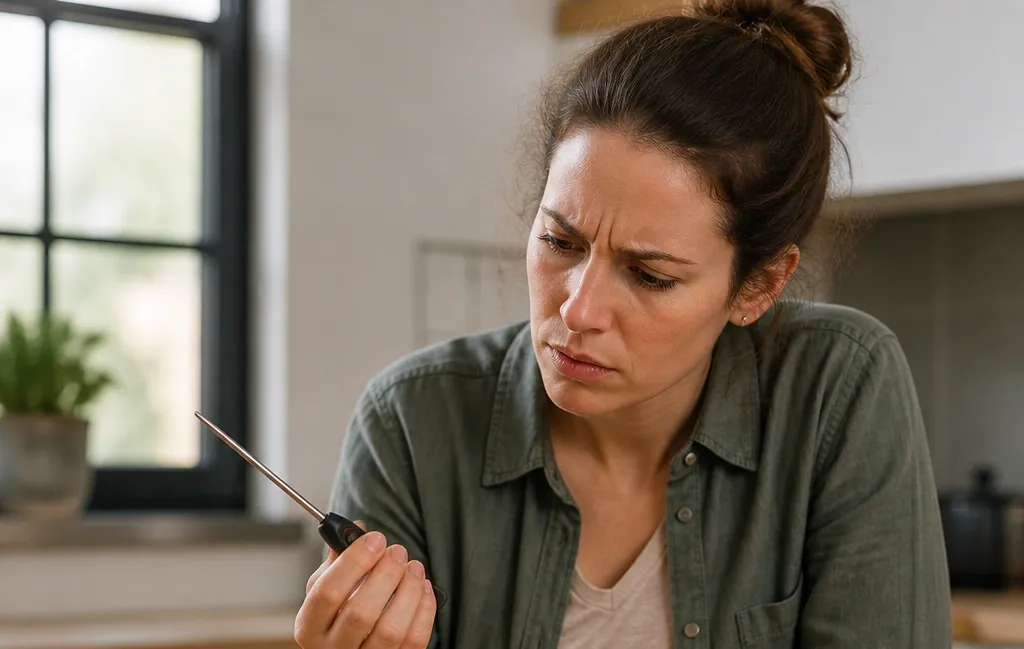
Altitude and battery health are two variables home cooks frequently overlook. In high-altitude areas like Denver, water boils at a lower temperature due to reduced atmospheric pressure. While this primarily affects boiling points, extreme environmental shifts can sometimes cause minor variances in cheaper digital sensors. If you live at elevation, prioritize a CDN model with a manual calibration feature so you can verify its baseline.
Battery health matters just as much. As a small button-cell battery depletes, the LCD screen might remain bright, but the sensor processing can start to lag. Most consumer testing suggests swapping the battery once a year if you cook frequently. A weak battery leads to a "drifting" temperature reading, where the numbers bounce around endlessly and never settle on a final figure. Knowing when power drops affect performance saves you from throwing away a perfectly good tool.
Common Mistakes When Buying a Meat Thermometer
Many people buy the most expensive model thinking it is automatically the best, but that is rarely true for everyday home use.
- Buying unnecessary technology: If you do not want to manage a Bluetooth connection or charge a lithium-ion battery pack, do not buy a smart wireless probe. Every extra feature is a potential point of failure. CDN succeeds by keeping things analog-simple in a digital body.
- Ignoring probe length: If you cook large turkeys or deep-fry whole birds, a short three-inch probe will not reach the thermal center. CDN offers long-stem models specifically designed for deep pots and massive roasts.
- Overlooking the display quality: If you wear reading glasses or cook outdoors at night, look for CDN models with backlit screens and large digits. Small, unlit displays are the most common complaint in negative user reviews.
- Confusing instant-read with leave-in: Never leave a folding instant-read thermometer inside a closed oven. The plastic housing and LCD screen will melt rapidly. Only use designated corded probes for continuous oven monitoring.
If you are building out a new culinary space and upgrading your tools, ensuring you have properly organized workspaces makes keeping essential gear like your thermometer accessible much easier.
Safe Internal Temperature Guide
According to the USDA Food Safety guidelines, using a food thermometer is the only reliable way to ensure food has reached a safe minimum internal temperature. Color and texture are not safe indicators. Here are the standard targets you should program into your memory—or your leave-in thermometer:
| Meat Type | Target Internal Temp | Why It Matters |
|---|---|---|
| Ground Beef & Pork | 160°F (71°C) | Destroys E. coli and other pathogens distributed during grinding |
| Poultry (Chicken/Turkey) | 165°F (74°C) | Essential for eliminating Salmonella and Campylobacter |
| Whole Cuts (Beef/Pork/Lamb) | 145°F (63°C) | Requires a mandatory 3-minute rest time before carving |
| Fish & Seafood | 145°F (63°C) | Cook until flesh is opaque and separates easily with a fork |
Having a precise tool is especially critical when preparing poultry. Referencing a detailed poultry safety chart ensures you hit the exact mark for thighs, breasts, and wings, which all cook at slightly different rates.
Frequently Asked Questions
Are CDN thermometers waterproof?
Most CDN digital models are water-resistant, meaning they can handle steam exposure, splashes, and a quick wipe down with a damp cloth. However, they are not fully waterproof. You should never toss a digital thermometer into a dishwasher or submerge it in a sink full of water, as this will permanently damage the internal circuitry.
How do I know if my CDN thermometer is still accurate?
The easiest method is the Ice Bath Test. Fill a glass with crushed ice and add just enough water to fill the gaps between the cubes. Stir it and let it sit for one minute. Insert the probe into the center of the ice slurry without touching the sides or bottom of the glass. It should read exactly 32°F (0°C). If it is off by more than two degrees, calibrate it using the manufacturer's instructions or replace it.
Why is my instant-read thermometer taking 10 seconds to register?
"Instant-read" is somewhat relative in the budget category. While professional thermocouples read in one to two seconds, a high-quality CDN thermistor usually takes four to eight seconds to stabilize. If it is taking longer than ten seconds, ensure the sensing tip is clean. Built-up carbon from grilling acts as an insulator and slows down heat transfer to the sensor.
Can I leave a CDN digital thermometer inside the oven?
Only if it is a specific "probe-style" model equipped with a heat-resistant cord. Handheld folding or pocket thermometers have plastic bodies and liquid crystal displays that will melt instantly in a hot oven. Always verify the packaging states the unit is "oven-safe" before attempting continuous monitoring.
Is CDN better than other popular brands?
CDN excels in simplicity and value. If you are trying to decide between various manufacturers, looking at how established brands compare overall can clarify whether you need CDN's straightforward approach or a competitor's advanced features.
Conclusion
When you review consumer reports for the best CDN meat thermometer in 2026, remember that the most expensive model is rarely the winner for home kitchens. The best tool is the one you actually use every single time you cook. CDN earns its longstanding reputation by manufacturing instruments that are straightforward, easy to clean, highly durable, and accurate enough for the most demanding holiday dinners. They strip away unnecessary complications and deliver exactly what matters: a reliable temperature reading.
If you want a balance of professional-grade precision and everyday pricing, CDN remains one of the safest investments you can make for your kitchen. Your next step is simple: pick up a CDN folding instant-read thermometer, perform the ice bath calibration test the moment you unbox it, and use it on your very next meal to experience the difference precision makes.