A nutrition food scale calculates calories, macros, and nutrients by multiplying the weight of your food by nutrient values stored in a built-in database. The scale itself only measures mass. A load cell converts physical pressure into an electrical signal, and a microchip translates that signal into grams or ounces.
The nutritional math happens entirely in software. Once you identify the food, the processor pulls standard reference data and multiplies every nutrient per 100 grams by your actual weighed portion.
Understanding how nutrition food scales calculate calories, macros, and nutrients means looking at two separate systems working together: the hardware that captures weight, and the software that applies food science data to that number. This article explains both sides of that process, where the numbers come from, and why the final readout on your screen is always an estimate rather than an exact measurement.
The Load Cell Converts Physical Weight Into Digital Data
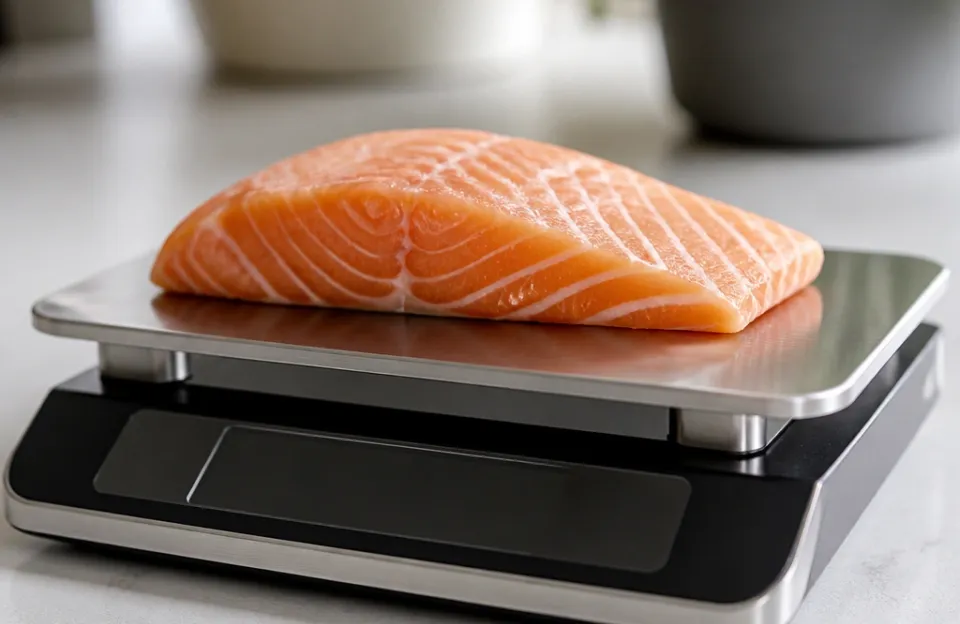
Every digital nutrition scale relies on a component called a strain gauge load cell. This is a small metal bar with a thin electrical wire bonded to it. When you place food on the platform, the metal bar bends slightly.
That bending stretches the wire, which changes its electrical resistance.
The scale's internal circuit sends a tiny current through that wire. As the resistance changes under the weight of your chicken breast or handful of almonds, the voltage drops or rises. An analog-to-digital converter reads that voltage change and turns it into a binary number.
The microprocessor then matches that number to a calibrated weight value displayed on the screen.
This entire process happens in milliseconds. The accuracy depends on the quality of the load cell and how well the manufacturer calibrated it at the factory. Most kitchen-grade models measure down to one gram.
Higher-end versions used for precise dietary tracking might measure to 0.1 grams. That resolution matters when you weigh calorie-dense foods like oils or nuts, where a few extra grams add up fast.
Getting reliable readings requires placing the scale on a hard, flat surface. Soft surfaces like cutting boards resting on towels absorb some of the downward force, confusing the load cell. I've seen people get wildly different weights just by moving a scale from a granite counter to a wooden board sitting on a silicone mat.
If you want accurate macro tracking, keep the base stable. You can check out maintaining steady readings across various kitchen tools to see how sensor placement affects output.
How Nutrition Food Scales Calculate Calories Using Reference Databases
The scale does not analyze the chemical composition of your food. It doesn't know if you placed an apple or a rock on the platform until you tell it. You select the food item from a menu, scan a barcode, or type a name into a connected app.
That input tells the processor which database entry to use.
Once the food is identified, the math is simple multiplication. Standard nutritional databases list values per 100 grams. If the database says raw broccoli has 34 calories per 100 grams, and you weigh out 150 grams, the scale's processor runs this equation: (150 / 100) x 34 = 51 calories.
It repeats this exact calculation for every tracked nutrient simultaneously. Protein, carbohydrates, fat, fiber, sodium, and sugars all get multiplied by your specific portion weight. The result flashes on the display or syncs to your phone.
Where do these baseline numbers come from? In the United States, most devices pull from the USDA FoodData Central repository. This massive public dataset contains nutrient profiles for thousands of raw and prepared foods, compiled through laboratory analysis.
European scales often use the McCance and Widdowson dataset or similar regional equivalents maintained by government health agencies. Manufacturers license or download these datasets and compress them into the scale's firmware or the companion app's cloud server.
When you use a smart scale paired with an app, the app handles the heavy lifting. The scale transmits the weight via Bluetooth, and the app queries a much larger cloud database. This allows for branded food lookups using barcode scanners, pulling specific formulations directly from packaged goods.
Breaking Down Macros: Protein, Fat, And Carbohydrate Math
Macronutrients follow the same multiplication rule as total calories, but they also tie back into the calorie count itself. The system uses the Atwater general factor method to calculate energy. This standard assigns fixed caloric values to each macro:
- Protein: 4 calories per gram
- Carbohydrates: 4 calories per gram
- Fat: 9 calories per gram
- Alcohol: 7 calories per gram (if tracked)
Some advanced apps will calculate total calories by multiplying the weighed grams of protein by four, carbs by four, and fat by nine, then adding those three results together. Others just pull the total calorie figure directly from the USDA entry. Both methods usually yield very close numbers, though slight rounding differences occur depending on the database's original lab testing.
Net carbohydrates require a secondary calculation. Total carbs are listed in the database, and dietary fiber is listed separately. The software subtracts the fiber grams from the total carb grams to display net carbs.
Sugar alcohols complicate this further, as some tracking systems subtract them partially or fully depending on the specific type of sugar alcohol present.
If you're weighing mixed dishes, the scale needs a recipe entry. You can't just select "stew" and expect accuracy unless you built that stew in the app first. Recipe building involves weighing every individual ingredient during prep, logging them, and letting the software divide the total macros by the final cooked weight or number of servings.
| Calculation Method | How It Works | Best Used For | Accuracy Level |
|---|---|---|---|
| Direct Database Pull | Multiplies portion weight by stored per-100g values | Single whole foods (raw chicken, apples, rice) | High |
| Atwater Summation | Calculates calories from weighed macro grams (P x 4, C x 4, F x 9) | Verifying total energy intake | High |
| Recipe Builder | Aggregates raw ingredients, divides by total cooked weight | Mixed meals, casseroles, soups | Moderate |
| Barcode Lookup | Pulls exact label data for packaged commercial foods | Processed items, boxed meals | Very High |
Tare Functions And Why They Matter For Nutrient Accuracy
The tare button zeroes out the weight of whatever container sits on the scale. This sounds basic, but failing to use it correctly ruins macro calculations. If you weigh oats in a bowl without taring the bowl first, the scale includes the ceramic weight in its math.
The processor thinks you're eating 300 grams of oats when you're actually eating 80 grams of oats and 220 grams of porcelain. Your logged calories will be nearly four times higher than reality.
Taring becomes even more important when measuring liquids or sticky foods like peanut butter. You place the jar on the scale, hit tare so it reads zero, scoop out what you need, and the negative number shows exactly how much mass you removed. Or you place an empty bowl, tare it, add flour, tare again, add sugar.
Each ingredient gets isolated.
For people tracking micronutrients like sodium or potassium, precision here is non-negotiable. A single un-tared tablespoon of soy sauce adds phantom weight that throws off the entire meal log. Proper taring isolates the edible mass so the database multiplier only applies to the food itself.
Moisture Loss And Cooked Versus Raw Weight Discrepancies
One of the biggest sources of confusion with nutrition food scales is the difference between raw and cooked weights. Water has zero calories, zero protein, zero fat, and zero carbs. But water has mass.
When you cook food, water evaporates.
Take a raw chicken breast weighing 200 grams. After grilling, it might weigh 140 grams. The protein and fat content didn't vanish; the water did.
If you search "chicken breast" in your scale's database and select the raw entry, you must weigh it before cooking. If you weigh the 140-gram cooked piece but apply the raw database multiplier, you'll underestimate your protein and calories because the software assumes that 140 grams still contains its original water volume.
Conversely, if you select the "cooked, grilled" database entry, you must weigh the food after it comes off the heat. Mixing raw weights with cooked database entries, or cooked weights with raw entries, creates significant tracking errors over time.
This principle applies heavily to grains and pasta, which work in reverse. Dry rice absorbs water and triples in weight during boiling. One hundred grams of dry rice yields roughly 300 grams of cooked rice.
The calories remain identical. If you weigh cooked rice but use the dry database profile, you'll log three times the actual calories you consumed. Always match the state of the food on the scale to the exact state described in the database entry.
Managing safe internal temperatures during cooking also affects moisture retention, which shifts the final weight.
Where The Calculations Fall Short: Limits Of Scale-Based Tracking
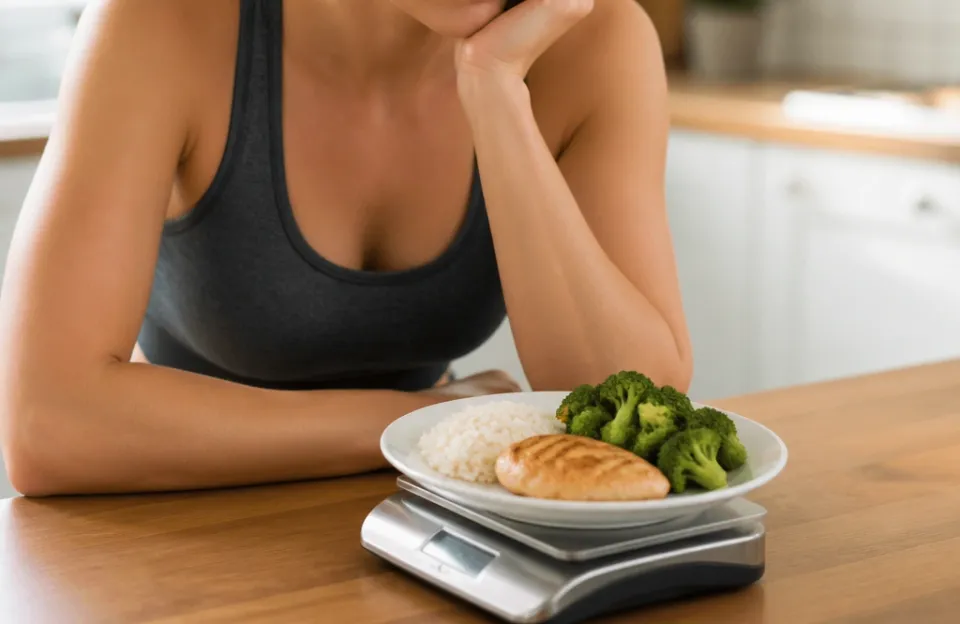
Nutrition food scales provide excellent estimates, but they cannot account for biological variation. A Fuji apple grown in Washington has a slightly different sugar and water content than one grown in New Zealand. The USDA database provides averages.
Your specific piece of fruit might deviate by 5% to 15%.
Soil quality, harvest time, animal feed, and storage conditions all shift the actual nutrient profile of whole foods. The scale multiplies your weight by an average number. It doesn't run a spectrometer analysis on your lunch.
For someone managing a clinical condition requiring extreme precision, this margin of error matters. For general fitness tracking, it rarely impacts long-term progress.
Packaged foods are more consistent because manufacturers formulate to specific recipes and test batches for labeling compliance. Scanning a barcode pulls data tied to that exact production formula, making processed foods easier to track accurately than whole agricultural products.
Another limitation involves fat rendering. If you weigh a fatty steak raw, cook it, and drain the grease, you've lost measurable fat calories down the sink. The scale's raw database entry assumes you eat all the fat that was originally present.
Tracking cooked meat with drained fat requires selecting specific "cooked, lean only" database entries to stay reasonably accurate. If you rely on fast temperature checks to avoid overcooking, you might retain more moisture and fat than a well-done preparation would, keeping the weight closer to the raw profile.
Companion Apps And Cloud Databases Expand The Math
Standalone scales with built-in screens usually hold limited databases. They cover common whole foods and basic staples. Smart scales connect to smartphones via Bluetooth, offloading the calculation to an app with access to millions of user-generated and verified food entries.
These apps handle complex math that standalone hardware struggles with. They adjust for brands, specific restaurant preparations, and custom recipes. When you step on a scale to track body weight alongside your food intake, some ecosystems correlate daily caloric totals with metabolic trends over weeks.
Cloud syncing also allows for unit conversions. You might buy produce in pounds but track macros in grams. The app handles the conversion factor instantly before running the nutrient multiplication.
Keeping your kitchen workspace organized makes juggling phones, scales, and prep bowls much smoother during this process.
Battery life plays a role too. Continuous Bluetooth transmission drains power faster than a simple LCD display. Some users prefer weighing everything offline and batch-syncing later to preserve charge, though real-time syncing prevents forgetting what you ate three hours ago.
Micronutrient Tracking Beyond Basic Macros
While most people buy nutrition food scales to track calories, protein, carbs, and fat, the underlying math works identically for vitamins and minerals. If the database entry includes iron, calcium, vitamin C, or cholesterol, the processor multiplies those values by your weighed portion just as it does for protein.
Tracking micronutrients requires a database detailed enough to include them. Generic entries might only show macros. Comprehensive datasets like the full USDA Standard Reference release contain dozens of micronutrient fields for thousands of foods.
This level of detail supports specific dietary needs. Someone managing anemia tracks iron intake by weighing spinach and red meat precisely. Someone monitoring blood pressure weighs high-sodium ingredients to stay under daily limits.
The scale doesn't treat micronutrients differently; it simply applies the same weight-ratio formula to smaller numerical values measured in milligrams or micrograms instead of grams.
Frequently Asked Questions
Do nutrition food scales actually analyze the food chemically?
No. The scale only measures physical weight using a load cell. All nutritional data comes from pre-loaded databases like the USDA FoodData Central.
The processor multiplies your weighed portion by the standard nutrient values stored for that specific food item. No chemical breakdown occurs on the device itself.
Why do my calculated calories sometimes differ from the package label?
Package labels round numbers according to FDA regulations. Calories under 50 can be rounded to the nearest 5-calorie increment, and macros are rounded to the nearest gram or half-gram. The scale's database might use unrounded laboratory values.
Additionally, if you weigh a slightly different amount than the serving size printed on the box, the math will naturally diverge from the printed label.
Should I weigh my food before or after cooking?
You must match the state of the food to the database entry you select. If you choose the raw entry in the app, weigh the food before cooking. If you choose the cooked entry, weigh it after.
Cooking changes water content significantly, which alters the weight without changing the total calories or macros present in the food.
Can a food scale accurately track mixed meals like soup or casserole?
Only if you build the recipe in the companion app first. You weigh and log every individual ingredient during preparation. The software adds up the total macros and calories for the entire pot, then divides that sum by the final cooked weight or the number of portions you serve.
You cannot simply place a bowl of finished stew on the scale and expect it to know the ratio of potatoes to beef.
Are the calorie calculations perfectly accurate?
They are highly reliable estimates, not perfect measurements. Whole foods vary naturally in water and sugar content based on growing conditions. The databases provide averages.
For packaged foods with barcodes, the accuracy is much closer to exact because manufacturers formulate to strict recipes. For whole foods, expect a natural variance of roughly 5% to 15% from the displayed number.
Does the scale automatically know what food I put on it?
Standard scales do not recognize food types. You must manually select the item from a menu, search a name, or scan a barcode. Some newer camera-based AI systems attempt visual recognition, but traditional nutrition food scales rely entirely on user input to pull the correct database multiplier.
Without your input, it just displays a meaningless weight.
What To Keep In Mind While Tracking
How nutrition food scales calculate calories, macros, and nutrients comes down to straightforward arithmetic applied to standardized data. The hardware captures mass. The software applies averages.
Together, they give you a functional map of your daily intake.
The numbers on the screen guide your decisions, provided you weigh consistently and match raw foods to raw entries. Small variances exist because agriculture isn't uniform. Don't chase decimal-point perfection.
Use the data to spot trends over weeks. Pairing accurate food weights with reliable temperature readings during meal prep keeps your tracking grounded in repeatable habits rather than guesswork. Weigh your food, log it honestly, and let the math do the rest.