Dark-on-dark kitchens have firmly replaced the all-white aesthetic that dominated the 2010s. Pairing dark kitchen cabinets with dark wood floors creates a grounded, sophisticated space that feels intentional rather than heavy. But executing this look requires more than just choosing two dark colors and hoping for the best. In practice, the difference between a moody, luxurious kitchen and a cramped, cave-like room comes down to undertone coordination, layered lighting, and strategic contrast.
This guide breaks down exactly how to style dark kitchen cabinets with dark wood floors in 2026. You will learn how to match undertones, select the right countertop materials, layer your lighting plan, and avoid the most common design mistakes homeowners make when committing to a high-contrast, low-reflectivity palette. Whether you are working with a compact galley layout or an expansive open-concept floor plan, these principles will keep your kitchen feeling rich, functional, and visually balanced. You can also read our guide on kitchen flooring ideas with oak cabinets.
Why the Dark-on-Dark Aesthetic Works
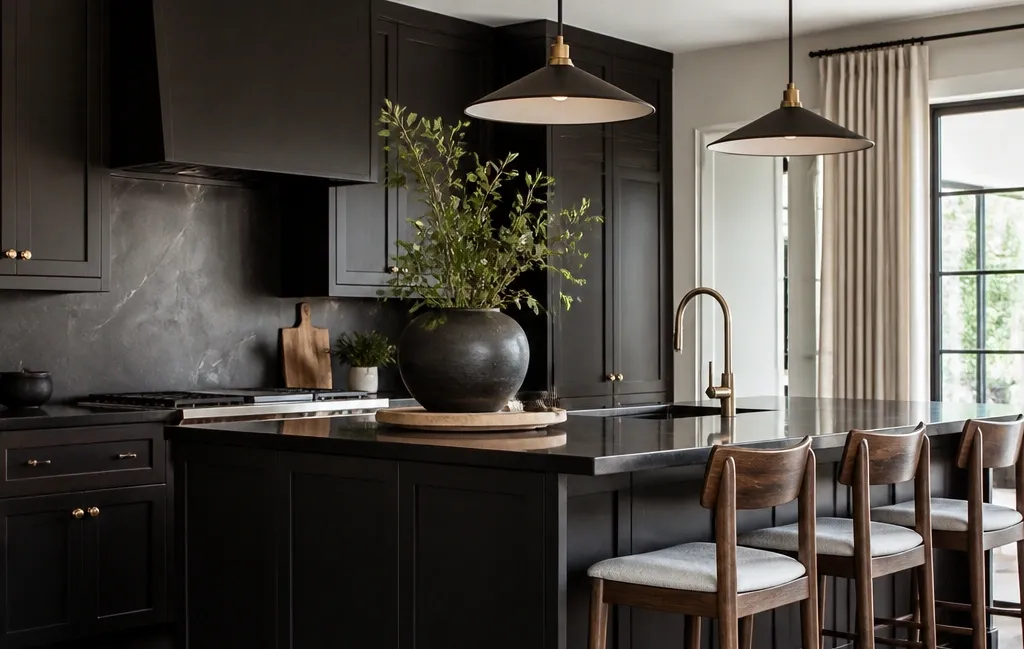
The appeal of combining dark cabinetry with dark flooring lies in visual weight. Light kitchens feel energetic and airy, but they can sometimes lack character. Dark tones anchor a room, defining its perimeter and creating a sense of permanence. When both the base (floors) and the vertical elements (cabinets) share a similar depth, the remaining components—hardware, countertops, backsplashes, and decor—become the focal points.
A common misconception is that this palette only suits large, sun-drenched homes. That is simply not true. Even in standard suburban layouts or smaller apartments, a dark kitchen adds architectural drama. The secret is avoiding a flat, monochromatic box. Instead, aim for layers of espresso, charcoal, navy, and deep walnut that interact dynamically. By varying the finish and texture across these dark surfaces, you create a space that shifts in appearance as natural and artificial light changes throughout the day.
Matching Undertones Between Cabinets and Flooring
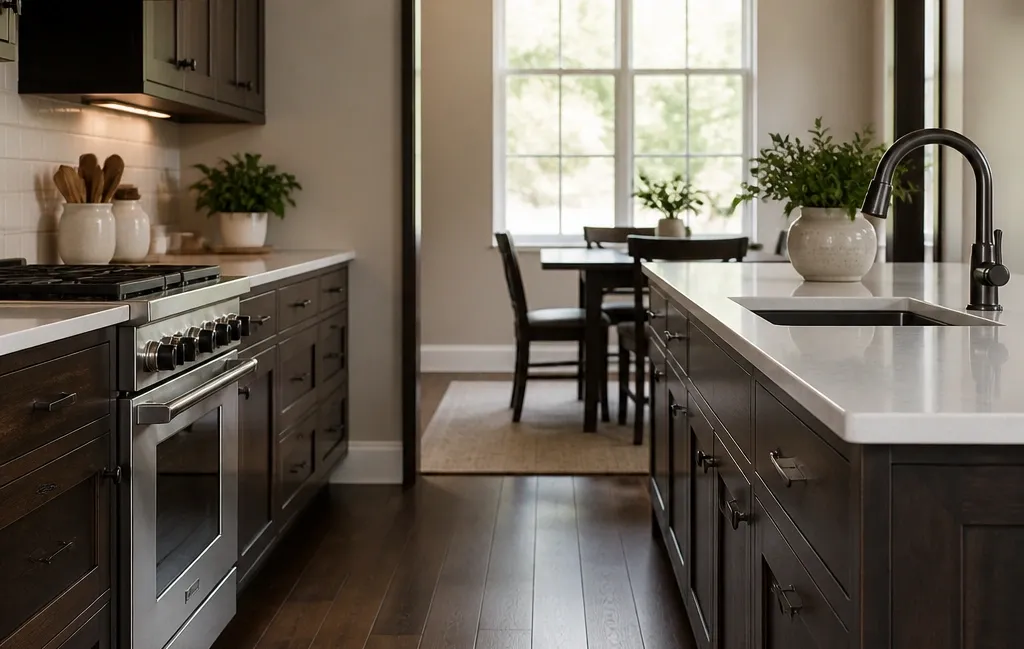
The single biggest mistake when styling dark kitchen cabinets with dark wood floors is ignoring undertones. Dark is not a single color; it is a spectrum. If your hardwood floors have warm, reddish-brown mahogany undertones, pairing them with cool, slate-gray cabinets will create visual friction. The two elements will fight each other rather than blend into a cohesive backdrop.
To get this right, identify the dominant undertone of your existing or planned flooring:
- Warm undertones (red, orange, yellow): Found in woods like cherry, mahogany, and warm walnut. Pair these with espresso, deep olive, or warm charcoal cabinets.
- Cool undertones (blue, gray, green): Found in ebony stains, ash, or gray-washed oak. Pair these with navy, slate, or true black cabinets.
- Neutral undertones: True blacks or heavily desaturated browns. These are the most forgiving and can bridge warm and cool cabinet choices.
When selecting samples, always view them together in the actual kitchen under both daylight and evening artificial light. A stain that looks perfectly matched in the showroom can shift dramatically once installed. For more guidance on spatial planning, understanding the standard mounting height ensures your dark cabinetry doesn’t visually crowd the floor plane.
Choosing the Right Cabinet Finish and Door Style
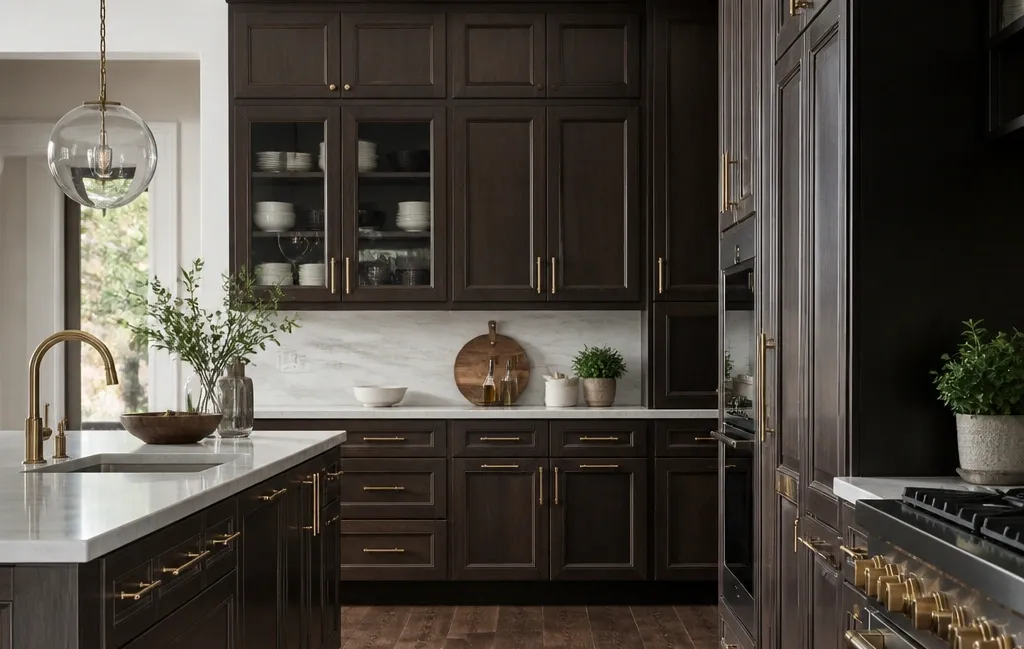
Finish and profile dictate how light interacts with your dark surfaces. In 2026, matte and satin finishes remain the preferred choice for dark cabinetry. High-gloss dark cabinets reflect light aggressively, which can highlight every fingerprint, smudge, and speck of dust. A matte or low-sheen finish absorbs light softly, giving the wood or painted surface a velvety, premium texture.
However, if both your floor and your cabinets are entirely matte, the room can feel flat. Introduce subtle variation. If your dark wood floors have a satin polyurethane seal, consider a slightly flatter matte paint for the cabinets.
Door style matters equally. Completely flat slab doors on dark cabinets can read as overly severe or commercial. Shaker-style doors, or those with a subtle inner bead, introduce shadow lines. These micro-shadows break up the expanse of dark color, adding architectural interest without introducing a lighter hue. If you prefer a modern slab look, incorporate integrated finger pulls or channel hardware to create physical grooves that catch the light.
Layering Lighting to Prevent a Cave-Like Feel
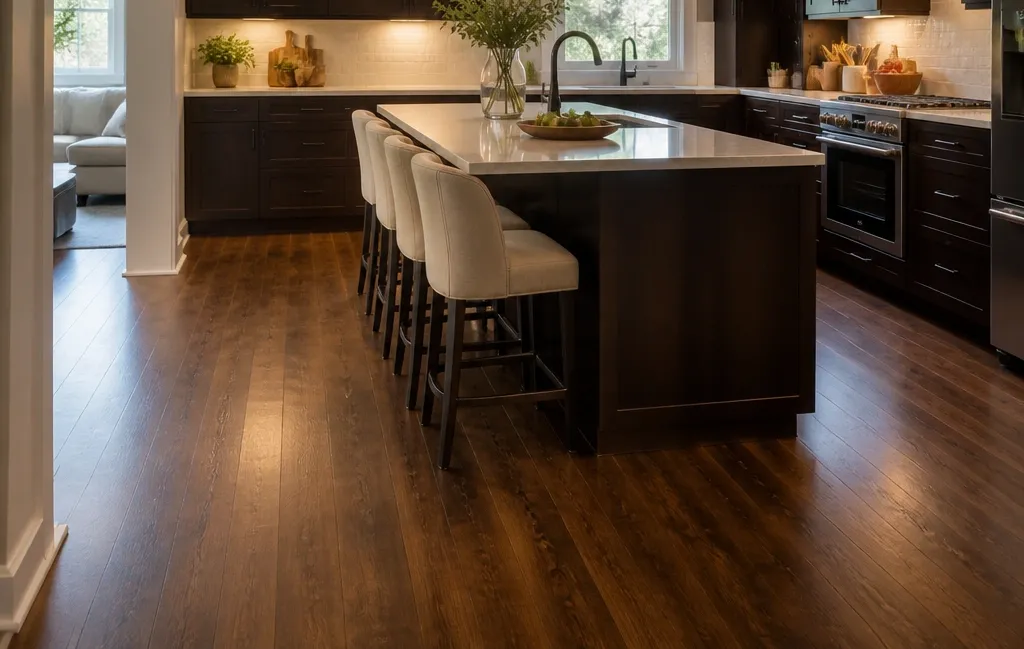
Because dark surfaces absorb light rather than reflecting it, a robust lighting plan is non-negotiable. Relying on a single central ceiling fixture will leave your corners in deep shadow and make the kitchen feel oppressive. Professional designers follow the guidelines established by organizations like the Illuminating Engineering Society to ensure adequate task and ambient illumination in low-reflectivity spaces.
You need three distinct layers of light:
- Ambient lighting: Recessed LED ceiling lights spaced evenly to wash the room in general illumination. Avoid placing them too far apart; dark rooms require a tighter grid than light rooms.
- Task lighting: Under-cabinet LED strips are essential. They illuminate your countertops for food prep and, crucially, create a horizontal band of light that visually separates the dark upper cabinets from the dark lower cabinets and floor.
- Accent lighting: Pendant lights over an island or dining peninsula draw the eye upward. Choose fixtures with metallic interiors (like brass or copper) to bounce warm light downward.
Pay strict attention to color temperature. Bulbs rated around 3000K to 3500K provide a neutral white light. Anything below 2700K will turn your dark wood muddy and yellow, while anything above 4000K will make the space feel sterile and clinical.
Selecting Countertops That Provide Visual Relief
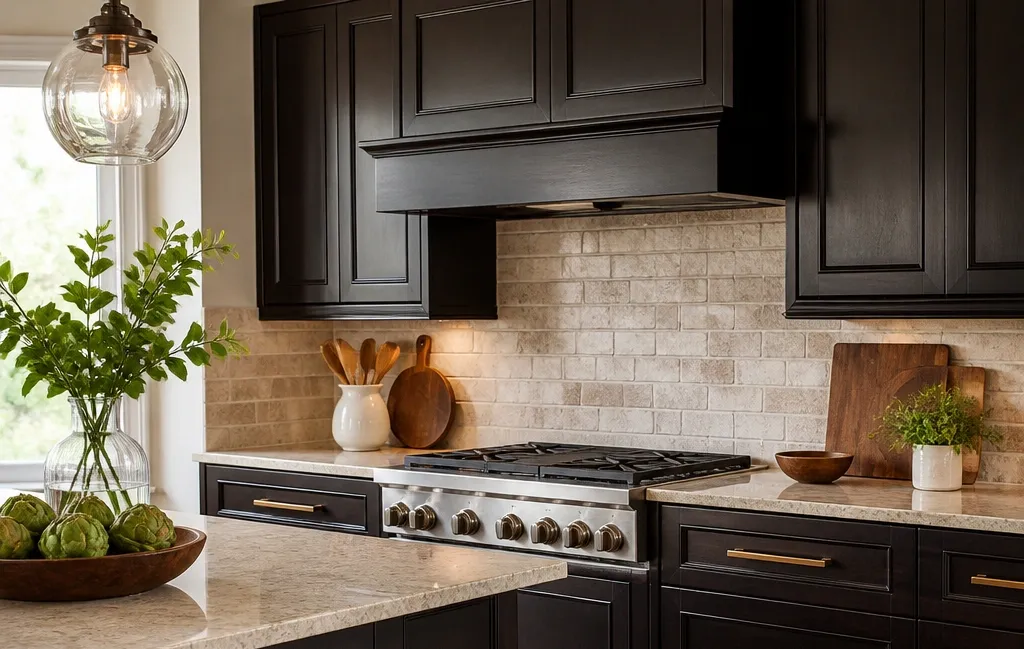
Your countertops act as the primary horizontal break between dark upper and lower elements. While a fully dark kitchen (black cabinets, black counters, dark floors) is a valid ultra-modern choice, it demands exceptional lighting and is unforgiving to live in daily. For most homes, introducing a lighter countertop is the most effective way to balance the room.
| Countertop Material | Visual Effect | Maintenance Level | Best Undertone Match |
|---|---|---|---|
| White Marble / Quartzite | High contrast, luxurious, bright | High (requires sealing) | Warm or Cool |
| Light Gray Quartz | Subtle contrast, modern, uniform | Low | Cool |
| Warm Cream Granite | Soft transition, traditional | Medium | Warm |
| Butcher Block (Light Maple) | Textural contrast, organic feel | High (requires oiling) | Warm |
White or light gray stone instantly lifts the visual weight of the room. The light material acts as a horizon line, giving the eye a place to rest before moving down to the dark wood floors. If you prefer a seamless look but want to avoid total darkness, choose a countertop with heavy, dramatic veining—a dark quartzite with thick white veins bridges the gap between your cabinets and your backsplash beautifully.
Backsplash Strategies for Dark Kitchens
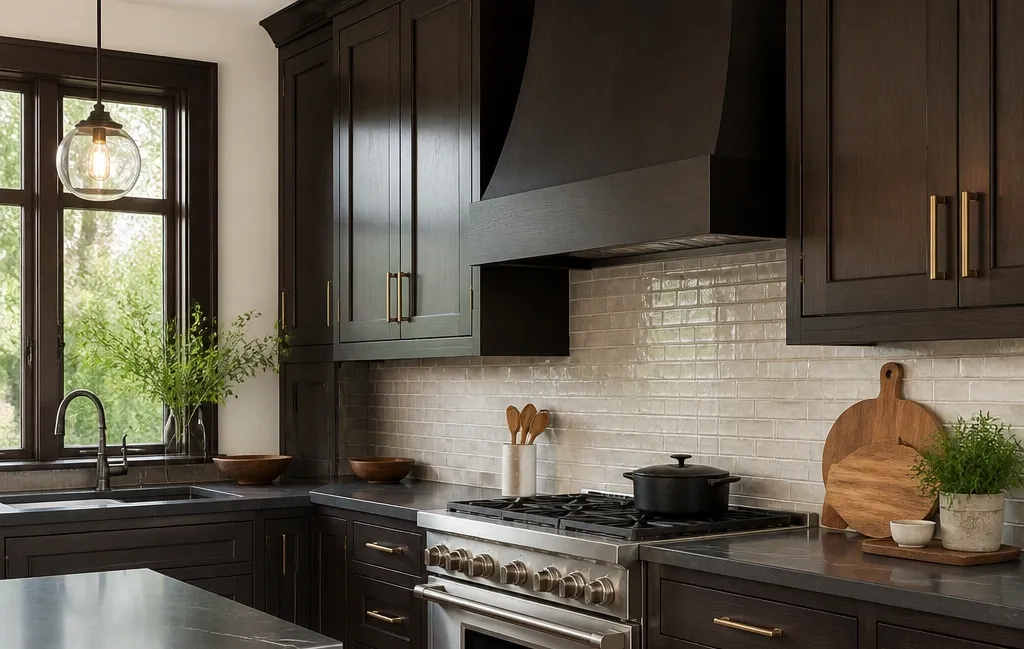
The backsplash is your opportunity to introduce texture, pattern, or a stark tonal shift. In a kitchen defined by dark cabinets and dark wood floors, a light-colored backsplash is usually the safest and most effective route. Crisp white zellige tile adds handmade texture and reflects light unevenly, creating a shimmering effect that prevents the wall from looking flat.
If white feels too stark against your specific dark tones, consider a medium-toned natural stone slab, a muted terracotta, or a pale greige subway tile. The goal is to establish a clear boundary. When the backsplash is too close in value to the cabinets, the wall becomes a void.
For those who want to lean into the moody aesthetic, a dark backsplash can work, but only if it introduces a completely different material. For example, dark cabinets paired with a dark, highly reflective mirrored or glossy glass backsplash will bounce light back into the room, compensating for the dark color.
Hardware and Metallic Accents
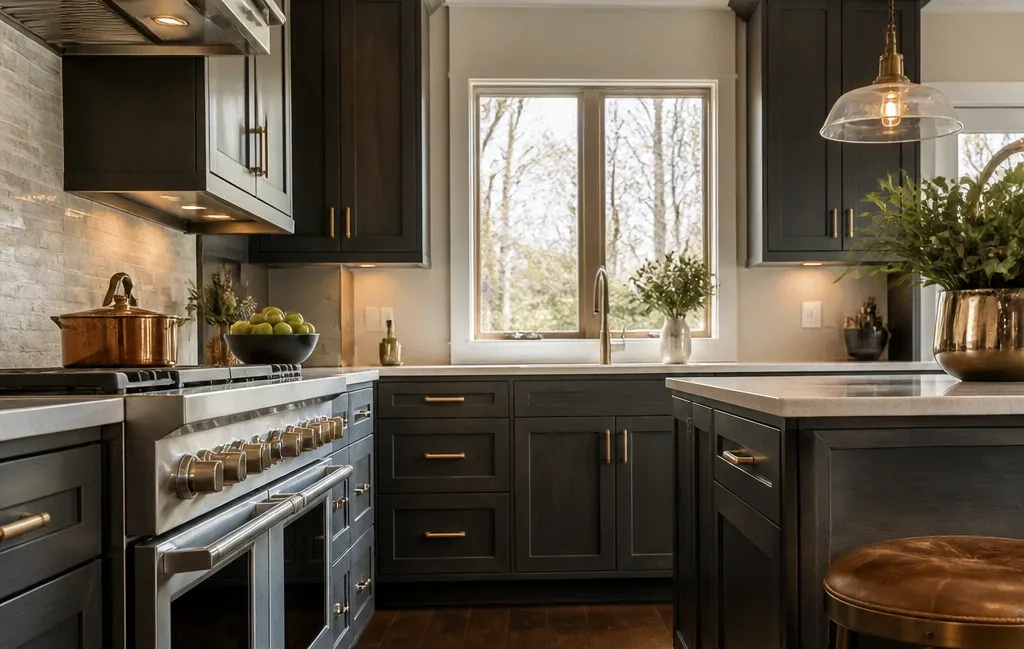
Hardware serves as the jewelry of a dark kitchen. Against deep cabinetry, your choice of drawer pulls, knobs, and faucets will either disappear into the background or pop dramatically. Both approaches are valid, but they serve different design goals.
- Tone-on-tone (Matte Black): Choosing matte black hardware for dark cabinets creates a seamless, minimalist look. This works exceptionally well in contemporary or transitional spaces where you want the architecture, rather than the details, to stand out.
- High-contrast metals (Brass, Gold, Copper): Unlacquered brass or polished gold hardware provides a brilliant, warm contrast against navy, charcoal, or espresso cabinets. The metal catches ambient and pendant light, acting as tiny reflectors scattered throughout the room.
- Cool metals (Polished Nickel, Chrome): These offer a sharp, crisp contrast that leans more industrial or traditional. They pair best with cool-toned dark cabinets and gray-stained floors.
Ensure consistency. Mixing three different metal finishes in a dark kitchen creates visual clutter. Stick to one dominant metal for cabinet hardware and carry it through to your sink faucet and pendant light details. Just as precision matters when monitoring cooking temperatures with reliable tools, exactness in your hardware alignment and finish selection elevates the entire room.
Incorporating Texture and Decorative Elements
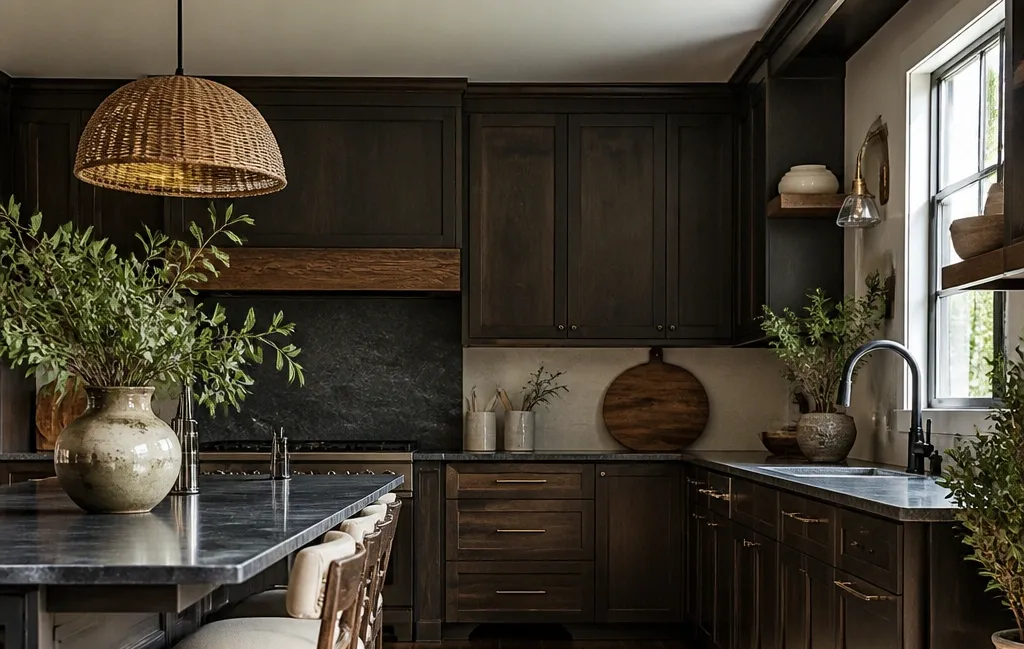
When color contrast is minimized by a dark-on-dark palette, textural contrast must do the heavy lifting. If everything is smooth and dark, the kitchen will feel lifeless. Break up the expanses of cabinetry and flooring with varied materials.
Runners and rugs are incredibly practical here. A vintage-style runner with faded cream, rust, and navy threads placed between an island and the main counter run breaks up the continuous dark wood floor. It also softens the acoustics of the room, which tend to echo more when hard, dark surfaces dominate.
Consider swapping out a few upper cabinet doors for open shelving in a lighter wood tone, such as white oak or bleached ash. This introduces “air” into the upper half of the kitchen. Displaying light-colored ceramics, clear glassware, or wooden cutting boards on these shelves provides necessary relief. When outfitting these spaces with everyday culinary gear, comparing appliance footprints helps maintain a clutter-free counter, much like evaluating different countertop cooker sizes before buying.
Managing Wall Colors and Ceiling Treatments
In a kitchen with dark cabinets and dark wood floors, your walls and ceiling are vital tools for maintaining a sense of volume. Do not paint the walls a dark color unless the room has massive windows and soaring ceilings. For standard eight- or nine-foot ceilings, keep the walls light. Crisp white, soft cream, or pale greige allows the eye to travel outward, preventing the dark cabinetry from feeling like it is closing in.
The ceiling should almost always remain a flat, bright white. A white ceiling acts as a giant reflector, bouncing light from your pendants and recessed fixtures back down into the workspace. Painting the ceiling dark, or installing heavy dark wood beams without ample natural light, will visually compress the room and make it feel suffocating. Keep the overhead plane simple, clean, and highly reflective.
Addressing Small Spaces and Layout Concerns
Homeowners frequently worry that dark kitchen cabinets with dark wood floors will make a small kitchen feel microscopic. While dark colors recede visually, they do not change the physical dimensions of the room. A small kitchen feels cramped due to blocked sightlines, clutter, and poor lighting—not solely because of paint color.
To keep a compact dark kitchen feeling open, prioritize verticality. Extend your upper cabinets all the way to the ceiling. This draws the eye upward and eliminates the dusty, awkward gap between short cabinets and the roofline. Alternatively, remove upper cabinets entirely on one wall, replacing them with floating shelves or a large piece of art.
Wider floorboards also help. If your dark wood floors use narrow two-inch planks, the sheer number of seams can make the floor look busy and the room feel tight. Opting for wide-plank flooring (five to seven inches) creates longer, uninterrupted visual lines that expand the perceived footprint of the space. Proper spatial planning goes beyond aesthetics; ensuring ergonomic placement makes navigating a darker, moodier kitchen effortless.
Daily Maintenance for Dark Surfaces
A practical reality of this design choice is maintenance. Dark surfaces, particularly dark wood floors and matte dark cabinets, show dust, pet hair, water spots, and cooking grease far more readily than medium-toned or light surfaces. Committing to this aesthetic means committing to a consistent cleaning routine.
For dark wood floors, sweep or vacuum with a hard-floor attachment daily to prevent abrasive grit from dulling the finish. Use a damp microfiber mop with a pH-neutral wood cleaner weekly. Avoid steam mops, as excessive moisture can warp dark stained wood and lift the finish.
For dark cabinets, skip heavy wax polishes that leave a streaky, hazy residue on matte paint. A soft microfiber cloth lightly dampened with warm water and a drop of dish soap is usually enough to cut through cooking grease. Always dry the surface immediately with a second clean cloth to prevent water spots from etching into the finish. Keeping your kitchen pristine ensures the rich tones remain the focal point rather than the smudges.
Common Mistakes to Avoid
Even experienced DIYers stumble when coordinating deep tones. Avoid these frequent missteps to ensure your kitchen looks professionally designed:
- Near-matching stains: Trying to match the cabinet stain exactly to the floor stain rarely works. Slight variations in dye lots and wood species make them look like a failed attempt at matching. Instead, aim for a deliberate contrast—either significantly different shades of dark, or entirely different undertones.
- Ignoring natural light shifts: A dark navy cabinet might look perfect at noon but turn pitch black at 6 PM. Always test large swatches in the room over a full 24-hour cycle before finalizing your order.
- Overlooking appliance finishes: Stainless steel appliances can look jarringly bright against a moody dark backdrop. Consider panel-ready appliances that hide behind dark cabinet fronts, or opt for black stainless steel to maintain the cohesive tone.
- Neglecting grout color: If you use a light backsplash tile but pair it with dark gray grout, the grout lines will dominate the wall. Match your grout closely to your tile color to keep the backsplash reading as a unified block of light.
Conclusion
Styling dark kitchen cabinets with dark wood floors is a bold design choice that yields a deeply sophisticated, grounding space when executed correctly. The success of this aesthetic does not rely on finding identical colors, but on mastering the interplay of undertones, maximizing layered lighting, and introducing strategic contrast through countertops, hardware, and textiles. By keeping your ceiling bright, your metals intentional, and your maintenance routine consistent, you can achieve a moody kitchen that feels luxurious rather than cavernous.
Your immediate next step is to gather physical samples of your chosen floor stain, cabinet finish, and countertop material. Lay them flat on a table together near a window in your home, and observe how they interact at different times of day before purchasing anything. If you are ready to explore how spatial proportions affect your layout, review our guide on optimal cabinet placement to finalize your measurements.
Frequently Asked Questions
Should I choose matte or glossy finishes for dark cabinets?
Matte and satin finishes are the industry standard for dark cabinetry in 2026. High-gloss dark surfaces reflect light harshly and highlight every fingerprint, smudge, and speck of dust. A matte finish absorbs light softly, providing a velvety, premium texture that hides minor imperfections much better. Save the shine for your metallic hardware or glass pendant lights instead.
How do I prevent a dark kitchen from feeling like a cave?
Prioritize contrast on your horizontal planes. Install light-colored countertops and a bright backsplash to create visual boundaries between the dark upper and lower cabinets. Crucially, implement a three-tier lighting plan—ambient recessed lights, task-focused under-cabinet LEDs, and accent pendants—to ensure no corner falls into deep shadow.
Does the wood grain matter on dark floors?
Yes, wood grain significantly impacts the final mood. A tight, uniform grain reads as modern and sleek, complementing flat-panel or minimalist Shaker cabinets. Heavy knots and pronounced grain patterns lend a rustic, organic feel. If your cabinets are very dark and solid, a floor with a slightly visible grain pattern adds necessary texture so the bottom half of the room doesn’t look like a void.
What is the best wall color for a kitchen with dark cabinets and dark floors?
Crisp, clean white or a very pale warm cream is the most effective choice. Because the floors and cabinets absorb so much light, the walls must reflect it back into the room. Avoid painting the walls a dark color unless the kitchen features floor-to-ceiling windows, as dark walls combined with dark cabinets and floors will severely compress the space.
Which countertop materials work best with this color palette?
Light-colored stones such as white marble, Calacatta quartz, or pale quartzite offer the strongest contrast. They act as a bright horizon line that visually separates the dark upper cabinets from the dark base cabinets and flooring. If you prefer a darker countertop for durability reasons, choose one with prominent, light-colored veining to break up the mass.
Can I mix dark painted cabinets with dark stained wood floors?
Absolutely, and this is often the preferred approach. Mixing a painted surface (like charcoal or navy cabinets) with a stained natural surface (like walnut or espresso floors) inherently introduces textural variation. This prevents the room from looking flat and ensures the two dark elements complement rather than compete with one another.