You have marinated the tenderloin, watched the grill marks form, and now comes the moment of doubt. You slice into the center and see a hint of pink. Is it a juicy masterpiece or a food safety risk? For decades, home cooks overcooked pork until it resembled shoe leather out of fear of foodborne illness. That era is over. Modern farming and updated science mean you can serve pork that is both perfectly safe and genuinely delicious.
The short answer: whole cuts like loins, chops, and tenderloins are safe at an internal temperature of 145°F (63°C) followed by a mandatory three-minute rest. Ground pork must always reach 160°F (71°C). Large, tough cuts like pork shoulder require temperatures between 195°F and 205°F (91°C–96°C) so their dense connective tissues melt into rich gelatin. You can also read our guide on what temperature should ground beef be cooked to.
This guide breaks down exactly how to hit those targets every time, why the numbers matter, and the practical techniques that separate dry, gray meat from restaurant-quality results.
Why the USDA Changed the Rules on Pork
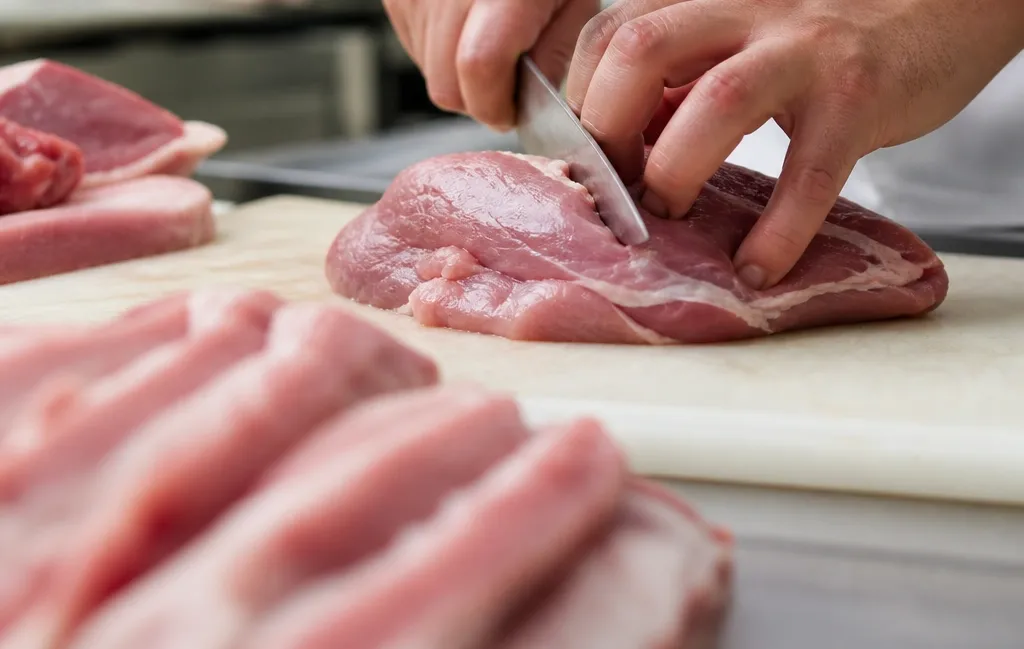
Many older cookbooks still recommend cooking all pork to 160°F or even 170°F. That advice stems from historical fears of trichinosis, a parasitic disease once common in hogs. Today, modern commercial farming practices have virtually eliminated this parasite from the supply chain. Because the risk dropped dramatically, the USDA lowered its official guidance for whole muscle cuts to 145°F with a three-minute rest. You can also read our guide on why is my meat thermometer giving different readings in different spots.
In practice, this change is a game-changer for texture. When you pull a lean pork loin at 145°F, the muscle fibers remain relaxed, holding onto their natural juices. Push that same cut past 155°F, and the proteins tighten aggressively, squeezing moisture out onto your cutting board. A reliable digital thermometer is the only way to guarantee you stop cooking at the exact right second. If you are currently relying on a basic dial model, upgrading to a precise instrument will immediately improve your results.
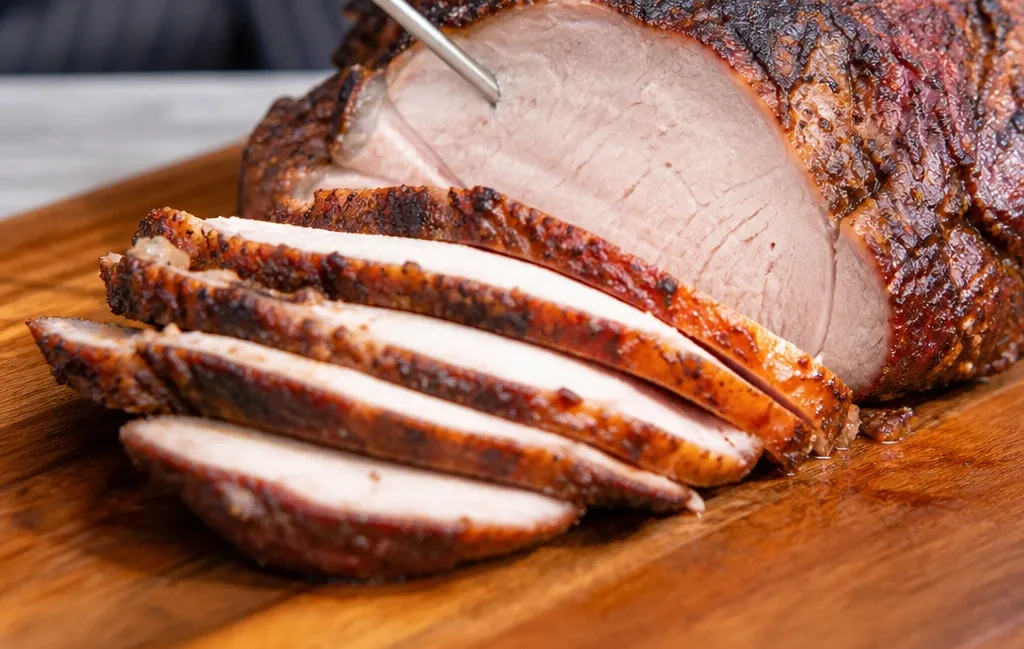
A fast-reading probe placed in the thickest part of the chop ensures accurate readings.
The Science Behind the Three-Minute Rest
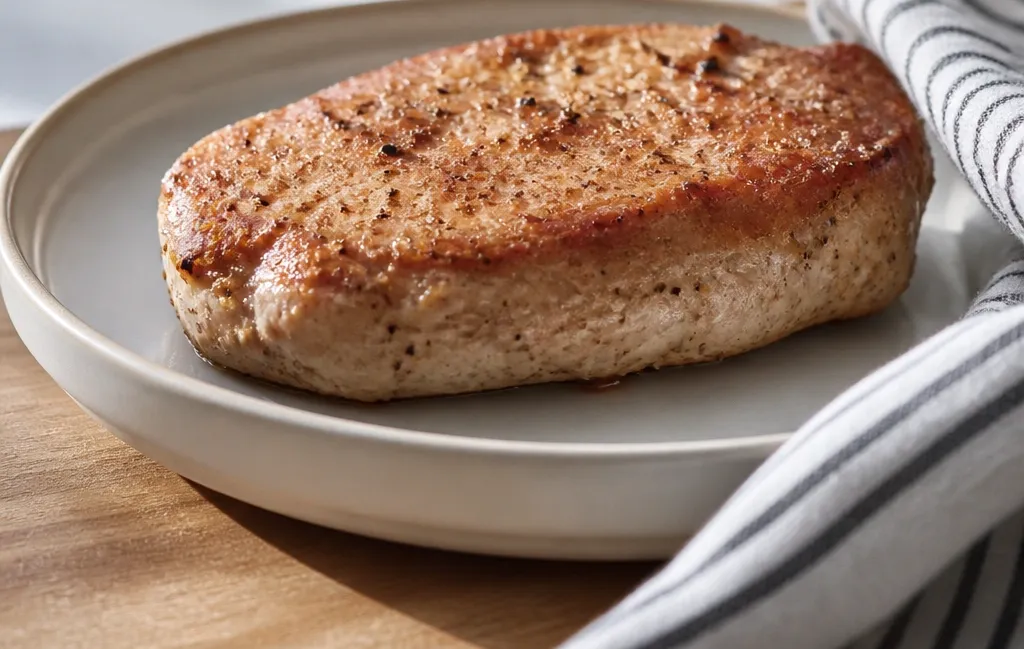
A three-minute rest after removing whole cuts from the heat is not a culinary suggestion; it is a food safety requirement. During those minutes, the internal temperature either remains constant or continues to rise slightly. This sustained heat finishes destroying any lingering pathogens.
Beyond safety, resting allows the pressurized juices inside the meat to redistribute evenly through the muscle fibers. If you slice a pork chop the second it leaves the pan, those juices bleed out instantly, leaving the meat dry and chalky. Set the meat on a warm plate, tent it loosely with foil if you like, and wait. Patience here is what keeps your dinner moist.
Pork Internal Temperature Chart by Cut
Not every piece of pork should be cooked to the same temperature. While 145°F is the safety floor for whole cuts, the ideal target depends entirely on the amount of fat and collagen in the specific muscle. A lean chop cooked to 200°F is inedible, but a pork shoulder pulled at 145°F is too tough to chew.
Use this chart as your quick reference when planning dinner:
| Pork Cut | Minimum Safe Temp | Ideal Culinary Temp | Best Cooking Method |
|---|---|---|---|
| Bone-in Pork Chops | 145°F (63°C) | 145°F – 150°F | Pan-sear, Grill |
| Pork Tenderloin | 145°F (63°C) | 145°F | Roasting, Grilling |
| Pork Loin Roast | 145°F (63°C) | 145°F – 150°F | Slow roasting |
| Ground Pork / Patties | 160°F (71°C) | 160°F | Frying, Baking |
| Fresh Sausage | 160°F (71°C) | 160°F | Grilling, Sautéing |
| Pork Shoulder (Butt) | 145°F (63°C)* | 195°F – 205°F | Smoking, Braising |
| Baby Back Ribs | 145°F (63°C)* | 190°F – 200°F | Low and slow |
| Pre-cooked Ham | 140°F (60°C) | 140°F | Reheating |
| Fresh (Raw) Ham | 145°F (63°C) | 145°F – 150°F | Roasting |
*Note: While 145°F makes tough cuts technically safe to eat, they will be rubbery and unpalatable. Always push them to the ideal culinary temp for proper texture.
Lean Cuts: Chops, Loins, and Tenderloins
Lean cuts contain very little intramuscular fat. They include the center-cut loin, the tenderloin, and standard chops. Your target is strictly 145°F (63°C). At this temperature, the meat will have a slight blush of pink in the center and will be exceptionally juicy. Anything over 155°F starts to turn grainy and dry.
Ground Pork: Sausages, Meatballs, and Patties
When pork is ground, any bacteria originally living on the surface of the meat gets mixed throughout the entire batch. This is why the 145°F rule does not apply. You must cook ground pork to 160°F (71°C) so the center of the patty or sausage reaches a lethal temperature for pathogens. The meat should be fully opaque with no pink remaining.
If you make homemade sausages, keep the meat and equipment ice-cold until the moment it hits the heat. Warm fat smears during grinding, resulting in a crumbly, dry sausage rather than a snappy, juicy one. Choosing the right appliance for browning these links matters too; understanding how different countertop ovens circulate heat helps prevent burning the outside before the center hits 160°F. Evaluating air circulation differences between models can save your batch from uneven cooking.
Tough, Fatty Cuts: Shoulder and Ribs
Pork shoulder (often labeled pork butt) and ribs are packed with tough connective tissue called collagen. Collagen does not begin to dissolve into silky gelatin until the meat spends hours above 160°F, with the real magic happening between 195°F and 205°F (91°C–96°C).
If you try to slice a pork shoulder at 145°F, it will fight your knife. But if you smoke or braise it until it reaches 203°F, it will yield effortlessly to a pair of forks. When smoking large shoulders overnight, a leave-in probe system is essential so you do not have to open the smoker lid constantly. Comparing reliable wireless monitoring setups ensures you maintain steady pit temperatures without losing sleep.
Slow-smoked pork shoulder becomes tender only after reaching 195°F to 205°F internally.
How to Measure Pork Internal Temperature Correctly
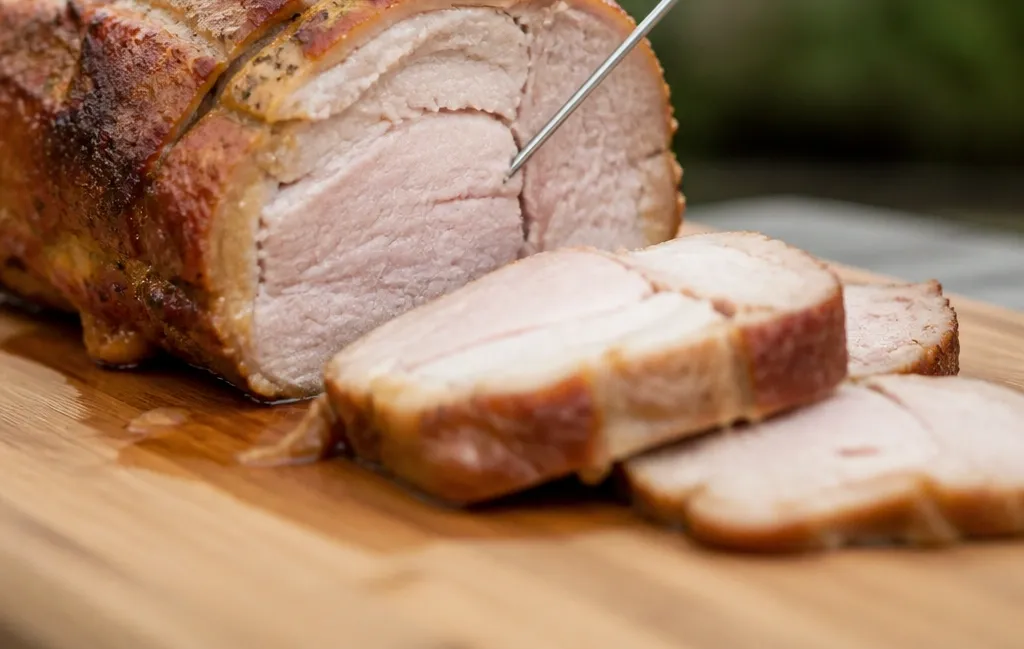
Getting an accurate reading requires more than just poking the meat randomly. Placing the probe in the wrong spot yields false numbers, leading to undercooked risks or ruined dinners. In my experience, improper probe placement is the most common reason home cooks fail to hit their targets.
- Target the thickest part: Insert the probe tip into the geometric center of the thickest area of the meat.
- Avoid bone, fat, and gristle: Bones conduct heat faster than muscle, giving you an artificially high reading. Pockets of pure fat insulate the probe, giving you a low reading. Aim for solid muscle.
- Check multiple spots: On a large roast or a whole fresh ham, test two or three different areas. The edges will always be hotter than the deep center.
- Account for carryover cooking: Meat continues to cook after leaving the heat source. For a small pork chop, the temperature might rise 2°F to 3°F. For a massive pork crown roast, it can jump 10°F. To hit a final resting temperature of 145°F, pull the roast off the heat when your thermometer reads 138°F to 140°F.
If your readings seem erratic or jump wildly when you move the probe slightly, your tool might be failing. Learning to recognize signs of inconsistent sensor behavior prevents dangerous guesswork in the kitchen.
Understanding Carryover Cooking
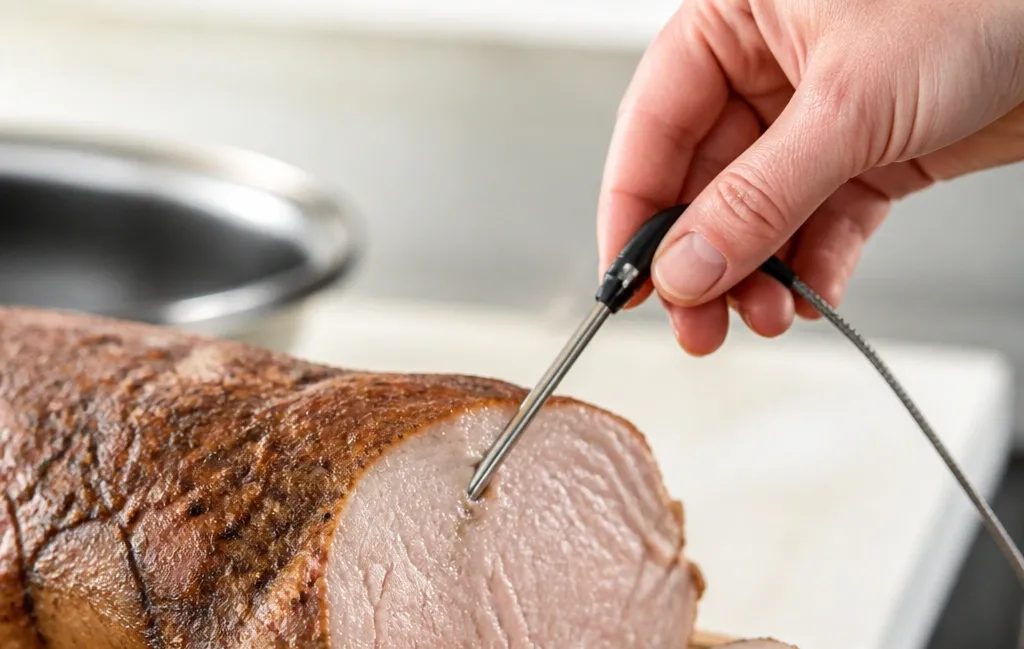
Carryover cooking happens because the exterior of the meat is significantly hotter than the interior when you take it off the grill or out of the oven. That thermal energy continues to travel inward toward the cooler center even after the heat source is removed.
This principle dictates when you pull your pork. If you wait until the thermometer says 145°F while the chop is still sitting in a hot cast-iron skillet, the residual heat in the pan and the meat's own crust will push the center up to 155°F by the time you sit down to eat. Always pull early, let the rest period do the work, and trust the physics of heat transfer.
Safety Factors Beyond the Thermometer
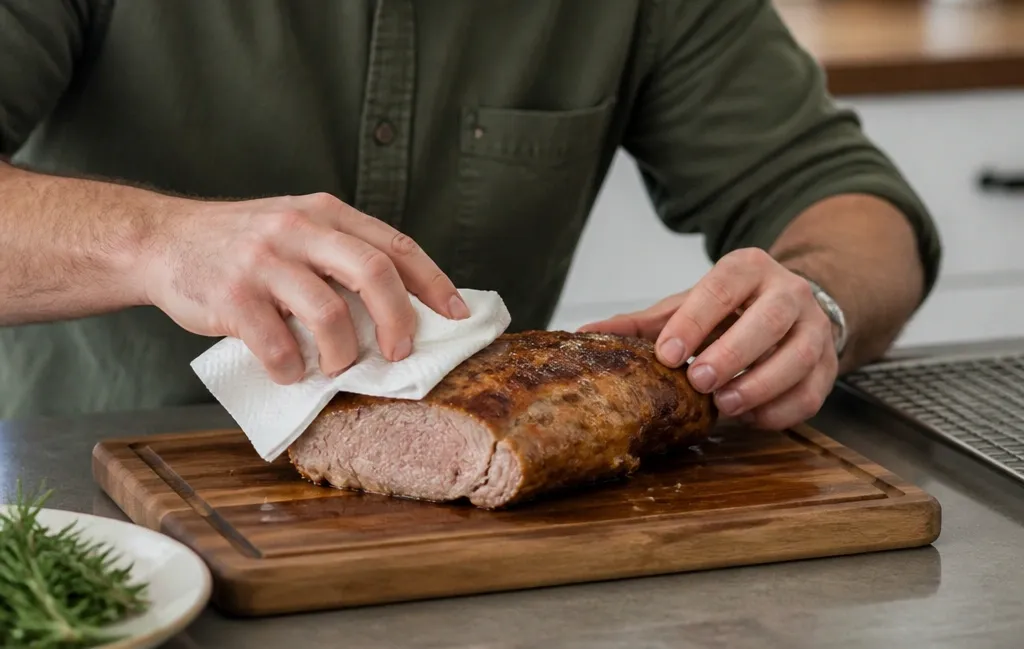
Hitting the right internal temperature is critical, but food safety spans the entire process from the grocery store to your refrigerator.
The Danger Zone
Bacteria multiply rapidly between 40°F and 140°F (4°C and 60°C). Never leave raw or cooked pork sitting on the counter for more than two hours. If you are hosting a summer barbecue and the ambient temperature is above 90°F, that safe window shrinks to just one hour. Keep raw meat chilled until the moment it goes on the heat.
Preventing Cross-Contamination
Never place freshly cooked pork back onto the same unwashed plate that held it raw. Wash your hands, cutting boards, and knives with hot, soapy water immediately after handling raw pork. Even if your chop is cooked to a perfect 145°F, it can become contaminated again if it touches a surface carrying raw meat juices.
Appearance vs. Reality
Do not trust your eyes to judge doneness. Some pork remains stubbornly pink even when fully overcooked, particularly if it has been smoked, cured, or cooked at high altitudes. Conversely, ground pork patties can turn brown well before they actually reach the safe 160°F mark. Color is a visual cue, but a thermometer provides proof. Just as you would follow a specific chart when preparing poultry, treating pork with the same rigorous temperature standards guarantees consistent safety across all your proteins.
Common Mistakes When Cooking Pork
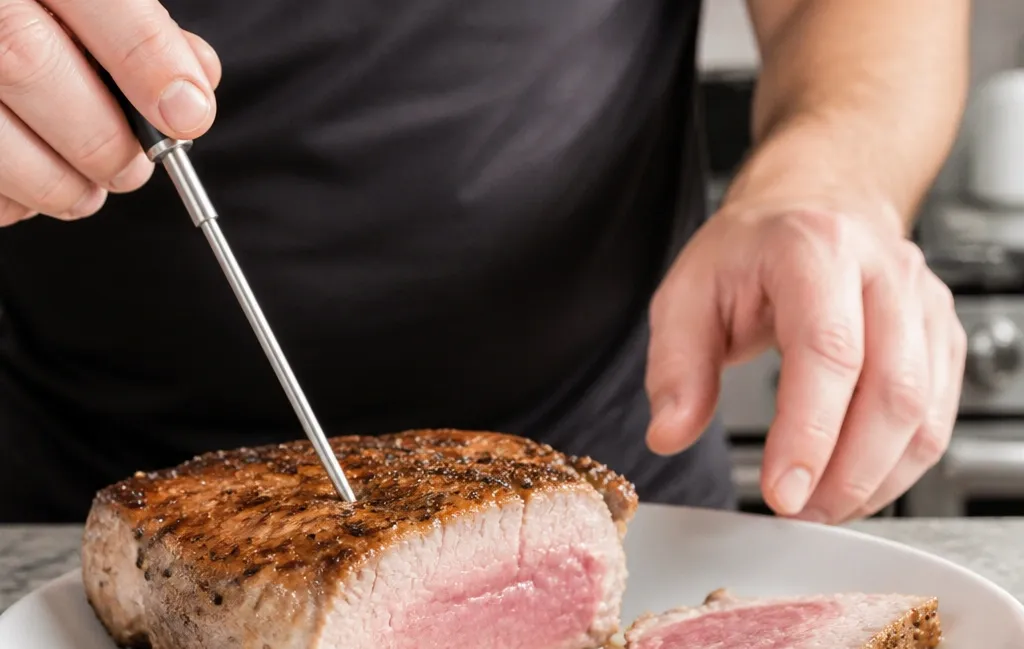
Even experienced home cooks fall into bad habits when preparing pork. Avoiding these pitfalls will immediately elevate your meals:
- Cooking by time instead of temperature: A recipe stating "bake for 25 minutes" is merely an estimate based on the author's specific oven and meat thickness. Your setup is different. Always rely on your probe.
- Ignoring calibration: If your thermometer is off by five degrees, your safety margin vanishes. Test it regularly in a glass of ice water; it should read exactly 32°F (0°C). If it drifts, recalibrate it or replace the batteries. Keeping track of fading power indicators saves you from mid-cook failures.
- Thawing on the counter: Thawing pork at room temperature leaves the outer layers sitting in the Danger Zone while the core remains frozen. Always thaw meat in the refrigerator overnight, or use the cold-water submersion method if you are in a rush.
- Crowding the pan: Packing too many chops into a single skillet drops the pan's temperature drastically. The meat steams in its own juices instead of developing a flavorful sear. Give each piece room to breathe.
- Slicing too soon: Skipping the rest period ruins the texture you worked so hard to achieve. Set a timer for three minutes minimum.
Handling Leftovers Safely
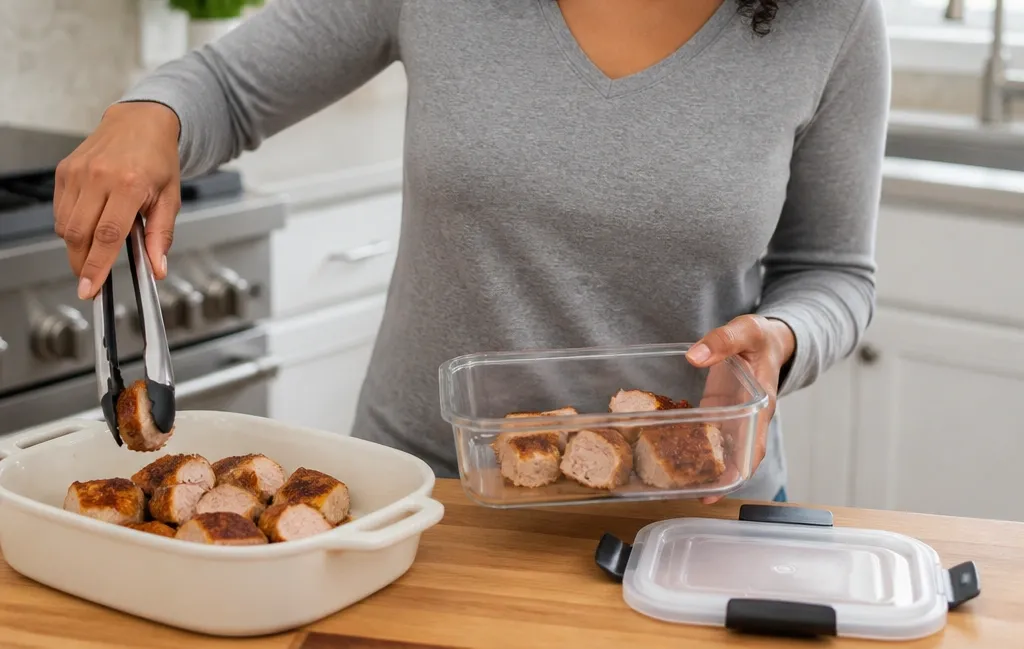
Proper storage is the final step in cooking pork safely. Slice or shred your leftovers and place them in shallow, airtight containers within two hours of cooking. Shallow containers allow the meat to cool quickly through the Danger Zone once placed in the fridge.
Cooked pork maintains peak quality for three to four days in the refrigerator. If you need more time, freeze it. When reheating, ensure the internal temperature reaches 165°F (74°C) to eliminate any bacteria that may have developed during storage. Using a dedicated probe for checking leftover temperatures takes the guesswork out of meal prep.
Frequently Asked Questions
Is it okay if my pork chop is still pink?
Yes. A light pink hue in the center of a whole cut like a chop, loin, or tenderloin is perfectly safe and desirable, provided the meat reached 145°F and rested for three minutes. Ground pork, however, should never be served pink. Pinkness in smoked meats is also normal and is known as a "smoke ring," caused by chemical reactions with the wood combustion gases.
Why does ground pork need a higher temperature than whole cuts?
Bacteria naturally live on the exterior surfaces of raw meat. When you sear a whole chop, the intense heat instantly kills everything on the outside. However, when meat is passed through a grinder, those surface bacteria are pushed deep into the center of the mixture. You must cook ground pork to 160°F to ensure the heat penetrates every particle of the meat.
How do I know when ribs are done if I cannot use a thermometer?
Ribs are notoriously difficult to measure with a probe because the meat is thin and layered directly over bones. Most pitmasters rely on the "bend test." Pick up the slab of ribs with tongs from the center. If the meat cracks on the surface and the slab bends downward easily, it is done. This physical cue usually aligns with an internal temperature between 190°F and 200°F.
Can I cook pork straight from frozen?
Technically yes, but it is not recommended. Cooking frozen pork takes roughly 50% longer, and the exterior often dries out and overcooks before the frozen core reaches a safe temperature. Thawing in the refrigerator overnight ensures even cooking and a vastly superior texture.
Do I need a special thermometer for thick roasts?
For large cuts like pork shoulder or whole bone-in loins, a leave-in probe thermometer is highly recommended. Instant-read thermometers are fantastic for quick checks on chops, but opening an oven or smoker repeatedly to check a large roast causes massive temperature fluctuations. A leave-in probe lets you monitor the progress continuously from outside the cooking chamber. Selecting a dependable leave-in model makes long smoking sessions significantly easier to manage.
Conclusion
Cooking pork safely and deliciously comes down to respecting the science of temperature. The days of serving dry, overcooked meat out of misplaced fear are behind us. Remember the core rules: 145°F plus a three-minute rest for whole cuts, 160°F for anything ground, and upwards of 195°F for tough cuts meant to be shredded. Combine these targets with proper probe placement, an understanding of carryover cooking, and strict hygiene practices, and you will consistently produce restaurant-quality results.
Your immediate next step is simple: verify your thermometer's accuracy tonight using the ice water test. Once you confirm your tool is telling the truth, you can confidently fire up the grill or preheat the oven, knowing exactly when your pork is perfectly safe and ready to eat.



4 thoughts on “Pork Internal Temperature Guide: How to Cook It Safely”