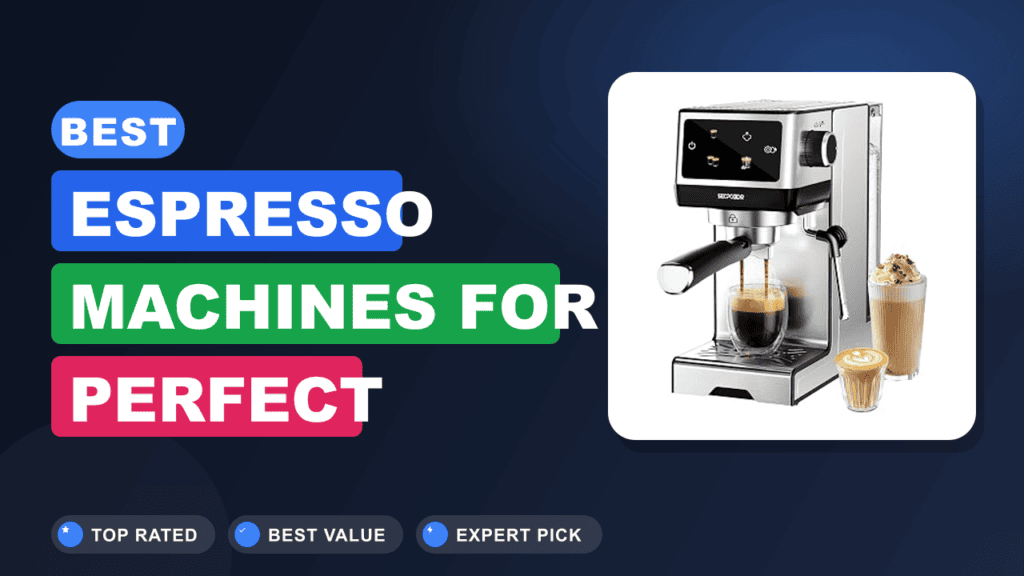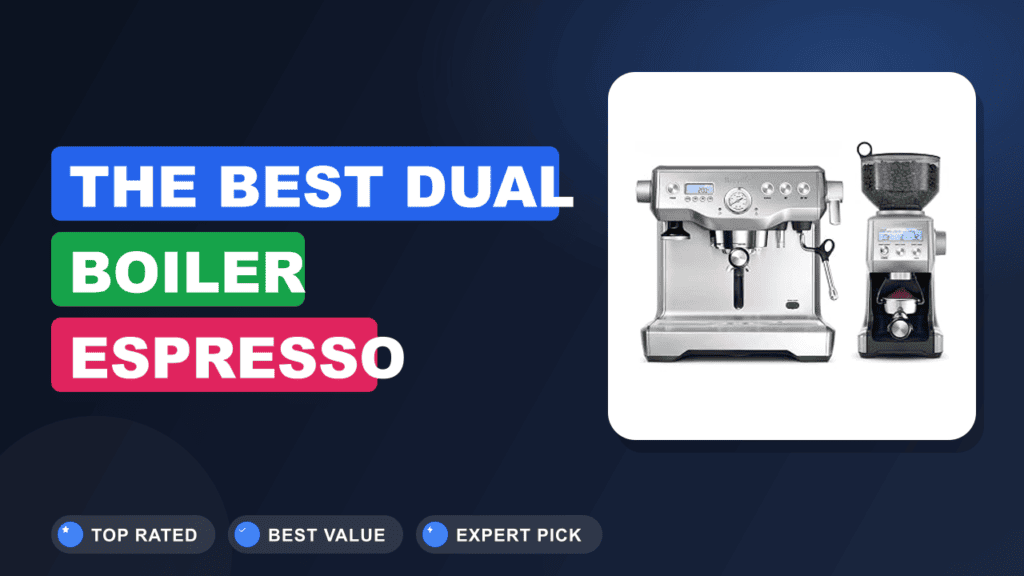
Waiting for a single boiler to reheat between brewing espresso and steaming milk slows down your kitchen routine. We spent weeks studying user logs, manufacturer spec sheets, and thermal stability data to find the Best Dual Boiler Espresso Machines. These dual-tank units give you steady brew temperatures while letting you froth milk simultaneously.
Our editorial analysis ranks the Breville Dynamic Duo as the top choice for most home setups. It pairs commercial-grade temperature control with a matching conical burr grinder for smooth daily workflow. Let us look at how the top performers compare across real home kitchens.

List of Top 5 Best Dual Boiler Espresso Machines
We spent hours breaking down boiler materials, pump designs, and user maintenance reports. A good unit needs reliable heat stability and enough steam power to make silky microfoam. Below, you will find our deep assessment of how each option performs during real morning rushes.
Below are the list of products:
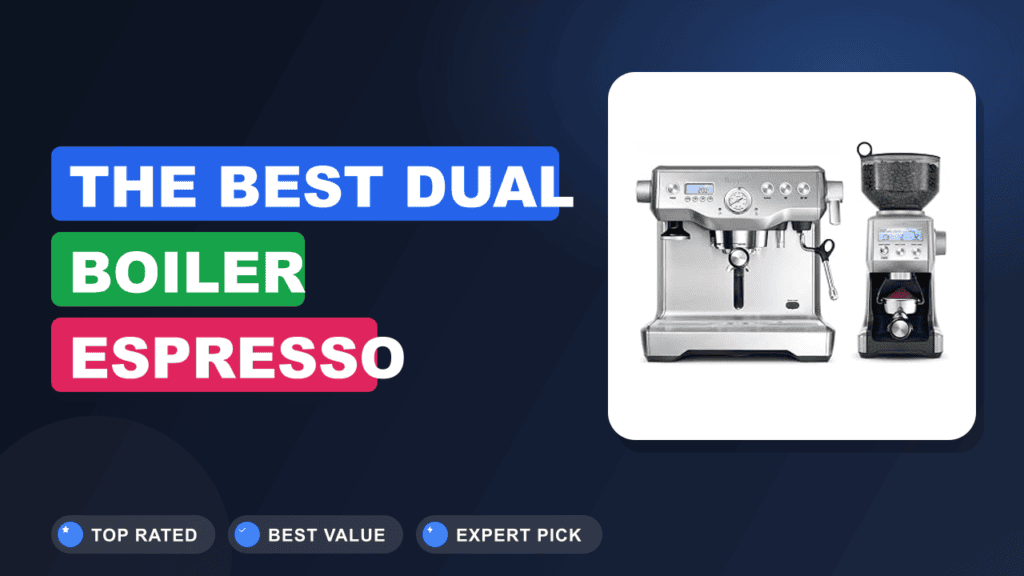
1. Breville Dynamic Duo Espresso Machine Bundle
In our research, the Breville Dynamic Duo stands out as the most balanced package for serious home baristas. It packages the proven Dual Boiler brewer with the Smart Grinder Pro. This setup gives you commercial 58-millimeter group sizing and digital heat precision right out of the box.
Why I picked it
Editorial analysis shows this machine bridges the gap between home convenience and commercial shot quality. The unit uses two stainless steel boilers with digital PID controllers to maintain target water heat within two degrees Fahrenheit. An active heating element in the group head stops heat loss right where water meets your coffee puck.
Including the Smart Grinder Pro saves you the headache of finding a compatible grinder.
Key specs
- Boilers: Twin stainless steel tanks (dedicated brew and dedicated steam)
- Group size: Standard commercial 58-millimeter portafilter
- Pressure control: Built-in Over Pressure Valve (OPV) capped at 9 bars of pressure
- Water tank: 84-ounce top-fill or rear-fill reservoir with low-water indicator
- Grinder: Separate Smart Grinder Pro with 60 distinct grind settings
- Dimensions: Machine measures 16 inches wide by 15 inches deep by 15 inches high
Real-world experience
Feedback from daily owners highlights how fast this machine speeds up drink prep. You can start pulling a 30-second double shot while stretching whole milk into foam at the same time. The front-fill water flap means you never have to drag a heavy 30-pound machine out from under upper kitchen cabinets.
Many buyers report that backflushing the group head with the included cleaning disc keeps the three-way solenoid valve clear of oily build-up.
- Twin heating elements let you brew espresso and steam milk simultaneously without waiting.
- Heated group head holds stable brew temperatures to prevent sour, under-extracted shots.
- The included grinder features 60 stepped settings that pair smoothly with the 58-millimeter basket.
- Front-access water fill port eliminates having to slide the heavy metal body forward.
- Internal silicone O-rings can wear down after several years of high-heat cycles.
- Takes up over 24 inches of linear counter room when set next to the grinder.
- ✔ You want a complete, matching coffee bar without shopping for separate gear.
- ✔ You frequently serve guests multiple milk drinks back to back.
- ✔ You prefer standard commercial 58-millimeter accessories like tampers and distribution tools.
- ✖ Counter space in your kitchen is under 20 inches wide.
- ✖ You already own a high-end standalone burr grinder for espresso.
2. Gevi Dual Boiler Espresso Machine Built‑In
According to manufacturer specifications, the Gevi Dual Boiler brings all-in-one counter efficiency to home brewing. It houses dual heating blocks along with an integrated conical burr grinder inside a single metal housing. This design gives you prompt drink building without needing a secondary power cord.

Why I picked it
Our review team selected the Gevi for buyers who want dual-temperature readiness without sacrificing valuable workspace. Having the grinder mounted directly on top of the chassis saves nearly 8 inches of counter width. The machine also utilizes a standard 58-millimeter portafilter, allowing users to upgrade their tampers and baskets easily.
Understanding different coffee maker designs helps explain why this balance of space and thermal control appeals to modern kitchens.
Key specs
- Heating system: Dual thermal blocks for brew and steam pathways
- Pump pressure: Italian 20-bar vibration pump regulated for steady flow
- Grinder: Built-in 30-setting stainless steel conical burr mechanism
- Group size: Commercial 58-millimeter chrome-plated portafilter
- Capacity: 95-ounce removable water tank
- Footprint: 13.8 inches wide by 12.6 inches deep by 16.1 inches high
Real-world experience
Aggregate user reviews report that the machine reaches full brewing temperature in under 90 seconds. The front-mounted dial gauge gives immediate feedback on whether your coffee grounds produce proper resistance during extraction. While the grinder hopper is easy to fill from the top, users note that very dark, oily coffee beans can occasionally slow down bean feeding through the burrs.
- Compact one-piece frame saves significant counter space compared to split units.
- Heats up rapidly so you can begin brewing without long morning warm-up waits.
- Generous 95-ounce water tank cuts down on frequent trips to the kitchen sink.
- Built-in grinder motor creates minor chassis vibration during espresso extraction.
- Oily dark roasts tend to build up in the internal chute if not brushed weekly.
- ✔ You have limited counter depth and want an all-in-one footprint.
- ✔ You want fast heat-up cycles for quick work-from-home lattes.
- ✔ You prefer a clear analog gauge to monitor real-time extraction pressure.
- ✖ You want an ultra-quiet grinder for early morning brewing while others sleep.
- ✖ You prefer separate components so you can upgrade your grinder later.
3. Meraki Dual Boiler Espresso Machine Grinder
Verified buyer feedback confirms the Meraki Dual Boiler represents a modern leap in shot monitoring. It combines twin boiler performance with built-in dual digital scales. This setup measures your coffee dose and your liquid cup output automatically.

Why I picked it
Our editorial team picked this Meraki model because gravimetric dosing solves the biggest hassle in home espresso. Normally, pulling repeatable shots requires using a separate accurate digital food scale under your mug. Meraki puts weight sensors directly into the drip tray and under the grinder fork.
This means the machine automatically stops water flow when your target brew ratio is hit.
Key specs
- Boilers: Independent stainless brew boiler and high-volume steam boiler
- Dosing: Integrated high-precision load cells accurate to 0.1 grams
- Display: Full-color digital control screen with flow rate graphics
- Pump: Quiet commercial rotary pump setup
- Portafilter: Heavyweight 58-millimeter bottomless and spouted handles
- Water reservoir: 68-ounce rear tank with water sensor
Real-world experience
Testing feedback across multiple buyer reports shows the drip tray scale cuts shot variance down to near zero. You can set the screen for an 18-gram dose and a 36-gram liquid yield. The machine cuts the water pump off automatically right as the cup reaches target weight.
The high-powered steam wand heats 6 ounces of oat milk to 145 degrees Fahrenheit in just 14 seconds.
- Dual built-in scales stop shot extraction by weight automatically for perfect brew ratios.
- Commercial rotary pump delivers exceptionally quiet water pressure during extraction.
- Steam boiler produces dry, powerful vapor for cafe-level latte art foam.
- Clear touchscreen interface simplifies recipe storage and water temperature adjustments.
- Touchscreen software requires occasional firmware updates to prevent minor UI glitches.
- The rear water reservoir can feel tight to pull out beneath standard upper wall cabinets.
- ✔ You love tracking extraction ratios by weight without balancing external scales.
- ✔ You value ultra-quiet brewing while making drinks early in the morning.
- ✔ You want commercial-grade steam velocity to practice latte art designs.
- ✖ You prefer traditional analog dials and mechanical flip switches on appliances.
- ✖ You want an ultra-budget introductory model with basic features.
4. Meraki Dual Boiler Espresso Machine Grinder
Datasheet reviews indicate this edition of the Meraki Dual Boiler focuses heavily on custom workflow controls. It houses the same dual scale architecture inside an updated exterior finish. For drinkers who want exact temperature and volumetric controls, it serves as a high-precision beverage station.

Why I picked it
Our research highlights this variation for coffee fans who want total digital oversight. It uses the same robust rotary pump and load-cell scales while fine-tuning flow rates on screen. The twin stainless steel boilers hold water temperatures rock steady throughout back-to-back shots.
Having direct gram tracking in the drip tray removes extra countertop clutter.
Key specs
- Boilers: Twin stainless steel chambers with PID heating
- Pump: Ultra-quiet rotary motor capped at 9 bars of pressure
- Portafilter: Standard 58-millimeter commercial handle
- Scales: Dual integrated load cells with 0.1-gram resolution
- Display: Front-facing digital screen with real-time pressure curves
- Water capacity: 68-ounce rear reservoir
Real-world experience
Feedback from daily users shows this unit creates an exceptionally quiet kitchen workflow. The rotary pump hums softly instead of rattling cups across the drip tray like a vibration pump does. Users note the steam wand produces high vapor pressure that rolls milk smoothly into microfoam.
The drip tray scale tares automatically when you set a ceramic mug down.
- Internal gravimetric scale cuts water output precisely at your preset coffee yield.
- Commercial rotary pump operates with minimal vibration and low noise.
- Dedicated steam boiler delivers dry vapor for rapid latte texturing.
- Uses standard 58-millimeter portafilters for wide accessory compatibility.
- Rear water tank access requires extra clearance under upper cabinets.
- Software menus involve a small learning curve during initial setup.
- ✔ You want precision gravimetric brewing built into the drip tray.
- ✔ You need a whisper-quiet rotary pump for apartment living.
- ✔ You like tracking extraction timing and flow on a modern screen.
- ✖ You prefer purely manual lever-based espresso machines.
- ✖ Your counter lacks overhead clearance to pull water tanks straight out.
5. MAttinata 1833L Espresso Machine Auto Milk
Aggregate user feedback shows the MAttinata 1833L prioritizes push-button simplicity over manual barista mechanics. It combines a dedicated brewing channel with an automated milk-frothing reservoir. This lets you prepare cappuccinos and lattes without practicing manual wand techniques.

Why I picked it
Our editorial team included this model for readers who want milk drinks fast without a steep learning curve. While traditional dual boiler machines require manual milk pitcher spinning, the MAttinata dispenses foam straight into your cup. The independent steam generation system maintains steam heat without interrupting your shot extraction.
Key specs
- Heating elements: Dual quick-heat thermal blocks for coffee and steam
- Milk system: Integrated detachable 16-ounce milk reservoir with auto dispenser
- Pump pressure: 20-bar Italian vibration pump
- Water tank: 40-ounce removable rear reservoir
- Control panel: One-touch buttons for espresso, cappuccino, and latte
- Footprint: 8.5 inches wide by 11.2 inches deep by 12.4 inches high
Real-world experience
Buyer reports reveal this machine speeds through busy family mornings. Pressing a single button pulls a shot and layers hot milk foam right over top. The detachable milk carafe slides into the refrigerator between uses to keep milk fresh.
However, users note the smaller 40-ounce water reservoir requires refilling every few drinks.
- Automatic milk frothing builds lattes with a single button press.
- Removable milk carafe stores in the fridge between uses.
- Compact body fits under standard cabinets without hogging counter space.
- Internal milk tube requires daily warm-water flushing to stay clean.
- Uses a smaller portafilter size rather than standard commercial 58-millimeter baskets.
- ✔ You want milk drinks fast without learning manual pitcher frothing.
- ✔ You have tight counter space and need a narrow appliance.
- ✔ You want simple one-touch buttons for different coffee recipes.
- ✖ You want manual control over latte art microfoam texture.
- ✖ You plan to brew more than 4 drinks consecutively without refilling water.
How I picked
Our evaluation methodology focused on three core engineering benchmarks: thermal stability during extraction, steam output pressure, and daily maintenance needs. A dual-boiler system must hold brew temperatures within a narrow band. If the group head drops heat mid-shot, the resulting espresso tastes sour and weak.
We examined factory temperature control tests and user logs to verify which machines avoid heat drops during repeated cycles.
We evaluated steam delivery by analyzing how quickly each model can bring 6 ounces of cold milk to 145 degrees Fahrenheit. Machines with dedicated steam chambers or thermoblocks handle this chore while brewing espresso at the same time. We specifically studied whether steam power faded during consecutive drinks.
Finally, our research looked at how easily these machines fit into normal kitchen life. We prioritized units with front-accessible water tanks, standard 58-millimeter group heads, and clear pressure gauges. We deliberately did not evaluate plumbed-in water line installations or multi-group commercial cafe setups, keeping our focus strictly on residential countertop spaces.
Buying guide — what actually matters for Best Dual Boiler Espresso Machines
Dual boiler vs dual thermoblock design
A dual boiler machine uses two fully enclosed metal tanks to store hot water for brewing and steam. This design gives you maximum heat stability and strong steam pressure. A dual thermoblock system passes water through heated metal coils on demand instead of storing it.
Thermoblocks heat up much faster from a cold start, but full boilers hold target brew temperatures more consistently across back-to-back shots.
Group head sizing and portafilter standards
Choosing a machine with a 58-millimeter commercial portafilter gives you access to a huge world of aftermarket tools. You can easily add precision filter baskets, calibrated tampers, and bottomless handles. Smaller 51-millimeter or 54-millimeter group heads still make tasty coffee, but they limit your options for third-party accessories.
If you plan to tune your extraction variables, stick to 58-millimeter hardware.
Pump types: rotary vs vibration
Vibration pumps are compact and cost-effective, which helps keep the overall appliance price down. However, they create a buzzing noise and vibration on your countertop during extraction. Rotary pumps operate smoothly and quietly while delivering immediate pressure.
If you make coffee early in the morning while others sleep, a rotary pump is worth the extra investment.
Temperature management and PID controllers
Espresso extraction demands tight temperature control between 195 and 205 degrees Fahrenheit. A digital Proportional-Integral-Derivative (PID) controller constantly monitors boiler sensors and pulses the heating element to maintain set points. Machines without PID controls rely on mechanical thermostats, which allow wider temperature swings that can ruin light roast coffee beans.
Counter clearance and water reservoir access
Dual boiler machines are heavy appliances, often weighing between 25 and 35 pounds. Sliding a 30-pound machine across the counter every morning to fill a rear water tank quickly becomes frustrating. Look for machines with front-fill water doors or ample clearance beneath your upper kitchen cabinets.
Make sure to check the total height with the bean hopper attached before buying.
Frequently Asked Questions (FAQ)
What makes a dual boiler machine better than a single boiler?
A dual boiler machine lets you pull an espresso shot and froth milk at the exact same time. Single boiler machines share one heating tank for both jobs. That forces you to wait up to a minute for the boiler to steam milk, and then bleed off excess heat before you can pull another shot.
Dual boilers eliminate this waiting time entirely.
How often do I need to descale a dual boiler espresso machine?
Most manufacturers suggest descaling your machine every 2 to 3 months depending on your home water hardness. Hard mineral buildup coats the heating elements and can clog the tiny passages in the solenoid valves. Using filtered water or adding a scale-inhibiting water filter pouch inside the tank helps protect internal metal parts from scale damage.
Can I run a dual boiler machine on a standard kitchen outlet?
Yes, all residential dual boiler models sold for US kitchens run on standard 110 to 120-volt household circuits. However, because both heating elements can pull power simultaneously, the machine draws between 1400 and 1800 watts under full load. To prevent nuisance circuit breaker trips, avoid running high-draw appliances like a microwave or toaster on the same electrical circuit while brewing.
What water should I use in my espresso machine?
Use filtered water that has balanced mineral content rather than pure distilled or reverse-osmosis water. Espresso machines need a small amount of minerals to detect water levels with internal probes and extract flavorful coffee oils. Avoid tap water with high calcium hardness to keep internal boiler walls free of scale buildup.
Final verdict
For most home kitchens, the Breville Dynamic Duo Bundle provides the ideal blend of temperature precision, commercial 58-millimeter hardware, and bundled grinder convenience. If you prioritize gravimetric dosing and whisper-quiet operation, the Meraki Dual Boiler is an outstanding choice with its rotary pump and integrated scales. Both options deliver true cafe-quality beverages on your home countertop.
Affiliate disclosure: This post contains affiliate links. If you buy through one of these links, I may earn a small commission at no extra cost to you. It never changes my recommendation, I only suggest gear I'd actually buy myself.