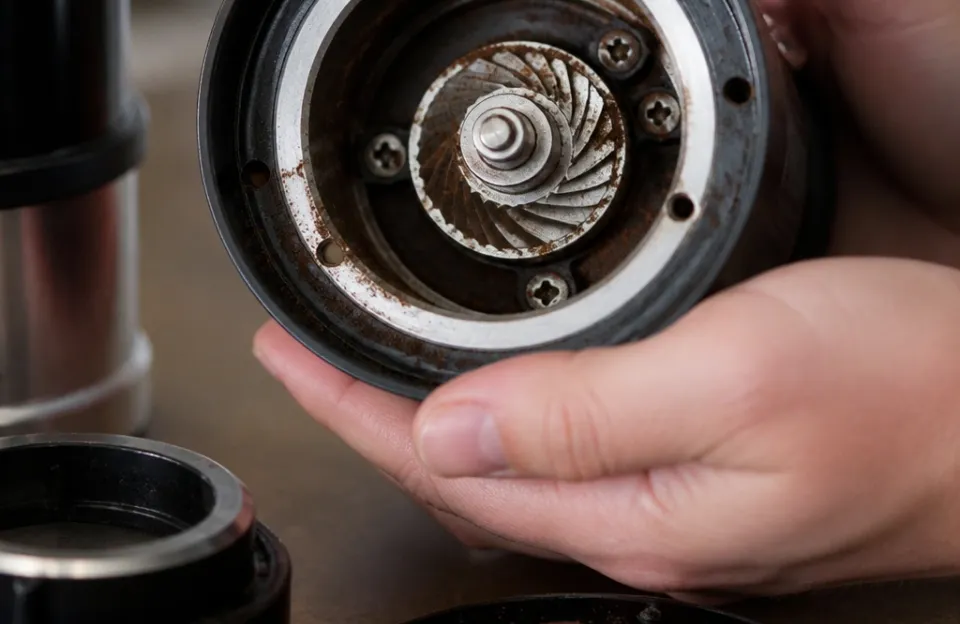
A coffee grinder making loud noise usually signals a foreign object, worn burrs, or motor trouble. Stop grinding immediately to prevent permanent damage or safety hazards. Most loud noises come from simple fixes like clearing debris or tightening loose parts.
Identifying Specific Noise Types

Different sounds point to different problems inside your machine. A high-pitched squeal often means the motor bearings are dry or failing. This sound gets louder as the grinder runs and does not stop when you remove beans.
You might also hear it during startup before beans even enter the chamber.
Grinding or metallic scraping noises suggest burr contact. The burrs may be misaligned, chipped, or worn down completely. This happens frequently in older machines or after dropping the unit.
Metal-on-metal friction creates heat that ruins both flavor and equipment.
Rattling sounds typically indicate loose hardware. Screws securing the hopper, lid, or base can vibrate free over time. Plastic clips holding internal panels may also crack or break.
These vibrations amplify through the metal housing and sound much worse than they actually are.
Clicking or popping noises often mean electrical issues. The switch contacts could be arcing due to wear or moisture. Capacitors in the control board might be failing intermittently.
These sounds require immediate attention since they pose fire risks.
Thumping or clunking points to physical obstructions. Stones mixed with green beans sometimes survive roasting. Hard plastic fragments from packaging can fall into the hopper.
Even dense clumps of stale grounds can jam the mechanism temporarily.
Humming without rotation suggests a seized motor or blocked burr set. The motor tries to spin but cannot overcome resistance. Thermal protection may kick in after thirty seconds.
Repeated attempts will burn out the windings permanently.
Clearing Obstructions Safely
Unplug the grinder before inspecting anything. Never reach into the chamber while power is connected. Remove all visible beans from the hopper first.
Use a soft brush to sweep out loose grounds and chaff.
Check the space between burrs carefully. Shine a flashlight to spot wedged stones or debris. Needle-nose pliers work well for extracting small objects.
Avoid metal tools that could scratch precision surfaces.
Disassemble according to the manual if needed. Many grinders allow top burr removal without tools. Others require specific wrenches included with purchase.
Keep track of every screw and washer during disassembly.
Clean each component individually before reassembly. Compressed air blows out hidden dust effectively. A dry microfiber cloth wipes away oily residue.
Never use water unless the manufacturer explicitly permits it.
Reassemble slowly and verify alignment. Burrs must seat properly without wobble. Hand-tighten screws until snug then add a quarter turn.
Test rotation by hand before restoring power.
Run the grinder empty for ten seconds after cleaning. Listen for any remaining abnormal sounds. Add a small bean batch only if silence returns.
Monitor closely during the first few uses post-cleaning.
Assessing Burr Wear And Alignment
Burr lifespan varies greatly by material and usage. Steel burrs typically last five to seven years with daily home use. Ceramic versions may last decades but shatter if dropped.
Commercial units endure far longer under heavy loads.
Inspect cutting edges visually under bright light. Sharp burrs show defined ridges and clean angles. Worn burrs appear rounded, shiny, or flattened.
Dull edges crush beans instead of slicing them cleanly.
Check for chips or cracks along the surface. Even tiny defects create uneven particle size. Damaged burrs generate excess fines and boulders.
Extraction suffers regardless of dial-in adjustments.
Verify parallel alignment between upper and lower burrs. Spin the shaft by hand feeling for drag spots. Consistent resistance indicates proper spacing.
Variable pressure reveals tilt or warping.
Adjust calibration rings if your model allows. Most prosumer grinders include stepped or stepless options. Follow manufacturer instructions precisely for your unit.
Small changes make big differences in clearance.
Replace matched sets rather than individual pieces. Mixing old and new burrs causes premature wear. Aftermarket options exist but vary in quality.
Stick with OEM parts unless verified compatible.
New burrs need seasoning before optimal performance. Grind two pounds of cheap beans to coat surfaces. Discard these initial batches entirely.
Flavor stabilizes after this break-in period completes.
Motor And Electrical Diagnostics
Motor problems escalate quickly without intervention. Burning smells accompany overheating windings. Smoke indicates insulation failure requiring replacement.
Unusual heat on the casing warns of impending doom.
Test continuity with a multimeter if comfortable. Disconnect power and access wiring terminals. Resistance readings should match service manual specs.
Infinite resistance means an open circuit somewhere.
Capacitor failures cause intermittent operation. Bulging or leaking cases are obvious signs. Replacement capacitors cost little but require soldering.
Discharge stored energy before touching components.
Switch mechanisms accumulate carbon deposits over time. Contact cleaner restores function temporarily. Permanent fixes involve replacing the entire assembly.
Generic switches rarely fit proprietary housings correctly.
Voltage fluctuations damage sensitive electronics. Surge protectors help but don't eliminate risk. Dedicated circuits provide stable power delivery.
Avoid sharing outlets with microwaves or blenders.
Thermal fuses protect against catastrophic fires. They trip once and cannot reset. Testing confirms whether replacement is necessary.
Bypassing safety devices voids warranties and invites danger.
Professional repair makes sense for expensive machines. Labor costs often exceed budget model values. Authorized technicians carry genuine spare parts.
DIY attempts on complex assemblies risk injury.
Preventive Maintenance Routines
Regular care prevents most noise complaints. Clean weekly for daily brewers. Monthly deep cleans suit occasional users.
Neglect accelerates wear exponentially.
Empty the hopper between uses. Stale beans attract pests and mold. Residual oils turn rancid over days.
Freshness degrades noticeably within forty-eight hours.
Brush grounds from crevices after each session. Static cling holds particles against walls. Bellows attachments help purge retention areas.
Ground buildup alters dose consistency.
Lubricate moving parts per schedule. Food-grade grease suits bearing surfaces. Oil attracts dust creating abrasive paste.
Apply sparingly to avoid contaminating coffee.
Tighten fasteners quarterly. Vibration loosens connections gradually. Thread locker prevents recurring issues.
Replace stripped screws promptly before stripping worsens.
Store grinders away from humidity sources. Moisture corrodes steel and degrades electronics. Silica gel packets absorb ambient dampness.
Climate-controlled environments extend service life significantly.
Track maintenance dates in a notebook. Patterns emerge linking neglect to failures. Warranty claims benefit from documented care.
Resale value increases with proven upkeep records.
When Replacement Beats Repair
Some repairs cost more than new units. Budget grinders lack available spare parts. Sourcing components takes weeks or months.
Labor fees double total expense easily.
Performance declines despite fresh burrs. Motors lose torque with age. Electronics become unreliable after decade-plus use.
Newer models offer better consistency and features.
Safety concerns override economic logic. Frayed cords expose live conductors. Cracked housings compromise grounding paths.
Recalled models should retire immediately regardless of condition.
Noise persists after thorough troubleshooting. Internal gearboxes wear beyond adjustment. Shaft bearings develop irreversible play.
Continued operation risks sudden catastrophic failure.
Consider upgrade opportunities during breakdowns. Stepless adjustment improves espresso dialing. Larger burrs reduce retention and heat.
Quieter motors improve kitchen comfort substantially.
Research current market offerings before deciding. Technology advances rapidly in this category. Reviews reveal real-world reliability data.
Price-to-performance ratios shift constantly.
Donate functional parts to hobbyist communities. Salvaged steppers drive DIY projects. Control boards teach electronics skills.
Responsible disposal keeps e-waste from landfills.
Frequently Asked Questions About Grinder Noise
Can I keep using a grinder that makes noise?
No, continuing operation risks complete failure or injury. Address the root cause before brewing again. Temporary fixes rarely hold under load.
Safety should always precede convenience.
How long do coffee grinder burrs typically last?
Home steel burts average five to seven years with daily use. Ceramic variants may last twenty years or more. Commercial environments shorten lifespans dramatically.
Usage frequency matters more than calendar age.
Why did my grinder suddenly get louder overnight?
Sudden changes indicate acute failures rather than gradual wear. Foreign objects lodge unexpectedly. Components fracture without warning.
Electrical faults manifest instantly. Investigate thoroughly before assuming normal aging.
Is it worth repairing an old grinder?
Depends on original quality and part availability. Premium machines justify professional service. Entry-level units rarely warrant investment.
Compare repair quotes against replacement costs honestly. Sentimental value doesn't brew better coffee.
Does grind setting affect noise level?
Finer settings increase motor load and friction. Coarser grinds run quieter generally. Extreme fineness approaches stall conditions.
Find balance between extraction needs and mechanical stress. Adjust incrementally monitoring sound changes.
Can cleaning alone fix loud grinding noises?
Sometimes yes if debris caused the issue. Built-up oils and grounds create drag. Thorough cleaning restores smooth operation frequently.
Persistent noise after cleaning indicates mechanical damage. Don't ignore symptoms hoping they resolve spontaneously.
Are some grinders naturally louder than others?
Yes, design choices influence acoustic output. Direct-drive motors transmit more vibration. Belt-driven systems isolate noise better.
Plastic housings resonate differently than metal. Read reviews focusing specifically on sound levels.
Should I oil my grinder burrs?
Never apply oil directly to cutting surfaces. Contamination ruins flavor and attracts grit. Bearings may require food-safe grease periodically.
Consult manuals for approved lubricants and intervals. Improper lubrication causes more harm than good.
What causes a burning smell with loud noise?
Overheated motors produce distinct acrid odors. Blocked airflow traps heat internally. Overloaded circuits strain windings excessively.
Stop immediately and unplug the unit. Professional assessment determines salvageability versus replacement needs.
Can voltage issues make grinders noisy?
Yes, low voltage reduces motor torque significantly. Undervoltage causes straining and humming. High voltage accelerates component degradation.
Stable power delivery ensures consistent performance. Quality surge protection helps maintain proper levels.
Understanding coffee grinder noise patterns empowers smarter decisions. Early intervention saves money and preserves equipment. Regular maintenance extends service life considerably.
Trust your ears as diagnostic tools. Silence indicates health while clamor demands attention. Your morning ritual deserves reliable machinery operating safely and efficiently.