The most common espresso machine portafilter size is 58mm, and it serves as the commercial standard for most prosumer and high-end home machines. However, sizes range from 49mm to 58mm depending on the brand, and compatibility is not interchangeable even between machines that look identical. You must measure your specific group head or check the manufacturer specification before buying replacement baskets, tampers, or accessories, as a 1mm difference prevents proper sealing and extraction.
Why Portafilter Diameter Matters More Than You Think
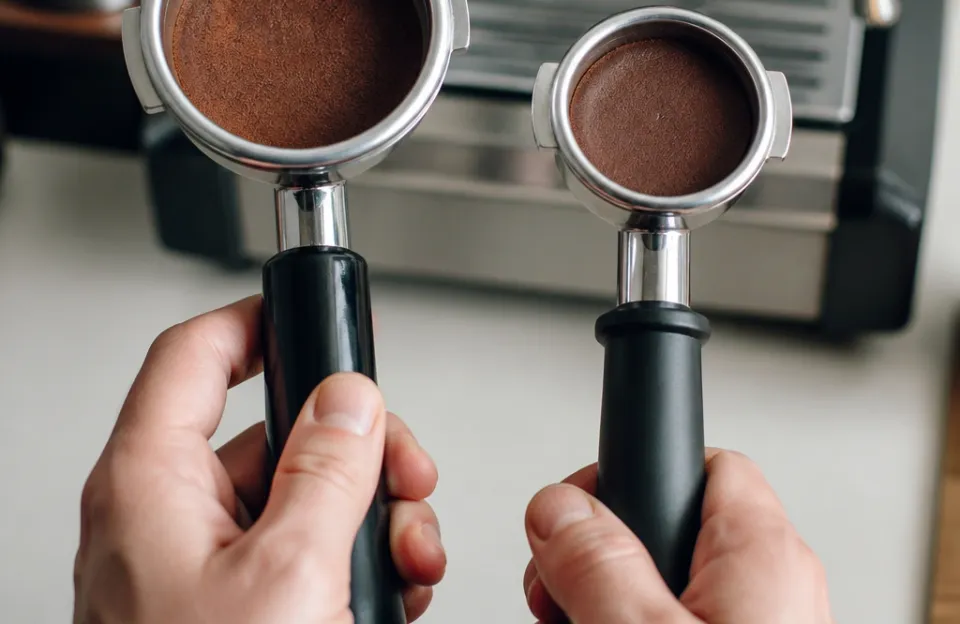
Portafilter size dictates every other accessory you will buy for your espresso setup. The diameter determines the basket capacity, the tamper size, the puck screen fit, and even the dose weight you can use. Getting this number wrong means wasted money on parts that physically cannot lock into your group head.
This measurement refers specifically to the inner diameter of the basket rim where it seats against the gasket. It does not refer to the outer width of the handle or the total length of the assembly. Many beginners assume all home machines use one universal standard because commercial cafes mostly use 58mm gear.
That assumption leads to frustration when a new tamper arrives too wide for their Breville or DeLonghi machine.
We compared specs across major brands and found that while 58mm dominates the prosumer market, the entry-level and mid-range home segment is fractured. Understanding which camp your machine falls into saves time and prevents returns. This guide breaks down the exact measurements, brand-specific quirks, and measurement methods so you can buy with confidence.
The 58mm Commercial Standard
Fifty-eight millimeters is the benchmark for professional espresso equipment and serious home machines. Brands like La Marzocco, Rocket, Profitec, Lelit, ECM, and Expobar use this size almost exclusively. If you own a machine in the $1,500 to $5,000+ range, you likely have a 58mm group head.
This size allows for a standard 18g to 22g double shot dose with adequate headspace. The wider surface area promotes even water distribution across the coffee bed, which reduces channeling. Most third-party accessory makers prioritize 58mm first, giving you the widest selection of precision baskets, calibrated tampers, and bottomless portafilters.
Check current price on Amazon

The trade-off is cost and counter space. Machines built around 58mm groups tend to be heavier, more expensive, and require more clearance. If you are upgrading from a smaller machine to a 58mm platform, verify your grinder can produce consistent doses in the 18g to 22g range.
Smaller grinders often struggle to dose accurately at the higher weights this size demands.
Common Home Machine Sizes Below 58mm
Many popular home espresso machines use proprietary or smaller diameters to reduce manufacturing costs or fit compact designs. These sizes are not cross-compatible with commercial gear.
54mm: Breville’s Bambino, Barista Express, Barista Pro, and Oracle lines use 54mm. This is arguably the second most important size to know in the US market. Breville dominates the entry-to-mid tier, and thousands of buyers discover their 58mm accessories do not fit after purchase.
The 54mm size typically doses 16g to 19g comfortably.
53mm: Older Rancilio Silvia models and some Ascaso machines use 53mm. This size sits awkwardly between 54mm and 58mm. Accessories labeled “universal” rarely fit 53mm correctly.
Always confirm the exact model year, as Rancilio has shifted specs over decades.
51mm: DeLonghi Dedica, Gaggia Classic (older versions), and many budget-friendly machines use 51mm. This size limits you to roughly 14g to 17g doses. Finding quality aftermarket baskets for 51mm is harder than for 54mm or 58mm.
Many users upgrade their entire machine rather than hunt for niche 51mm parts.
49mm: Found on vintage lever machines and some ultra-compact modern units. This is rare in the current US market but still appears in estate sales or specialty imports. Basket availability is extremely limited.
If you are unsure where your machine fits, treat the manufacturer spec as law. Do not rely on forum posts from five years ago, as brands occasionally revise group heads without changing the model name.
Brand Specific Compatibility Chart
Use this table as a starting point, then verify against your specific model number. Manufacturers sometimes change specs mid-production.
| Brand | Common Size | Notes |
|---|---|---|
| Breville / Sage | 54mm | Applies to Bambino, Barista Express/Pro, Oracle |
| DeLonghi | 51mm | Dedica, EC155, ECP series |
| Gaggia | 58mm | Classic Pro, New Classic |
| Rancilio | 53mm / 58mm | Silvia uses 53mm; commercial lines use 58mm |
| Lelit | 58mm | MaraX, Victoria, Bianca |
| Profitec | 58mm | Go, 300, 500, 700 series |
| Rocket | 58mm | Appartamento, Mozzafiato, R58 |
| La Marzocco | 58mm | Linea Mini, GS3 |
| Flair | 46mm | Manual lever; unique sizing |
| Moka Pot | N/A | Not a portafilter system; incompatible |
This chart covers the most frequent questions we see. For brands not listed, consult the user manual or contact the manufacturer directly. Guessing based on visual similarity is the most common cause of accessory returns.
How to Measure Your Portafilter Correctly
Measuring seems simple, but doing it wrong produces misleading numbers. Follow these steps precisely.
Remove the basket from the portafilter. You need to measure the bare metal housing, not the insert. Clean any coffee residue from the rim.
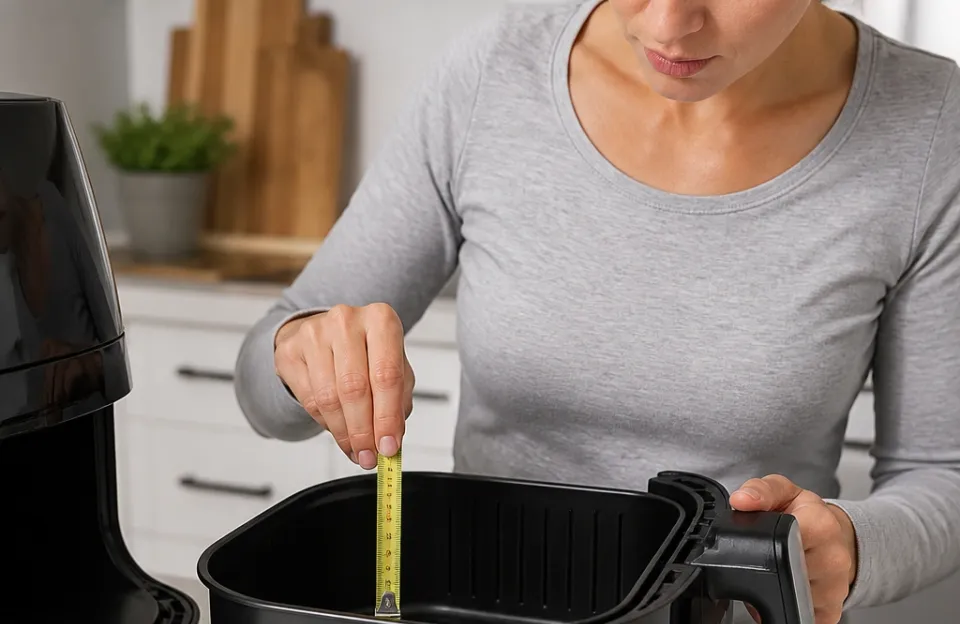
Use digital calipers, not a ruler or tape measure. Rulers lack the precision needed for 1mm tolerances. Place the caliper jaws inside the rim, measuring the inner diameter at the point where the basket lip would seat.
Take three measurements at different angles and average them. Oval wear can distort older group heads.
Measure the basket itself if you still have doubts. The outer diameter of the basket rim should match the inner diameter of the portafilter housing within 0.5mm. If your basket measures 57.5mm and your housing reads 58mm, you have the correct pairing.
A basket reading 56mm in a 58mm housing indicates a mismatch or severe wear.
Record both numbers. When shopping for replacements, provide both the housing inner diameter and the basket outer diameter to sellers. This eliminates ambiguity.
Basket Types and Depth Variations Within Each Size
Diameter is only half the equation. Basket depth and shape vary significantly even within the same 58mm category. A 58mm single-wall basket from one brand may hold 18g while another holds 22g.
Single vs. Double: Single baskets hold 7g to 10g and have a tapered or funnel shape. Double baskets hold 14g to 22g with straight walls.
Most home baristas use doubles exclusively because singles extract unevenly due to their shape.
Ridgeless vs. Ridged: Ridged baskets have a groove near the top that locks into the portafilter spring. Ridgeless baskets rely on friction alone.
Ridgeless baskets are easier to remove and clean but can fall out during knock-out if the spring tension is weak. Check your portafilter spring type before switching.
Precision vs. Stock: Precision baskets like IMS or VST have laser-drilled holes with tighter tolerances. They improve flow consistency but demand better grind control.
Stock baskets are more forgiving of grinder limitations. If your grinder is under $300, stick with stock baskets until you upgrade.
When replacing baskets, match both diameter and depth. A 58mm x 26mm basket will not function correctly in a portafilter designed for 58mm x 22mm. Depth affects headspace, which changes pressure dynamics during extraction.
Product listings usually specify depth in millimeters alongside diameter. Read those numbers carefully.
Tamper Sizing Rules for Each Diameter
Your tamper must match your basket diameter precisely. A tamper that is too small creates uneven density at the edges. One that is too large binds against the basket wall and damages the finish.
The general rule is to choose a tamper 0.5mm to 0.75mm smaller than your basket inner diameter. For a 58mm basket, use a 57.25mm or 57.5mm tamper. For 54mm Breville machines, use a 53.25mm or 53.5mm tamper.
For 51mm machines, use a 50.25mm or 50.5mm tamper.
Some manufacturers list tamper size by the basket they fit rather than the actual tool diameter. Always verify the product description states the actual millimeter measurement of the tamper base, not just “fits 58mm.” Ambiguous listings cause mismatches.
Flat-base tampers work for most users. Convex bases compress the center slightly more than the edges, which some claim reduces channeling. The difference is subtle and secondary to proper sizing.
Get the diameter right first, then experiment with base shape if desired.
Check current price on Amazon
Upgrading Your Portafilter System Safely
Upgrading to a bottomless portafilter or precision basket improves diagnostics and extraction quality. But upgrades introduce new compatibility risks.
Bottomless portafilters expose the basket bottom so you can observe extraction in real time. They help identify channeling, uneven tamping, and grind issues. Ensure the bottomless unit matches your machine’s locking lug pattern, not just the diameter.
A 58mm bottomless portafilter for a Gaggia Classic will not fit a 58mm Lelit MaraX despite sharing the same nominal size. Lug count, angle, and ear thickness vary.
Puck screens sit atop the coffee bed to distribute water evenly. They require sufficient headspace. If your basket is already filled to the rim at your target dose, adding a puck screen causes the shower screen to press into the coffee, blocking flow.
Test headspace by inserting a puck screen dry and locking the portafilter. If it meets resistance before fully seating, skip the screen or switch to a shallower basket.
Third-party portafilters sometimes improve thermal stability or ergonomics. Verify the replacement specifies compatibility with your exact machine model. Generic “58mm portafilter” listings are unreliable.
Read reviews specifically from owners of your machine before purchasing.
Mistakes Buyers Make When Choosing Sizes
Assuming brand consistency across product lines is the top error. Breville makes 54mm machines but also sells 58mm commercial-style units under different names. DeLonghi uses 51mm for most home models but 58mm for their La Specialista line.
Never assume; always verify.
Buying based on outer diameter measurements causes endless returns. The exterior width includes the rim thickness and varies by manufacturer. Only inner diameter matters for compatibility.
Ignoring basket depth leads to dosing problems. A buyer might correctly identify their 58mm size but receive a basket that is too deep for their portafilter housing. The basket seats, but the coffee touches the shower screen, causing bitter extraction and mess.
Overlooking lug configuration wastes money on portafilters that physically cannot lock in. Diameter alone does not guarantee fit. Lug spacing, ear thickness, and rotation angle must all match.
Skipping the measurement step entirely is risky. Even if you believe you know your size, take two minutes with calipers to confirm. Manufacturing variances exist, and previous owners may have swapped parts on used machines.
Verification costs nothing and prevents costly mistakes.
Frequently Asked Questions About Portafilter Sizing
Can I use a 58mm basket in a 54mm portafilter?
No. The basket will not seat, and attempting to force it can damage the group head gasket or locking mechanism. Sizes are not adjustable or adaptable.
Buy baskets made specifically for your measured diameter.
Why do Breville machines use 54mm instead of 58mm?
Breville chose 54mm to accommodate smaller doses and reduce machine footprint for home kitchens. The narrower basket works well with the 16g to 19g doses typical of their integrated grinders. It also lowers manufacturing costs, keeping retail prices competitive in the entry-level segment.
Does portafilter size affect espresso taste?
Indirectly, yes. Wider baskets allow thinner coffee beds, which can promote even extraction at higher doses. Narrower baskets create taller beds that may extract differently at the same dose weight.
The bigger impact comes from matching your dose, grind, and basket depth correctly within whatever size you have. Proper technique matters more than chasing a specific diameter.
How do I find my portafilter size if I lost the manual?
Measure the inner diameter of the portafilter housing with digital calipers as described above. Alternatively, search your machine’s full model number plus “portafilter size” on the manufacturer’s support site. Avoid generic forums unless multiple recent sources confirm the same spec.
Are universal portafilters worth buying?
Rarely. Universal adapters claim to fit multiple sizes but often compromise seal integrity and alignment. Poor sealing causes leaks and inconsistent pressure.
Invest in a dedicated portafilter matched to your machine instead. The modest savings from a universal part do not justify degraded performance.
Knowing your exact espresso machine portafilter size unlocks the right accessories and prevents frustrating incompatibilities. Measure once, record the number, and reference it every time you shop. Your future self will thank you when every tamper, basket, and upgrade fits perfectly on the first try.
As an Amazon Associate, we earn from qualifying purchases.