Air fryer liners come in three main types: disposable parchment rounds, reusable silicone mats, and perforated paper sheets. The right one for your kitchen depends on how often you cook, what you're cooking, and whether you prioritize easy cleanup or crispy results. This buying guide breaks down the top options available right now, along with exactly what to look for before you add a pack to your cart.
We've organized these picks by material and use case. Whether you want a bulk stack of throwaway sheets for messy weeknight dinners or a thick silicone mat that lasts for years, you'll find specific products here that fit the bill. Each pick includes its strengths and real tradeoffs so you know exactly what you're getting.
What matters when picking an air fryer liner
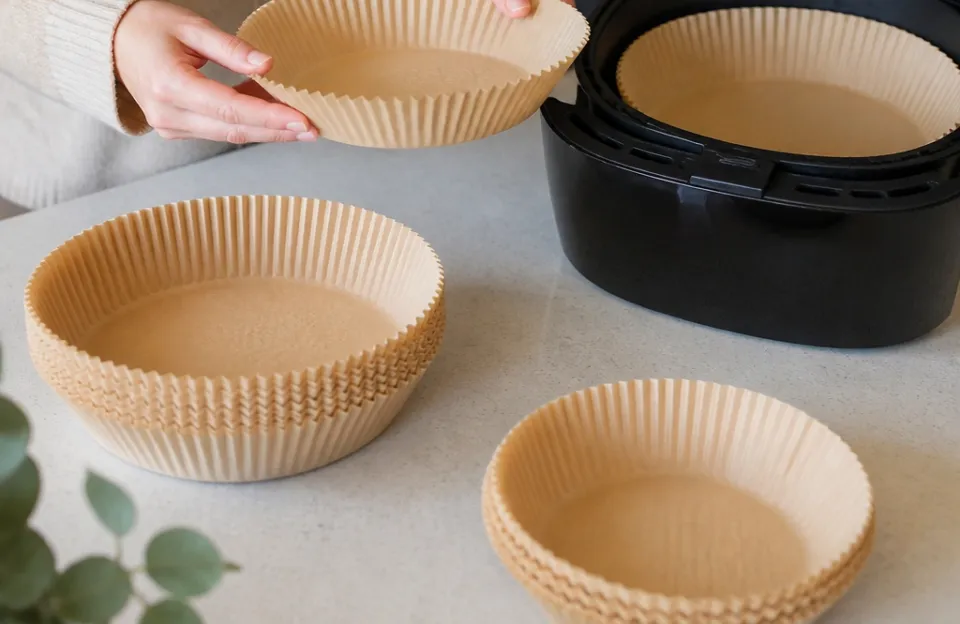
Size is the first thing to check. A liner that's too big will curl up the sides of the basket. That blocks airflow and can even touch the heating element, which is a fire hazard.
Measure the bottom of your specific basket before buying anything. Most round liners come in 6.3-inch, 7.9-inch, or 8.5-inch diameters. Square ones are less common but necessary if you own an oven-style air fryer.
Material dictates both performance and cleanup. Unbleached parchment handles temperatures up to about 425°F to 450°F depending on the brand. Silicone mats tolerate higher heat, usually around 460°F to 480°F, and don't require constant repurchasing.
Perforated options exist in both materials. They let hot air circulate under the food, which keeps things crisp. Solid liners catch every drop of grease, making them better for marinated dishes like saucy chicken wings where drippings would otherwise burn onto the basket floor.
Thickness matters more than people think. Flimsy parchment tears when you try to lift out heavy food. Thin silicone mats warp under high heat and don't sit flat.
Look for parchment rated at least 40 grams per square meter, or silicone that's at least 1.5 millimeters thick.
Reynolds Kitchens Parchment Paper Rounds
Reynolds makes a widely available pre-cut parchment option specifically shaped for air fryers. These are solid, unbleached paper rounds treated with a food-grade silicone coating to prevent sticking. They come in standard sizes designed to fit most 3-to-6-quart basket models.
These work well for everyday cooking where you just want to pull out the paper and toss it when dinner is done. The non-stick surface handles baked goods, breaded items, and basic roasting without needing extra oil spray. Because they're unbleached, they avoid the chemical processing concerns some cooks have with white parchment.
The limitation here is airflow. Since these are solid sheets, the hot air from the fan can only circulate above and around the food, not underneath it. If you're trying to get a really crunchy exterior, a solid sheet will trap steam against the bottom of your food.
You also need to weigh them down immediately; the powerful fan in an air fryer can blow a lightweight piece of parchment into the heating coil during preheating if there's no food sitting on it yet.
Gorilla Grip Reusable Silicone Liner
Gorilla Grip produces a thick, flexible silicone mat that replaces disposable paper entirely. It's made from BPA-free, food-grade silicone and comes in both round and square shapes to match different appliance brands. The material is dishwasher safe and heat resistant up to 460°F.
This is the pick for anyone who uses their machine daily and hates throwing away paper constantly. The thickness of the Gorilla Grip mat means it lays completely flat and won't curl at the edges when heated. It's heavy enough that the air fryer fan won't blow it around.
Cleanup involves wiping it down or tossing it on the top rack of the dishwasher.
The tradeoff is similar to other solid mats: reduced crisping on the bottom of your food. Also, while silicone is naturally non-stick, heavily caramelized sugars or melted cheese can sometimes bond to it if left to cool completely. You'll need to soak it occasionally if you cook a lot of sticky glazes.
For those tracking dietary details, using a liner means less oil is needed to prevent sticking, which slightly changes the final nutritional breakdown of fried foods.
INFRAOVENS Perforated Parchment Paper Sheets
INFRAOVENS sells parchment rounds with hundreds of small holes punched through them. They maintain the convenience of disposable paper while addressing the biggest complaint about solid liners: soggy bottoms. The holes allow the rapid air circulation that defines this cooking method to reach all sides of the food.
If your primary goal is achieving a crispy texture on french fries, breaded chicken, or roasted vegetables, perforated parchment is the way to go. You still get the benefit of catching most of the crumbs and preventing direct contact with the basket mesh, which makes washing the basket much faster. They handle standard air frying temperatures safely.
You can't use these for wet batters or very liquid-heavy marinades. The holes will let the liquid drip straight through to the bottom of the basket, defeating the purpose of the liner. They are strictly for drier applications or foods with minimal dripping.
When cooking something heavily seasoned, you might want to pair the liner with a reliable digital temperature probe to verify doneness without lifting the paper repeatedly.
KITHELP Non-Stick Silicone Pot Liner
KITHELP offers a raised-edge silicone pot rather than a flat mat. It looks like a shallow, flexible cake pan that drops directly into the air fryer basket. The raised sides are usually about two inches high, creating a contained vessel inside your appliance.
This design solves the problem of liquid runoff. If you're reheating saucy leftovers, baking a small cake, or cooking something that releases a lot of fat, the raised walls keep everything contained. Nothing drips through the basket mesh at all.
It's particularly useful for smaller countertop ovens where the drip tray is hard to reach and clean.
The downside is significant: it blocks almost all airflow from the bottom. Food cooked in a silicone pot liner behaves more like it's in a traditional oven than an air fryer. You lose the rapid crisping effect on the underside of whatever you're cooking.
It also takes up vertical space, meaning you can't pile food as high in the basket. If you want maximum crunch on something like flour-dusted wings, a flat perforated liner works better than a deep pot style.
Hiware Extra Large Square Parchment Liners
Hiware manufactures pre-cut square parchment sheets meant for oven-style air fryers and toaster oven combos. While most liners target round baskets, square appliances require a different shape entirely. These are solid, unbleached, and come in larger dimensions like 8.5×8.5 inches or 9.5×9.5 inches.
If you own a dual-basket model or a flip-top oven design, round liners won't cover the corners. Hiware's square sheets fit flush against the edges of rectangular baskets, protecting the entire surface area. They hold up well to greasy foods and prevent baked-on residue on the wire racks common in oven-style units.
Like all solid parchment, they limit bottom airflow. You also need to be careful with sizing. If you buy a square liner that's even half an inch too large for your specific drawer, the edges will fold up and potentially scorch near the top heating elements.
Always measure the interior base of your drawer before ordering.
COSORI Official Replacement Silicone Mats
COSORI sells silicone mats sized specifically for their own popular air fryer models. Buying a liner made by the same company that built your appliance removes the guesswork from sizing. These mats feature a textured surface to grip food slightly, preventing things from sliding around when you shake the basket.
Brand-specific mats guarantee a proper fit. A liner that fits perfectly won't obstruct the fan or block the exhaust vents, which is a genuine safety concern with generic sizes. The textured surface also promotes slightly better browning than a perfectly smooth silicone sheet.
The obvious limitation is compatibility. If you don't own a COSORI, these likely won't fit your machine correctly. Even within the brand, a mat meant for the 5.8-quart model won't work in the 4-quart version.
They are also solid mats, so you sacrifice some bottom crispness compared to bare-basket cooking.
Converting Bulk Rolls Into Custom Liners
For cooks who own unusual or older appliance models, buying a roll of standard parchment paper and cutting custom circles is a practical alternative. Brands like Reynolds or Kirkland Signature sell large rolls. You trace the bottom of your basket onto the paper and cut it out yourself.
This approach guarantees a perfect fit every time, regardless of how obscure your air fryer brand is. It's also significantly cheaper per use than buying pre-cut specialty rounds. You control the exact diameter, ensuring the paper never creeps up the sides of the basket.
It requires manual effort every time you cook. The edges won't be factory-perfect, and you must ensure you don't accidentally cut the circle too large. A homemade liner that curls up the side of the basket can catch fire if it touches the heating element.
If you frequently batch-cook meals for the week using prepped ingredients, the time spent cutting dozens of custom circles adds up quickly compared to pulling pre-cut sheets from a box.
Quick-reference comparison table
| Product | Material | Shape | Airflow | Best For |
|---|---|---|---|---|
| Reynolds Kitchens Rounds | Parchment | Round | Low (solid) | Everyday easy cleanup |
| Gorilla Grip Silicone | Silicone | Round/Square | Low (solid) | Daily reuse, eco-friendly |
| INFRAOVENS Perforated | Parchment | Round | High (holes) | Crispy textures, dry rubs |
| KITHELP Silicone Pot | Silicone | Round (deep) | Very low | Saucy foods, baking |
| Hiware Square | Parchment | Square | Low (solid) | Oven-style fryers |
| COSORI Official | Silicone | Round | Low (solid) | COSORI owners |
| Bulk Roll DIY | Parchment | Custom | Low (solid) | Odd-sized baskets |
Matching the liner to your cooking style
Choosing between these options comes down to what you cook most often. If you rely heavily on wet marinades or sugary sauces that burn easily on bare metal, a solid liner is mandatory. The mess it prevents saves far more time than the slight loss in crispness costs.
Just remember that sugar burns fast, so keeping an eye on internal temps with a fast-reading thermometer prevents overcooking while you protect the basket.
If you primarily cook frozen foods, breaded items, or raw vegetables tossed in a little oil, perforated parchment gives you the best balance. You get easier cleanup than cooking bare, but you maintain the aggressive air circulation needed for browning.
Reusable silicone makes the most financial sense for households running the appliance multiple times a day. The upfront cost is higher than a box of paper, but it pays for itself within a few weeks of heavy use. Just be prepared to wash it regularly.
Grease builds up on silicone over time, and a dirty mat loses its non-stick properties.
One edge case involves very lightweight foods. If you're dehydrating herbs or cooking something light like shredded coconut, the powerful convection fan can lift even heavy parchment. In these cases, a silicone mat is safer because its weight keeps it anchored.
Alternatively, placing a metal trivet or a few heavier pieces of food on the edges of a parchment liner pins it down.
Safety limits you shouldn't push
Parchment paper has a strict thermal ceiling. Most manufacturers rate their paper safe up to 425°F, though some premium brands claim 450°F. Air fryers routinely hit 400°F.
Running a parchment-lined basket at max temperature for extended periods pushes the paper close to its ignition point. Never leave the appliance unattended when using paper liners at high heat.
Silicone tolerates more heat, generally up to 460°F or 480°F. However, cheap silicone blends sometimes contain fillers that degrade or off-gas at high temperatures. Pinch the silicone; if the pinched area turns white, it likely contains fillers.
Pure food-grade silicone maintains its color when bent or pinched.
Never preheat an empty air fryer with a loose liner inside. Without food weighing it down, the circulating air will lift the liner directly into the exposed heating coil at the top of the unit. This causes immediate smoking and potential fire.
Always place the food on the liner before turning the machine on, or wait until preheating finishes to insert the liner and food together. The FDA regulates food-contact materials including silicone and paper coatings, so purchasing established brands reduces the risk of unsafe chemical treatments.
Frequently asked questions
Do air fryer liners ruin the crispiness?
Solid liners reduce crispiness on the bottom of the food because they block direct air circulation. Perforated liners minimize this issue by allowing hot air to pass through the holes. If maximum crunch is your priority, skip the liner entirely or use a perforated parchment sheet.
Can I use regular baking parchment instead of pre-cut rounds?
Yes, you can cut standard parchment paper to fit your basket. The critical rule is to cut it to the exact size of the basket floor. If the paper extends up the sides, it can touch the heating element and catch fire.
Pre-cut rounds simply save you the measuring and cutting step.
Are silicone air fryer liners safe at 400 degrees?
High-quality, food-grade silicone is generally safe up to 460°F or higher, making 400°F perfectly fine. Check the manufacturer's stated temperature limit before buying. Avoid extremely cheap, unbranded silicone mats, as they may contain plastic fillers that melt or release fumes at high temperatures.
How do I choose between silicone and parchment liners?
Choose silicone if you use your air fryer daily and want to stop buying disposable paper. Choose parchment if you prefer throwing the liner away after cooking messy, greasy foods without washing anything. Perforated parchment is the middle ground for those wanting disposability plus crispiness.
Will the air fryer fan blow the liner into the heating element?
It can if the liner is placed inside during preheating without food on top of it. The convection fan generates strong upward drafts. Always weigh the liner down with food before turning the appliance on.
Heavier silicone mats are less prone to this issue than thin parchment paper.
Do I still need to clean the basket if I use a liner?
Yes. Liners catch the majority of grease and crumbs, but steam, fine particles, and occasional splatter still reach the basket walls and bottom. You'll spend significantly less time scrubbing, but a quick wash or wipe-down after cooking remains necessary to prevent buildup.
Using a good dual-probe setup to monitor food without opening the drawer repeatedly helps keep splatter contained inside the liner.
Getting the right fit for your machine
Buying air fryer liners comes down to measuring your basket, deciding between paper and silicone, and choosing solid or perforated based on the texture you want. Don't assume a "universal" size will fit your specific model perfectly. Take thirty seconds to measure the base of your basket before clicking buy.
A liner that fits properly protects your appliance, makes cleanup trivial, and keeps your food cooking safely without risking contact with the heating element.