Removing baked-on grease from an air fryer takes about 20 to 45 minutes, depending on how thick the buildup is. You need warm water, dish soap, baking soda, and a non-abrasive sponge. The basic method involves soaking the removable parts, applying a paste to stuck-on spots, and wiping down the interior chamber without submerging the base.
Air fryers cook by circulating hot air at high speeds around your food. That process splatters oil and fat onto the basket, the crisper plate, and the heating element. Over time, those splatters bake into a sticky, brown residue that regular dishwashing won't budge.
Learning how to remove baked-on grease from an air fryer keeps the appliance working properly and prevents old oil from smoking during your next meal. If you regularly cook fatty foods like crispy chicken wings, this kind of deep cleaning becomes a routine necessity rather than a rare chore.
Supplies needed for breaking down cooked-on fat
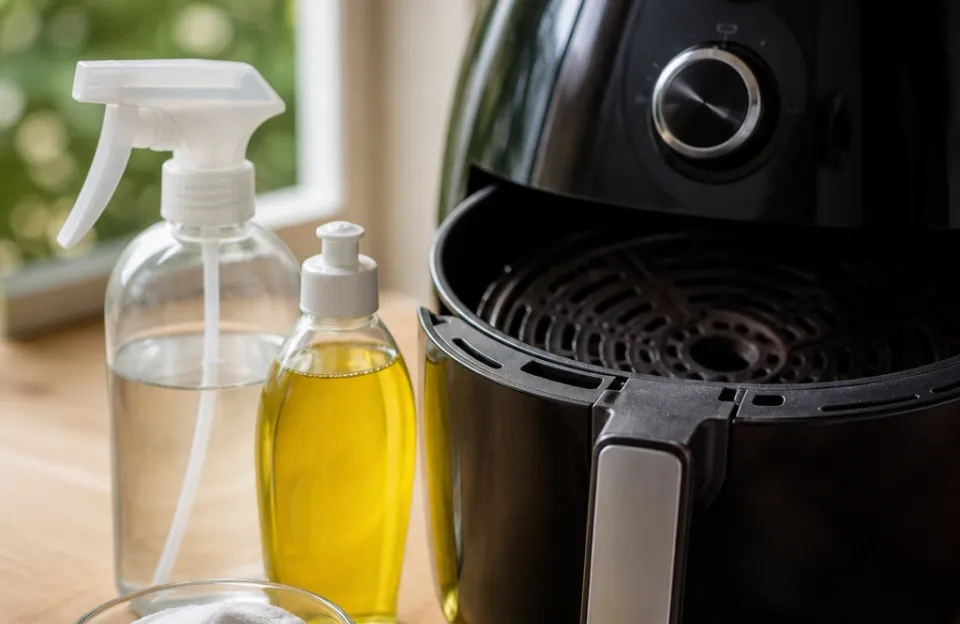
You don't need harsh chemical oven cleaners for this job. In fact, strong chemicals can damage the non-stick coating inside the cooking chamber or leave toxic residues near the heating element. Stick to basic kitchen supplies that cut through fat safely.
- Dish soap: A standard grease-cutting liquid dish soap works perfectly.
- Baking soda: This mild abrasive breaks down carbonized oil without scratching non-stick surfaces.
- White vinegar: Useful for dissolving mineral deposits and cutting through greasy films when mixed with water.
- Non-abrasive sponge or cloth: Microfiber cloths or the soft side of a kitchen sponge protect the coating. Never use steel wool or heavy scouring pads.
- Soft-bristled brush: An old toothbrush or a dedicated small cleaning brush reaches tight corners around the heating coil.
- Paper towels or dry cloths: For drying components completely before reassembly.
If you want to avoid scrubbing entirely, you can buy commercial air fryer cleaning sprays. However, a simple baking soda paste handles almost everything those products do, and it costs significantly less.
How to remove baked-on grease from an air fryer basket and tray
The basket and crisper tray take the most abuse during cooking. When you figure out the right timing for roasting potatoes, the starches and oils often bond directly to the metal mesh or non-stick surface. Removing that layer requires heat and moisture working together.
- Unplug the appliance and let it cool completely. Never attempt to clean a hot air fryer. The non-stick coating is softer when heated, making it highly vulnerable to scratches. Wait at least 30 minutes after cooking.
- Remove the basket and crisper plate. Pull them out and place them in your sink or a large basin.
- Fill the basin with very hot water and dish soap. Add enough soap to create suds. The water should be as hot as your tap allows.
- Soak for 15 to 20 minutes. This gives the soap time to penetrate the hardened grease layers. Don't rush this step. Soaking does the heavy lifting so your hands don't have to.
- Scrub gently with a non-abrasive sponge. After soaking, most of the grease will wipe away easily. Use circular motions. Avoid pressing too hard on non-stick coatings.
- Rinse thoroughly and dry. Rinse off all soap residue under warm running water. Dry the basket and tray completely with a towel or let them air dry before putting them back. Moisture left in the crevices can cause rust on uncoated metal parts.
Using a baking soda paste for stubborn crusty spots
Sometimes soaking alone doesn't work. If you've been cooking things like flour-dusted wings, the combination of flour, egg wash, and oil creates a cement-like crust that survives a basic soak.
Mix three parts baking soda with one part water in a small bowl. Stir until it forms a thick, spreadable paste. Apply this paste directly to the baked-on grease spots using your fingers or a spoon.
Let it sit for 15 to 30 minutes. The alkaline nature of the baking soda slowly breaks down the acidic compounds in the burnt fat.
After the paste has sat, take your soft-bristled brush or sponge and scrub the area gently. The baking soda provides just enough grit to lift the grease without gouging the surface beneath it. Wipe away the gritty residue with a damp cloth, then rinse the component clean.
Cleaning the interior chamber and heating element safely
The inside walls and the top heating element are where people usually get nervous. You can't submerge the main unit in water, which means you have to clean these areas manually while avoiding electrical components.
Grease splatters upward during cooking, coating the ceiling of the chamber and the exposed heating coil. If left unchecked, this grease burns every time you turn the machine on, producing smoke and bad odors. According to general appliance safety guidelines outlined by the Consumer Product Safety Commission, keeping heating elements free of debris reduces fire risks in countertop appliances.
- Turn the air fryer upside down (optional but helpful). Some people find it easier to access the heating element by flipping the unplugged, cooled unit over. Only do this if your specific model's manual permits it.
- Wipe the interior walls. Dampen a microfiber cloth with warm, soapy water. Wring it out until it's barely moist. Wipe down the inside walls, removing any visible grease splatters. Do not let water drip down into the base where the motor lives.
- Clean the heating element. Dip your soft-bristled brush (like a toothbrush) into warm soapy water. Shake off the excess. Gently brush the heating coil to dislodge baked-on grease. Work slowly. The goal is to loosen the carbonized fat, not bend the metal coil.
- Wipe away loosened debris. Take a barely damp cloth and carefully wipe the area around the heating element to pick up the grease you just brushed loose.
- Dry the interior. Use a dry paper towel or cloth to absorb any remaining moisture inside the chamber. Leave the drawer open for an hour to let residual humidity evaporate.
Never spray water or cleaning solutions directly into the interior of the machine. Liquid pooling near the fan motor or wiring causes permanent damage and creates a shock hazard.
Tackling grease on the exterior housing
The outside of the air fryer collects fingerprints, oil mist, and dust. While it doesn't affect performance, a greasy exterior attracts dirt and looks neglected.
Wipe the plastic or stainless steel housing with a cloth dampened in warm soapy water. For stainless steel models, wipe in the direction of the grain to prevent streaking. Dry immediately with a separate clean cloth to prevent water spots.
Avoid getting moisture into the control panel, buttons, or digital display screen. If grease builds up around the buttons, use a cotton swab dipped lightly in rubbing alcohol to dissolve it.
The steam bath trick for heavily neglected machines
If you haven't cleaned your air fryer in months, or if you recently bought a used one with severe buildup, manual scrubbing might feel impossible. A steam bath loosens the worst carbonized grease with minimal physical effort.
This method works especially well if you frequently cook high-fat items. Fatty cuts of meat, like bacon strips or heavily marbled steaks, render out significant amounts of oil that splatter everywhere. Over weeks, that oil polymerizes into a hard varnish.
- Prepare a heat-safe bowl. Find a small oven-safe bowl or ramekin that fits inside your air fryer basket.
- Add water and vinegar. Fill the bowl halfway with water and add two tablespoons of white vinegar. Alternatively, you can use water and a few lemon slices.
- Run the air fryer. Place the bowl in the basket. Set the temperature to 350°F (175°C) and run it for 5 to 10 minutes. The liquid will boil and fill the enclosed chamber with hot steam.
- Let it sit. Turn off the machine and unplug it. Leave the basket closed for another 10 to 15 minutes. The trapped steam continues to soften the baked-on grease on the walls, ceiling, and basket.
- Wipe it down. Open the drawer carefully to avoid steam burns. Remove the bowl. Take a damp cloth and wipe the interior. The previously rock-hard grease should now wipe away like soft butter. Follow up by washing the basket normally in the sink.
This technique saves your wrists and protects the non-stick coating from aggressive scraping.
| Cleaning Method | Best Used For | Time Required | Effort Level |
|---|---|---|---|
| Hot Soapy Soak | Routine maintenance, fresh grease | 20-30 minutes | Low |
| Baking Soda Paste | Crusty, dried-on flour and oil mixtures | 30-45 minutes | Medium |
| Steam Bath (Vinegar/Water) | Severe, long-term neglected buildup | 25-35 minutes | Low |
| Toothbrush Detailing | Heating coils, tight corners, crevices | 10-15 minutes | High |
Mistakes that ruin the non-stick coating
People often panic when they see thick black grease and reach for the wrong tools. Damaging the non-stick coating is the fastest way to ruin an air fryer permanently. Once the coating flakes off, food sticks relentlessly, and ingesting chipped coating material isn't ideal.
- Using metal utensils to scrape grease. Forks, knives, and metal spatulas will gouge the surface instantly. Always use silicone, wood, or plastic tools if you need to pry something loose.
- Applying aerosol cooking sprays directly to the basket. Many commercial cooking sprays contain propellants and emulsifiers that build up a sticky film over time. This film bakes onto the surface and mimics grease buildup, though it's chemically different. Rubbing a small amount of liquid oil on food with a paper towel prevents this issue entirely.
- Submerging the main base unit in water. The bottom half houses the motor, wiring, and fan. Putting it in the sink destroys the appliance. Only the removable drawer and basket are meant to get fully wet.
- Cleaning while hot. As mentioned earlier, non-stick coatings expand slightly when heated. Scrubbing them in this state increases the likelihood of peeling. Patience is required.
- Putting components in the dishwasher unnecessarily. While many baskets are labeled "dishwasher safe," the harsh detergents and prolonged high heat of a dishwasher cycle degrade non-stick coatings much faster than hand washing. Hand washing extends the lifespan of the basket significantly.
If you're wondering whether certain ingredients make cleanup harder, consider what you're cooking. Foods coated in wet batters or heavy flour dredges tend to fuse to the basket more aggressively than bare vegetables. Knowing how long to cook salmon or other delicate proteins correctly also prevents them from sticking and tearing, leaving behind protein residue that bakes into the metal.
Dealing with lingering grease smells after cleaning
Sometimes you successfully remove all visible baked-on grease from an air fryer, but the machine still smells like old oil when you turn it on. Odor molecules embed themselves into the plastic housing and porous rubber seals.
To neutralize these smells, wipe the entire interior chamber with a cloth soaked in undiluted white vinegar. Let the vinegar sit for five minutes, then wipe it out with a clean, water-dampened cloth. Vinegar naturally absorbs and neutralizes odor-causing compounds rather than just masking them.
Another option is to place a small bowl of dry baking soda inside the cold air fryer basket and close the drawer overnight. The baking soda acts as a passive odor absorber. Dump it out the next morning.
If the smell persists, repeat the steam bath method described above using lemon juice instead of vinegar. Citric acid breaks down the final invisible layers of rancid oil causing the stink.
Preventing grease from baking on in the first place
Knowing how to remove baked-on grease from an air fryer is useful, but preventing it saves far more time. Grease only bakes on when it sits through multiple heating cycles without being wiped away.
Wipe the basket and interior walls with a damp paper towel after every single use, once the unit has cooled down. It takes ten seconds. If you wait until the end of the week, that thin layer of oil will have already polymerized under repeated heat exposure.
Use parchment paper liners designed specifically for air fryers. These perforated sheets catch drippings from fatty meats and sugary marinades before they hit the metal basket. Just ensure the liner doesn't block the airflow vents or touch the top heating element, which could cause it to ignite.
Empty the drip tray or bottom of the basket frequently. When rendering fat pools at the bottom, the intense circulating air blows it up against the walls and heating coil. Pouring out excess liquid fat halfway through cooking a large batch of wings or sausages drastically reduces the mess left behind.
Different models handle grease differently. If you own a specific brand, check its manual. For example, users operating a Ninja AF101 model should pay attention to how its specific crisper plate design traps oil compared to standard round baskets.
Understanding your exact machine's airflow pattern helps you anticipate where grease accumulates fastest.
Frequently asked questions
Can I use oven cleaner to strip grease from my air fryer?
No. Oven cleaners contain sodium hydroxide (lye) and other caustic chemicals designed for heavy-duty ovens. These chemicals will eat through the non-stick coating on an air fryer basket and can leave toxic fumes trapped in the small, enclosed cooking chamber.
Stick to dish soap, baking soda, and vinegar.
Why does my air fryer smoke even after I cleaned it?
Smoke usually means there is still grease hiding somewhere you missed. Check the top heating element closely. Grease splatters upward and coats the coil, where it's hard to see.
When the element heats up, that hidden grease burns and smokes. Use a flashlight and a soft toothbrush to clean the coil thoroughly.
Is it safe to put the air fryer basket in the dishwasher?
Most manufacturers label their baskets as dishwasher safe, meaning it won't immediately break. However, dishwasher detergent is highly abrasive, and the extended heat cycle wears down non-stick coatings rapidly. Hand washing with warm soapy water preserves the basket's surface for years longer than machine washing.
Will baking soda scratch the non-stick coating?
Baking soda is a very mild abrasive. On the Mohs hardness scale, it is soft enough that it will not scratch intact non-stick coatings like PTFE (Teflon) or ceramic when used as a paste with a soft sponge. Do not use it dry and scrub with heavy pressure.
Mix it with water to create a slurry first.
How often should I deep clean the heating element?
For average home use, wiping down the heating element once a month is sufficient. If you cook highly fatty foods daily, inspect and brush the element every two weeks. Visible dark spots on the silver coil indicate carbonized grease that needs immediate removal.
Can I use a magic eraser sponge on the inside walls?
Melamine foam sponges (Magic Erasers) act like ultra-fine sandpaper. They are effective at removing stains, but they will eventually dull or strip a non-stick coating if used repeatedly. Reserve them for the exterior plastic housing or the uncoated metal drip pan, and avoid using them on the coated interior basket.
Keeping your machine running cleanly
Removing baked-on grease from an air fryer comes down to patience and the right chemistry. Hot water softens the fat, dish soap lifts it, and baking soda provides gentle abrasion for whatever refuses to let go. Protecting the non-stick coating matters more than rushing the job with harsh tools.
A quick wipe-down after every meal prevents the problem from compounding, saving you from spending your weekend scrubbing carbonized oil out of the heating coil.