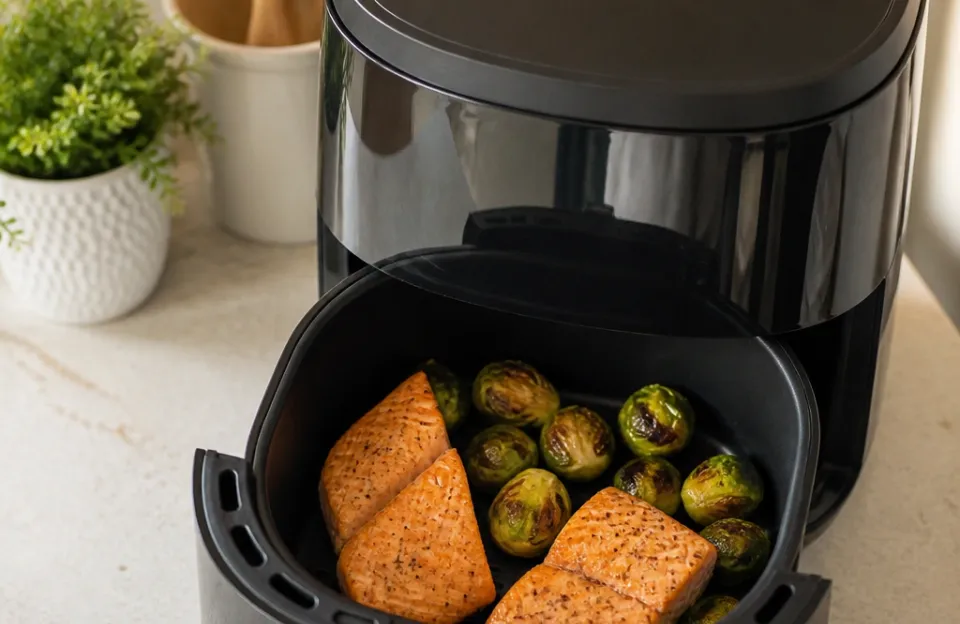
A nonstick air fryer basket is the removable cooking tray inside an air fryer coated with a slick surface layer, usually PTFE or ceramic. That coating stops food from bonding to the metal during high heat cooking. It also makes cleanup fast since grease and burnt bits wipe away with minimal scrubbing.
Understanding how these coatings work helps you pick the right machine and keep it running well. This article covers what nonstick air fryer baskets are made of, how long they last, why some peel, and how to care for them so the finish holds up over hundreds of meals.
What Makes Nonstick Air Fryer Baskets Different From Regular Metal Trays
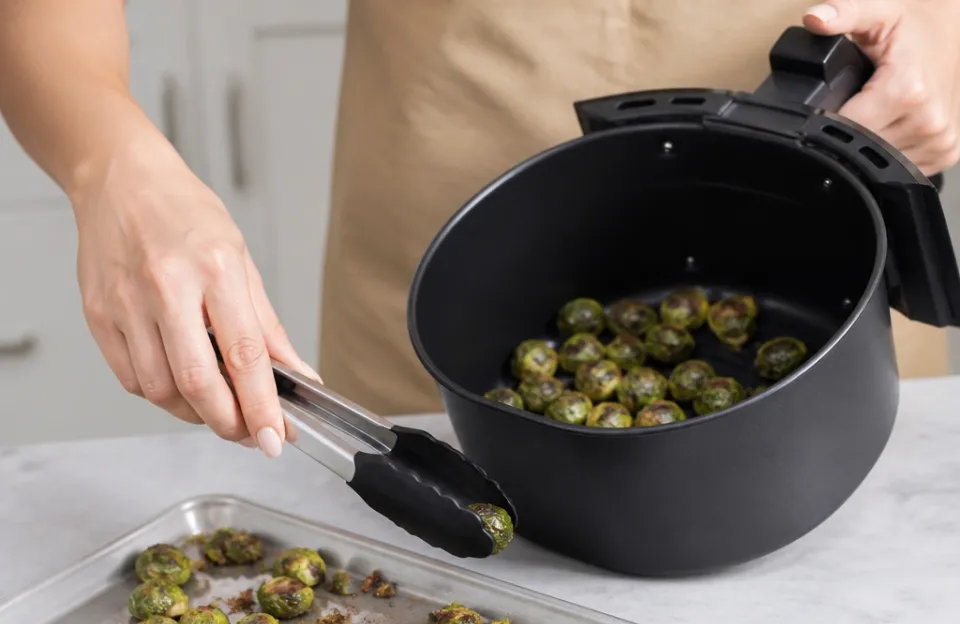
Standard stainless steel or bare aluminum trays require oil or parchment paper to stop food from sticking. A nonstick air fryer basket has a factory applied chemical layer that creates a low friction barrier between the food and the hot metal. When you cook items that need a crisp exterior, like getting chicken wings perfectly browned, that smooth surface allows the hot circulating air to do the work without the skin tearing off when you flip them.
The base material under the coating is typically stamped steel or cast aluminum. Manufacturers sandblast or chemically etch this base before spraying the nonstick layer on. The rough microscopic texture gives the liquid coating something to grip as it cures in industrial ovens at temperatures above 750°F.
Without that prep step, the finish would flake off within weeks.
Most baskets sold today use one of two main coating families. Polytetrafluoroethylene (PTFE) is the traditional option. Ceramic based coatings, which rely on silicon dioxide rather than fluoropolymers, have grown more common in recent years.
Both reduce sticking, though they behave differently under heavy daily use.
PTFE Coatings and How They Handle High Heat
PTFE is a synthetic fluoropolymer. It repels water and oil naturally, giving it a very low coefficient of friction. For decades, this was the default choice for almost all nonstick cookware, including air fryer baskets.
Under normal cooking conditions, PTFE is highly stable. Most air fryers max out around 400°F to 450°F. At those temperatures, the coating stays intact and safe.
The U.S. Food and Drug Administration regulates food contact surfaces, and FDA guidelines on cookware materials confirm that PTFE coatings are acceptable for standard kitchen use when manufactured correctly.
Problems start if the basket runs empty at maximum temperature for extended periods. Above 500°F, PTFE begins to degrade. It releases fumes that can irritate lungs and cause polymer fume fever in humans, which is especially dangerous to pet birds.
Because air fryers circulate heat rapidly, leaving an empty machine running on its highest setting is the most common way users accidentally damage the coating.
Older PTFE formulations used perfluorooctanoic acid (PFOA) as a processing aid. Due to environmental and health concerns, the industry phased out PFOA globally by 2015. Any modern nonstick air fryer basket you buy today should be labeled PFOA free.
Ceramic Based Finishes as the Alternative
Ceramic coatings use a sol gel process to bond silicon dioxide to the metal tray. They contain no PTFE and no PFOA. Many buyers prefer them because they avoid fluoropolymers entirely.
These finishes handle higher peak temperatures than PTFE, often rated safely up to 600°F. They also tend to have a slightly harder surface feel out of the box. However, ceramic coatings generally lose their slickness faster than PTFE does.
The initial release might be excellent, but with prolonged daily use, eggs and delicate fish may start clinging to the tray.
If you frequently cook sticky marinades or sugary glazes, ceramic can struggle sooner. Sugar caramelizes and bonds aggressively to surfaces, and ceramic lacks the extreme slipperiness of PTFE to resist that pull. Knowing your typical recipes matters here.
If you mostly roast vegetables or reheat pizza, ceramic works fine. If you regularly cook battered foods, PTFE holds up longer.
Why Your Basket Coating Peels or Flakes Off
Peeling is the number one complaint about any nonstick air fryer basket. The coating separates from the metal base and chips into the food. Several specific actions cause this.
Metal utensils are the primary culprit. Tongs, forks, or metal spatulas scrape through the thin top layer. Once a scratch exposes the metal underneath, moisture and heat get under the edge of the coating.
The surrounding area then lifts and flakes away during the next heating cycle. Always use silicone tipped tongs or wooden tools when turning food.
Thermal shock causes similar damage. Dropping a scorching hot basket directly into a sink full of cold water forces the metal to contract instantly. The rigid coating cannot flex as fast as the metal shrinks, so it cracks.
Let the tray cool on the counter for ten minutes before washing it.
Dishwashers accelerate wear. Even if a manufacturer claims a basket is dishwasher safe, the harsh detergents and prolonged high heat cycles break down the chemical bonds in the coating over time. Hand washing with mild soap extends the life significantly.
Stacking other heavy pots or pans inside the air fryer basket for storage also grinds the finish down. Treat the tray as a dedicated cooking vessel, not a general kitchen storage bin.
How Long a Nonstick Finish Lasts With Daily Use
Lifespan depends heavily on frequency and care. A PTFE coated basket used three times a week and hand washed gently will typically last two to four years before the release properties noticeably decline. Heavy daily use shortens that window to twelve to eighteen months.
Ceramic coatings degrade faster. Expect about six to twelve months of peak performance with regular use, followed by a gradual increase in sticking. You can still use the basket once the ceramic loses its slickness, but you will need to apply a light spray of cooking oil before adding food.
Signs of end of life include visible scratches exposing bare metal, large patches where the black or gray finish has worn away to silver, or food consistently burning onto spots that used to wipe clean easily. Once the coating is compromised over more than a small area, replacing the basket or the entire unit is the safest route. Eating small flakes of cured PTFE passes through the body without absorbing, according to toxicology data, but cooking on exposed, scratched aluminum raises different concerns regarding metal leaching.
| Attribute | PTFE Coated Basket | Ceramic Coated Basket |
|---|---|---|
| Max Safe Temp | ~500°F | ~600°F |
| Chemical Base | Fluoropolymer | Silicon Dioxide (Sol Gel) |
| PFOA Free | Yes (post 2015) | Yes (inherently) |
| Typical Lifespan | 2 to 4 years | 6 to 18 months |
| Oil Needed Over Time | Rarely | Often required as it ages |
| Dishwasher Safe | Technically yes, degrades fast | Technically yes, degrades fast |
Cleaning Methods That Protect the Surface Layer
Washing a nonstick air fryer basket requires a soft approach. Hard sponges, steel wool, and abrasive scouring powders strip the finish directly.
Start by letting the basket cool completely. Fill it with warm water and a few drops of standard dish soap. Let it soak for ten to fifteen minutes if there is baked on grease.
Soaking loosens carbonized food so you don't have to scrub hard.
Use a soft sponge, a microfiber cloth, or a nylon bristle brush to wipe the interior. Circular, gentle motions lift residue without scratching. Rinse thoroughly with warm water and dry immediately with a towel.
Leaving the basket to air dry can leave mineral deposits from hard water, which build up and create a rough texture that mimics a failing coating.
For stubborn stuck on messes, boil a small amount of water inside the basket on the stove if the shape allows it, or fill it with hot soapy water and let it sit overnight. Never try to pry burnt food off with a knife or metal spatula.
If you want to understand how proper maintenance affects overall cooking results, keeping the tray clean is just as important as knowing the exact timing for roasting potatoes so starch doesn't bake permanently into the corners.
Cooking Oils and Sprays That Damage Nonstick Surfaces
Aerosol cooking sprays are terrible for nonstick air fryer baskets. Commercial sprays contain propellants and emulsifiers like soy lecithin. These additives burn at lower temperatures than the oil itself.
They leave a gummy, invisible residue that bakes onto the coating. Over weeks, this buildup creates a sticky film that ruins the nonstick effect, and scrubbing it off takes the actual coating with it.
Use a pump action oil mister filled with pure avocado, olive, or canola oil instead. Alternatively, brush a tiny amount of oil directly onto the food rather than the basket. Many foods cooked in an air fryer already contain enough natural fat to prevent sticking without added oil.
When preparing wet batters or heavily marinated proteins, placing a perforated parchment paper liner at the bottom of the basket protects the surface. Just make sure the paper doesn't block the airflow vents, or the machine won't crisp the food properly. If you're working with heavily seasoned cuts, checking guides on achieving extra crunch on wings often points back to protecting the basket floor from sugary rubs that burn and stick.
PTFE Versus Ceramic: Which Fits Your Kitchen Better
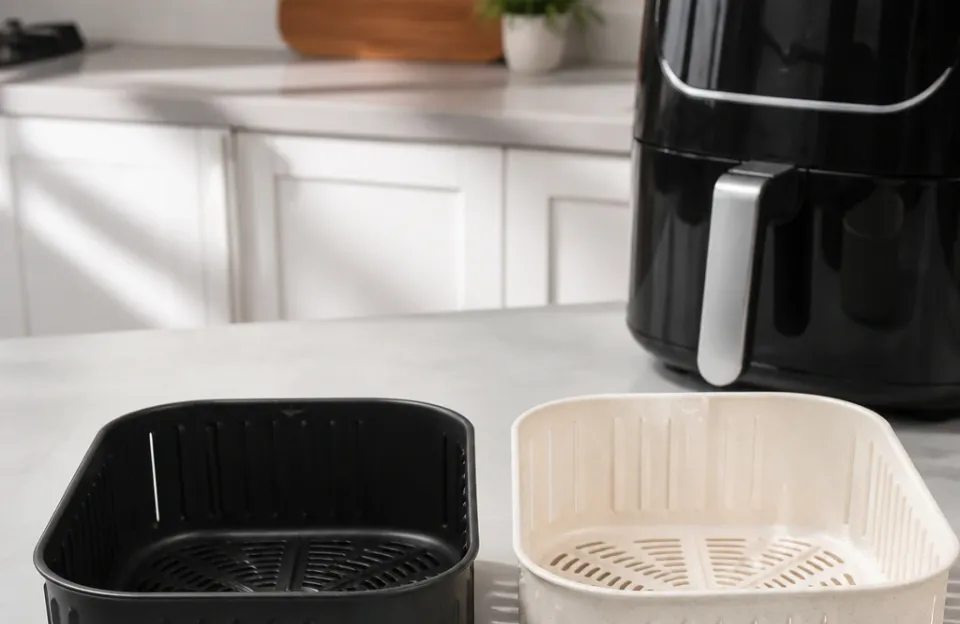
Choosing between the two comes down to your priorities. If longevity and effortless food release matter most, PTFE is the stronger choice. It stays slicker for much longer.
You spend less time fighting stuck cheese or batter.
If avoiding fluoropolymers is your primary concern, ceramic is the path. It provides a reliable surface for lighter cooking tasks. It handles accidental overheating slightly better without releasing fumes, though thermal shock will still crack it.
Consider what you cook. Delicate items like fish fillets or eggs demand PTFE. Dense root vegetables or frozen fries work fine on either surface.
If you own a larger capacity model, like a multi function countertop cooker, the sheer size of the basket means you'll likely be tossing heavier loads of food in and out, making the durability of PTFE more appealing. Conversely, if you use a smaller, specialized appliance like a glass basket model, the nonstick dynamics change entirely since glass doesn't require traditional chemical coatings at all.
Misconceptions About Nonstick Safety in Air Fryers
People repeat several myths about these coatings that don't hold up to scrutiny.
- "Scratched PTFE poisons your food." Ingesting a small flake of fully cured PTFE coating is inert. It passes through the digestive tract without being absorbed. The real risk of a scratched basket is that food sticks to the exposed metal and burns, or that the underlying aluminum reacts with acidic foods.
- "All nonstick coatings emit toxic gas during normal cooking." PTFE only begins to decompose and off gas above 500°F. Standard air frying happens between 350°F and 400°F. As long as you don't run the machine empty on maximum heat, normal cooking produces no harmful fumes.
- "Ceramic coatings last forever because they are harder." While ceramic resists scratching slightly better initially, its hydrophobic properties degrade faster than PTFE. Hardness does not equal lasting slickness.
- "You must season a nonstick basket like cast iron." Factory applied PTFE and ceramic coatings do not need seasoning. Rubbing oil into them and baking it on actually builds up the exact residue that ruins the surface.
- "Dishwasher cleaning is totally fine if the manual says so." Manufacturer warranties often cover defects, not wear from dishwashers. The caustic detergent and high drying heat in a dishwasher break down the coating's bond much faster than hand washing.
When to Replace the Basket Entirely
Small surface scratches are normal wear. You don't need to throw the basket away the first time you see a tiny mark. But widespread peeling changes the math.
If large sections of the coating are lifting, food will constantly burn onto those spots. You'll find yourself scrubbing aggressively, which damages the remaining good areas. It becomes a downward spiral.
Once more than twenty percent of the cooking surface is bare metal, replace the basket.
Many manufacturers sell replacement baskets separately. Check your model number before buying. A basket from a different brand or even a different model line from the same brand rarely fits correctly.
An ill fitting basket blocks the fan circulation, leading to uneven cooking and potential overheating of the heating element.
Also inspect the rim and the handle attachment points. Sometimes the coating wears thin where the basket slides into the main housing. Friction from inserting and removing the tray daily sands that edge down.
If the metal underneath starts rusting, the structural integrity is compromised.
Caring for the Basket During Specific Cooking Tasks
Different foods stress the coating in different ways. Understanding this helps you adjust your technique.
Bacon renders heavy grease. The fat pools at the bottom and gets extremely hot. Pour excess grease out halfway through cooking if your model allows safe removal.
Letting thick grease sit against the bottom coating at 400°F for twenty minutes accelerates breakdown. Learning how quickly bacon fat renders helps you time when to drain the tray before the grease scorches the surface.
Battered foods, like wet dredged chicken or tempura vegetables, drip raw batter through the basket holes. That batter cooks onto the outside bottom of the tray and the drip pan below. Clean both parts immediately after cooking.
Dried batter acts like glue and pulls at the coating when you try to chip it off later.
Acidic foods, such as tomatoes or citrus marinades, react with exposed metal. If your basket has deep scratches, avoid cooking highly acidic sauces directly in it. The acid pits the bare aluminum, creating rough craters that guarantee sticking in future uses.
Wrapping Up the Details on Air Fryer Coatings
A nonstick air fryer basket relies on a thin, carefully applied chemical layer to keep cooking simple and cleanup fast. Whether you choose PTFE for its long lasting slickness or ceramic to avoid fluoropolymers, treating the surface gently dictates how long it survives. Skip the aerosol sprays, put away the metal tongs, wash it by hand, and let it cool before it touches water.
Follow those basics, and the coating will hold up through years of daily meals.