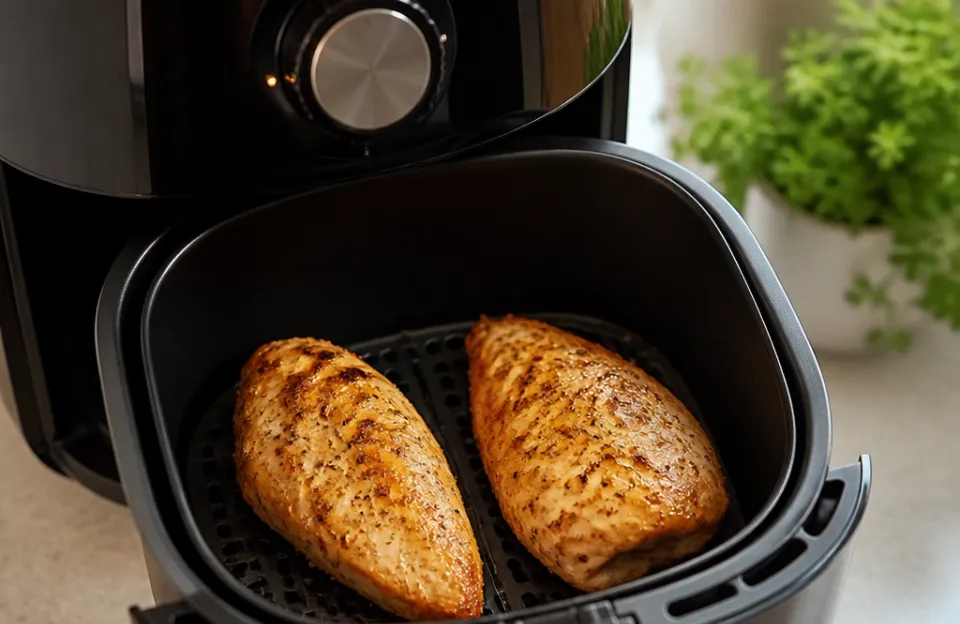
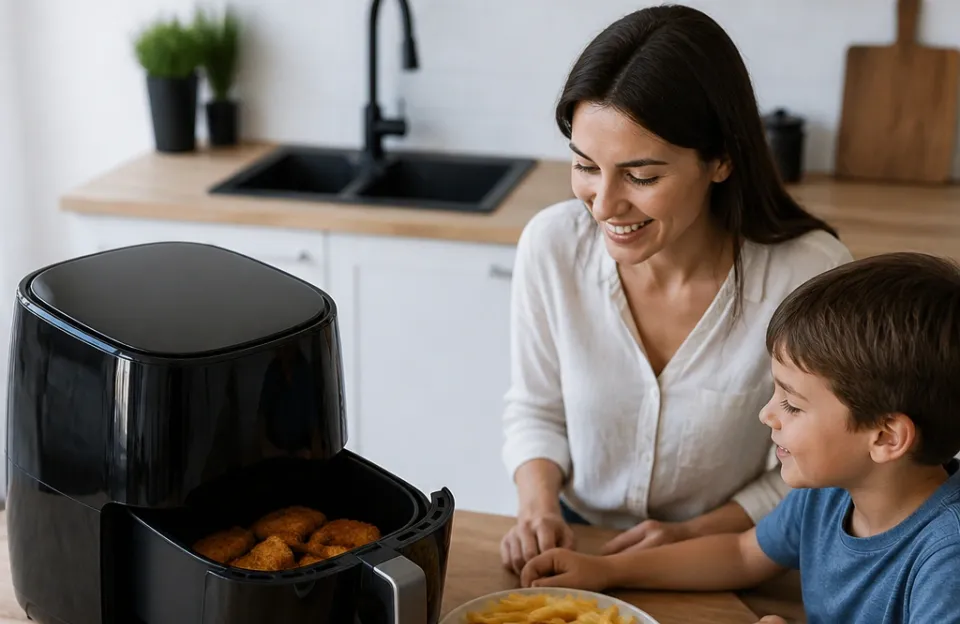
For one person, the right air fryer size is between 2 and 4 quarts. A 2-quart basket handles a single chicken breast or a small side of fries. A 3 to 4-quart model fits a full meal for one without taking up your entire counter.
Anything larger than 5 quarts wastes space and electricity when you are cooking solo.
Picking the correct air fryer size for one person comes down to what you cook most often. If you mostly reheat leftovers or make quick snacks, stay near 2 quarts. If you want to cook proteins and vegetables at the same time, aim for 3 or 4 quarts.
This guide breaks down how capacity translates to actual food, why going too big causes problems, and how to match the machine to your kitchen space.
How Air Fryer Capacity Translates to Real Food
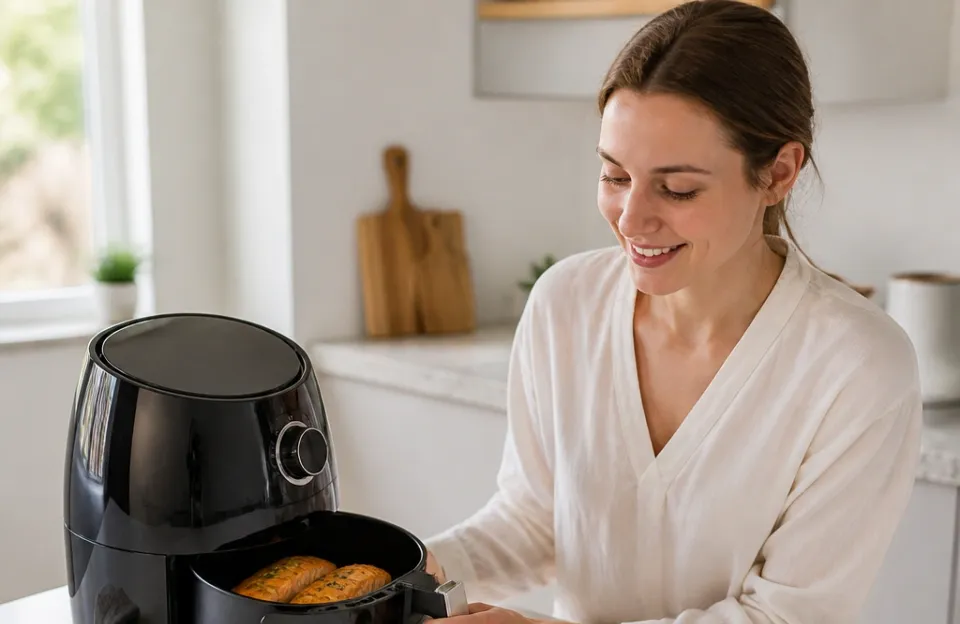
Manufacturers list capacity in quarts or liters. That number describes the total volume inside the cooking basket. It does not tell you how much food you can actually fit in a single layer.
Air fryers work by pushing hot air rapidly around the food. If you stack items on top of each other, the air cannot reach the bottom layers. The food steams instead of crisping.
A 2-quart basket gives you roughly enough surface area for two standard frozen burger patties placed side by side. You can also fit about half a pound of french fries in a single layer. For one person eating a light meal or a snack, this is plenty of room.
A 3-quart basket expands that space slightly. You can fit three or four chicken wings alongside a small handful of potato wedges. It holds a medium sweet potato comfortably.
This size is where most solo cooks find their sweet spot. It leaves enough room to shake the basket halfway through cooking without food spilling over the rim.
A 4-quart basket fits a whole bone-in chicken thigh with a cup of chopped broccoli next to it. You can roast a small piece of salmon with asparagus in the same batch. If you have a bigger appetite or like having leftovers for tomorrow's lunch, 4 quarts covers it.
We've put together notes on timing fish properly if you plan to use this size for seafood.
| Capacity | Fits in a Single Layer | Best For |
|---|---|---|
| 1.5 to 2 Quarts | 2 burger patties or 0.5 lb fries | Snacks, reheating, very small kitchens |
| 3 Quarts | 1 large chicken breast plus a side vegetable | Daily meals for one person |
| 4 Quarts | 2 bone-in thighs or a small whole meal | Larger appetites or cooking with leftovers |
| 5+ Quarts | Multiple portions meant for sharing | Families or heavy batch cooking |
Why Buying Too Big Causes Problems for Solo Cooks
It is tempting to buy a 6-quart or 8-quart air fryer just in case you have guests over. For someone living alone, a massive unit creates daily annoyances. The heating element and fan have to work harder to push hot air through a large, mostly empty chamber.
This uses more electricity every time you turn it on.
Preheating takes longer in a big basket. A 2-quart model reaches 400 degrees Fahrenheit in about three minutes. A 6-quart model might need five to seven minutes.
When you are only making a single serving of zucchini, waiting that long defeats the purpose of using a fast appliance. If you regularly cook lighter vegetables, checking how long softer produce needs prevents them from drying out while the large basket heats up.
Food placement becomes tricky in oversized baskets. If you put a single chicken breast in the center of a huge 8-quart tray, the intense airflow can dry out the edges before the thick center finishes cooking. Smaller baskets keep the food closer to the heating element and force the air to circulate tightly around the ingredients.
This produces better browning.
Cleaning is another factor. A 4-quart basket fits easily into a standard apartment sink. An 8-quart drawer is bulky, heavy, and awkward to scrub under a faucet.
If your dishwasher has limited space, the larger basket might block an entire rack.
Counter space matters too. A compact 2-quart cylinder takes up about the same footprint as a coffee maker. Large dual-basket models can be wider than a microwave.
If you live in a studio apartment or have a small galley kitchen, a giant appliance will sit in your way permanently.
Matching the Basket Shape to Your Cooking Style
Capacity numbers do not tell the whole story. The physical shape of the basket changes how much food fits inside. There are two main shapes: round buckets and square drawers.
Round baskets are common in smaller 1.5 to 3-quart models. They drop straight down like a deep fryer pot. These are great for tossing things like roasted chickpeas, french fries, or diced potatoes.
You grab the handle and shake the bucket, and everything tumbles evenly. Round baskets struggle with flat items. A large pork chop or a piece of fish might curl up against the curved walls, leaving the center unexposed to the heat.
Square or rectangular drawers dominate the 3 to 5-quart range. They maximize corner space. You can lay two pieces of bacon completely flat without overlapping them.
Square drawers slide out like a filing cabinet. They are easier to load and unload with tongs because you have a wide opening to see inside.
If you eat a lot of flat proteins like chicken breasts, fish fillets, or tofu slices, a 3-quart square drawer will hold more usable food than a 4-quart round bucket. Always look at the interior dimensions, not just the volume printed on the box. Some brands measure capacity by filling the basket to the absolute brim with water, which is not how you cook food.
Leave at least an inch of headspace below the rim so the air can flow over the top of your meal.
Wattage, Power, and Small Kitchen Limits
Smaller air fryers generally draw less power. A 2-quart model usually runs between 800 and 1200 watts. A 4-quart unit typically pulls 1400 to 1700 watts.
If you live in an older building, a dorm room, or an RV, electrical limits matter. Older wiring might trip a breaker if you run a high-wattage appliance at the same time as a microwave or a space heater.
Lower wattage does not mean worse cooking for one person. Because a 2-quart basket has less air volume to heat, an 1100-watt element can get it just as hot and just as fast as a 1700-watt element in a massive oven. The concentrated heat works in your favor.
If you are buying a model for a dorm or a shared office kitchen, check the rules first. Many university housing offices ban appliances over 1000 watts or require automatic shutoff timers. Compact models almost always meet these restrictions.
Oven-Style vs. Basket Models for One Person
Most people picture a basket-style machine when they think of air frying. There is also the toaster-oven style, which looks like a mini countertop oven with a glass door.
Basket models are faster. The enclosed space traps heat aggressively. They are better for getting crispy skin on chicken or crunch on roasted potatoes.
Cleaning a nonstick basket is usually faster than scrubbing wire racks. If your main goal is quick weeknight dinners for one, a 3-quart basket is the standard choice. Brands like Ninja make excellent compact options; we reviewed one popular small-footprint Ninja model that fits this category well.
Oven-style air fryers take up more counter space but give you visible control. You can watch the cheese melt without pulling a drawer open and losing heat. They often come with multiple racks, letting you bake a small pizza on one level while roasting vegetables on another.
However, for a single person, running a large toaster oven just to toast a bagel or cook one sausage link wastes energy. Only choose the oven style if you plan to replace your regular toaster entirely.
The FDA provides general guidelines on safe countertop appliance usage and avoiding cross-contamination when handling raw meats in compact spaces. Keeping your workspace clean is easier when your appliance matches your actual portion sizes.
Dual-Basket Machines When You Want Variety
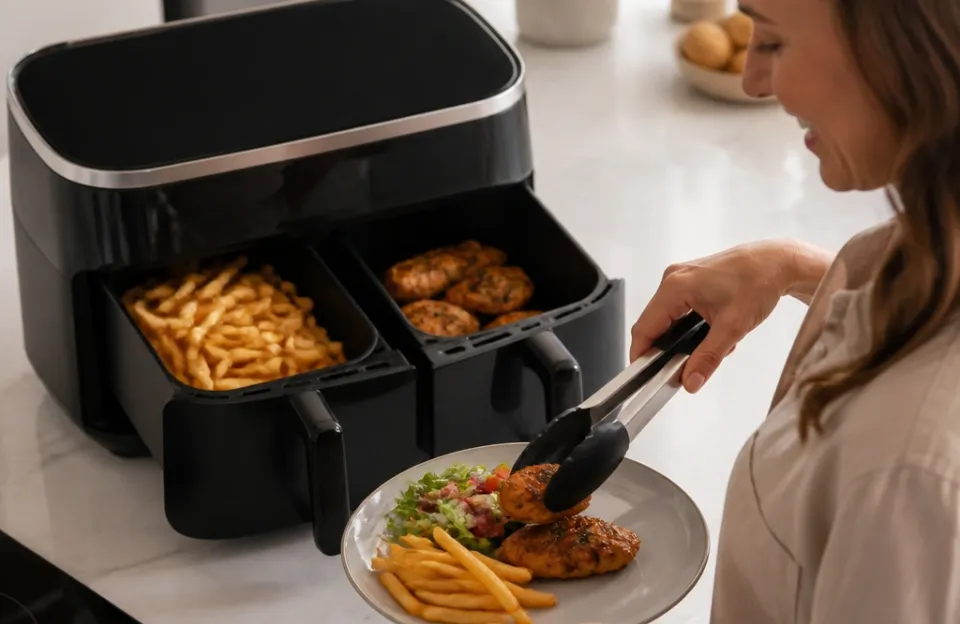
Dual-basket air fryers have two separate drawers, usually 3 or 4 quarts each. At first glance, a 6-quart dual zone seems too big for one person. But some solo cooks prefer them for a specific reason: cooking two different foods at two different temperatures simultaneously.
If you want to roast sweet potatoes at 400 degrees while gently warming a piece of fish at 325 degrees, a single basket forces you to compromise on temperature or cook in batches. A dual-basket lets you run both at once. Each drawer is still sized perfectly for a single serving.
The tradeoff is the footprint. Dual machines are wide. They also cost more.
If you rarely cook complex meals with multiple components, stick to a single 3-quart basket. If you meal prep or like having a protein and a starch finish at the exact same time, the dual setup earns its space. Just remember to wash both drawers after every use.
Where to Put a Small Appliance in a Tight Kitchen
Before you buy, measure your available space. You need clearance above and behind the machine. Air fryers vent extremely hot air out of the back exhaust port.
Placing a 2-quart model directly under low wooden cabinets can cause heat damage over time. Leave at least five inches of space behind the unit and four inches above it.
If you lack permanent counter space, look for models weighing under eight pounds. A lightweight 2-quart air fryer can live inside a cabinet or pantry and get pulled out only when needed. Heavier 4-quart models become annoying to lift repeatedly.
Some compact models come with cord wraps built into the base. This keeps the plug tidy when stored away. If you are keeping the machine on the counter full-time, pick a color or finish that matches your existing appliances so it does not look out of place.
Adjusting Recipes Down for a 2 to 4 Quart Space
Most online recipes assume you are cooking for a family in a 6-quart basket. When you scale down to a 2 or 3-quart machine, you have to adjust more than just the ingredient amounts.
Cooking times often shrink slightly. A smaller mass of food heats through faster. If a recipe calls for 20 minutes for a pound of chicken chunks, your half-pound portion might finish in 14 or 15 minutes.
Start checking early. Opening the basket to peek does not ruin the cooking process the way opening a traditional oven door does. The fan stops immediately when you pull the drawer out, and it resumes instantly when you push it back in.
Temperature settings usually stay the same. If a recipe says 375 degrees, set your small machine to 375 degrees. The difference is how the heat hits the food.
In a tight basket, the food sits closer to the heating coil. Keep an eye on tall items like thick muffins or stacked meatballs, as the tops might brown faster than the centers cook through.
Shaking the basket is critical in small units. Because the food is packed tighter, items touching the bottom mesh can stick or burn if left untouched. Pull the basket out every five to seven minutes and give it a firm toss.
This applies whether you are making crispy snacks or getting the timing right on potatoes.
Common Mistakes People Make Choosing a Solo Size
Buying based on the lowest price often leads to getting a 1.5-quart model that is too small for anything beyond reheating a slice of pizza. While cheap, these micro-baskets frustrate users who actually want to cook a meal.
Ignoring the exterior dimensions is another frequent error. Some "compact" 3-quart models have thick plastic housings that make them just as wide as a cheaper 5-quart model. Always check the width and depth measurements, not just the quart capacity.
Assuming a bigger basket means crispier food goes against how the technology works. Crispiness comes from rapid air circulation over exposed surfaces. Overcrowding ruins this, but so does putting a tiny amount of food in a cavernous space where the air loses velocity before hitting the target.
Match the basket to your typical portion.
Skipping the manual regarding maximum fill lines causes messy smoke-outs. Every basket has a "max" mark. Going above it blocks the fan path.
Grease gets pushed up into the heating element and smokes heavily. Even if you are hungry, never pack the basket past that line. If you're planning to cook heavier items, knowing how long thicker cuts take helps you plan smaller, manageable batches.
Frequently asked questions
Can I cook a whole chicken in a 3-quart air fryer?
No. A 3-quart basket physically cannot fit a standard whole chicken. You can fit a Cornish game hen, which weighs about one to two pounds, or you can cook a whole chicken broken down into individual pieces across multiple batches.
If you want to roast a whole bird at once, you need at least a 6-quart capacity.
Is a 2-quart air fryer too small for daily meals?
It depends on what you eat. If your daily meals consist of a protein and a vegetable, a 2-quart basket will feel cramped because you cannot fit both side by side without stacking them. If you mostly cook single items like a portion of fries, a couple of sausages, or a single chicken breast, 2 quarts is perfectly adequate.
Do smaller air fryers use significantly less electricity?
Yes. A 2-quart model drawing 1000 watts uses less power than a 6-quart model drawing 1700 watts. More importantly, the smaller unit finishes cooking faster because it has less air volume to heat.
Both factors combine to lower your energy usage per meal compared to running a large unit for one person.
Will food dry out faster in a small basket?
It can if you leave it in too long. Because the food sits closer to the heating element and the air moves in a tighter circle, moisture evaporates quickly. This is exactly why air fryers create crispy textures.
To prevent drying out lean meats, reduce the cooking time slightly or lightly coat the food in oil before starting.
Should I get a basket or a tray style for my apartment?
For a single person in an apartment, a basket style is usually better. Baskets contain splatter more effectively, preventing grease from coating your small kitchen. They also take up less horizontal counter space than tray-style toaster ovens and are much faster to clean in a small apartment sink.
Are air fryers safe to use in college dorms?
Many compact air fryers under 1000 watts are allowed in dorms, but you must check your specific university's housing policies first. Some schools ban all appliances with exposed heating coils. Look for models with automatic shutoff timers and cool-touch exteriors to meet strict dorm safety requirements.
Picking the Right Fit for Your Kitchen
Finding the correct air fryer size for one person saves counter space, lowers power bills, and actually improves how your food tastes. Stick to the 2 to 4-quart range. Choose a 2-quart round bucket if you mainly want snacks and simple reheating.
Go with a 3 or 4-quart square drawer if you want to cook complete meals with a protein and a vegetable in the same batch. Measure your available space, check the wattage limits of your outlets, and avoid the trap of buying a family-sized machine just because it was on sale. A smaller basket forces the hot air to work efficiently, giving you the crispy results you bought the appliance for in the first place.