Weigh food raw by default for the most consistent calorie and macro tracking, and always match the scale reading to the state named in the database entry. Cooking changes weight mainly by moving water in or out, so logging a raw weight against a cooked entry, or the reverse, will misstate calories and macros.
If your meal prep portions never seem to match your nutrition labels, this is usually the reason. The sections below explain why the scale reading shifts in the pan, how to handle foods that absorb water, what database entries actually describe, and when weighing cooked food is the better choice.
Why the Scale Reading Changes When Heat Hits the Pan
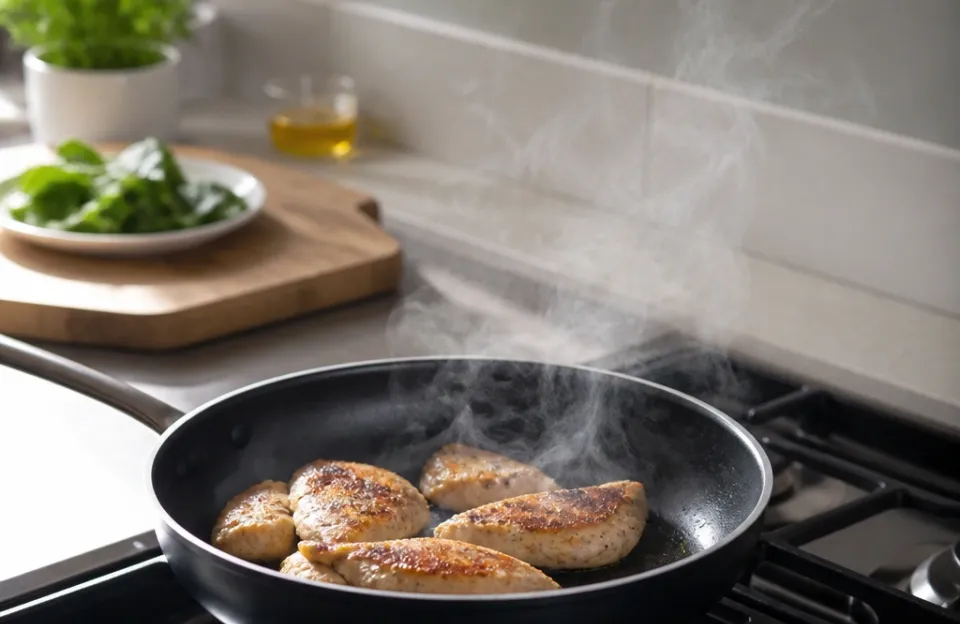
Water drives most of the weight change during cooking. Heat causes muscle proteins to contract and release moisture, so a steak or chicken breast shrinks and the liquid evaporates or pools in the pan. Cooking yield expresses this relationship as cooked weight divided by raw weight, and USDA publishes yield, moisture change and fat change values for specific cuts prepared under specific protocols. Those USDA cooking yield figures have been referenced since 1950 through Agriculture Handbook No. 102, and the underlying studies compare raw and cooked weights to derive them.
Most of the mass loss is water, so protein and fat content does not fall in simple proportion to the smaller cooked weight. Rendered fat is the main exception: when fat leaves the meat and stays in the pan, those calories are no longer in your portion. Rinsing cooked ground beef with warm water reduced fat and increased moisture in the studied samples, which shows how much fat position and handling can change the composition of what you eat.
Vegetables behave the same way. Broccoli, zucchini and spinach release water when roasted or sautéed, and spinach shrinks dramatically. The vitamins, minerals and fiber stay in the leaves; they simply weigh less without the water.
Other foods move in the opposite direction. Rice, oats and dried beans absorb water during cooking, so the cooked portion weighs more than the dry grain while the added weight carries no calories. That is why logging a cooked weight against a dry entry can multiply your calculated calories by mistake, and why the reverse error undercounts.
| Food type | Typical weight change | Primary cause | Calorie shift |
|---|---|---|---|
| Chicken breast | Loses moisture during cooking | Moisture evaporation | Minimal if no fat is added |
| Ground beef (80/20) | Loses moisture and some fat | Rendered fat and water | Lower if fat is drained |
| White rice | Gains weight | Water absorption | None per dry portion |
| Spinach | Large moisture loss | Water loss, leaves collapse | None |
| Dried pasta | Gains weight | Starch hydration | None per dry portion |
Treat these patterns as illustrations of direction rather than fixed values. Actual weight change depends on the cut, cooking method, starting temperature and water content, and USDA yield data is tied to specific research protocols.
Should You Weigh Food Before or After Cooking for Strict Macro Counting?
For strict macro counting, weigh food before cooking. Raw weight is the practical default for precision because raw weights are typically well characterized in official databases, while cooking introduces variables you cannot control consistently.
Pan heat, cook time and starting moisture all shift the final weight. Two people can bake the same potato at different temperatures and end up with different cooked weights. Weighing raw removes that variability, and the number you log reflects the food you actually bought.
Tracking apps usually name the state directly in the entry. Search results typically distinguish raw from cooked versions of the same food, and the reliable habit is to read the entry label rather than assume. If you are logging cooked weight, logging the cooked weight against the matching cooked entry keeps your numbers aligned with the routine described in that guide.
Mixed dishes make the raw approach even more valuable. If you make a stir fry, weigh the raw vegetables and raw meat separately before they hit the wok. Once oil and sauce are in the pan, separating components on a scale is impossible.
Foods That Gain Weight in the Pot
Grains and legumes reverse the usual intuition. You still weigh them dry, but understanding why they get heavier prevents a lot of tracking panic.
Dry oats soak up water, pasta swells in boiling water, and lentils roughly triple in size. The nutrients sit inside the dry structure, and water fills the gaps between starch molecules. Published weight-change figures for these foods vary by variety and cooking method, so treat any single percentage as a rough illustration rather than a rule.
Database values reflect the difference. USDA data types include Foundation Foods, the Food and Nutrient Database for Dietary Studies (FNDDS), Branded Foods and SR Legacy, and entries for raw and cooked forms of the same grain can differ substantially per 100 grams. The practical move is to pick the entry that matches your scale state rather than converting between them with a guessed yield factor.
If a recipe calls for 200 grams of cooked quinoa, work backward. Estimate the dry amount that produces that cooked weight, then log the dry figure in your app. The estimate will not be exact, which is one more reason to weigh dry whenever you cook from dry ingredients.
Baked goods follow similar logic. Flour, sugar, butter and eggs go into a bowl, and heat drives off moisture as the structure sets, so a loaf weighs less than the sum of its raw ingredients. Weighing baking ingredients individually before mixing is the only reliable method. Weighing a slice of homemade bread against a generic app entry rarely works because hydration levels vary widely between bakers.
How to Match Your Scale Reading to the Right Database Entry
The single rule that prevents most errors: match the state of the food on your scale to the state named in the entry.
FoodData Central is managed by the USDA Agricultural Research Service’s Beltsville Human Nutrition Research Center and hosted by the National Agricultural Library. It is not one uniform list. The data types serve different purposes: Foundation Foods covers individual samples of commodity or minimally processed foods with information about variability, FNDDS provides nutrient and portion weight data for foods reported in national dietary surveys, and Branded Foods comes from labels of national and international branded foods.
That matters because entries from different data types can describe the same food at different preparation states, and SR Legacy is a historical collection rather than a live one. Brand name products generally reflect the form the food is in when you buy it, such as raw chicken or uncooked rice, unless the label has an “as prepared” column based on package instructions.
When an entry name does not state raw or cooked, do not guess. Compare it with a version that does state the preparation method, and choose the one that matches the food on your scale. If you cannot tell, pick a different entry or weigh the food in its raw state and log a raw entry instead.
One more check applies to produce. Many database values describe the edible portion, so a listed banana weight excludes the peel. Weigh the part you actually eat, and remove stems, cores or peels before logging where the entry expects it.
A Simple Raw-Weighing Routine for Daily Tracking and Batch Cooking
Building a habit around weighing food before cooking requires a workflow that does not slow down dinner. If it takes too long, you will abandon it within a week.
- Turn on your kitchen scale and place your empty prep bowl or cutting board on it. Press the tare button so the display reads zero.
- Add your raw ingredient and read the weight in grams. Grams are more precise than ounces for small portions.
- Open your tracking app immediately. Search for the raw version of the food and enter the gram weight before you start chopping, while the number is still fresh.
- Move the food to the pan. If you need to weigh a second ingredient, place a new bowl on the scale or wipe the board and tare it back to zero.
- Cook the food, then eat knowing the macros you logged describe the raw food you actually bought, regardless of how much it shrank.
Keep the scale visible on the counter next to your cutting board. A scale in a drawer does not get used, and a fading display leads to misread numbers, so replace the batteries when the screen dims.
Batch prepping speeds this up. Weigh five days of raw chicken breasts on Sunday afternoon and log them all at once, then store them in individual bags. During the workweek you grab a bag and cook, and the math is already done.
For batch dishes like chili or casserole, weigh every raw ingredient going in and total the calories. After cooking, weigh the whole finished dish or count the equal portions you actually scoop out, then divide the total by the number of portions. That bridges the gap between raw prep and cooked consumption without pretending the cooked weight equals the raw weight.
Accounting for Oil, Marinades, and Sauces
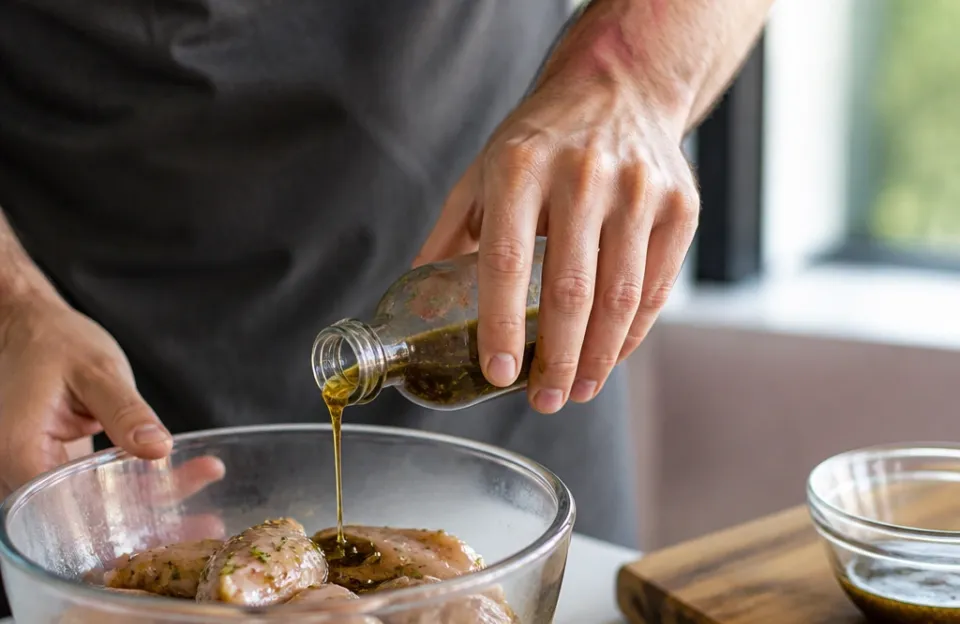
Weighing solid food is straightforward. Liquids complicate things because they transfer between bowls, pans and plates.
Cooking oil is the most common tracking error. If you pour oil directly from the bottle into a hot skillet, you have no idea how much you used. Place the oil bottle on the scale, tare it to zero, pour what you need and note the negative number. Or weigh the empty pan, add oil and weigh again. Log that exact amount.
Marinades sit on raw meat for hours. Some sodium and sugar absorb into the muscle fibers, and most of the liquid stays in the bag or gets thrown away. No reliable published absorption rate applies here, so weigh the marinade before adding the meat, then weigh the leftover liquid after removing the meat, and log the difference as consumed. Treat the absorbed fraction as an estimate rather than a measurement.
Sauces added after cooking, like gravy on mashed potatoes or dressing on a salad, should be weighed separately in a small bowl. Pouring sauce directly over plated food makes it impossible to separate the weight of the chicken from the weight of the dressing.
Spices and dry rubs weigh very little. For general health tracking you can ignore their weight. If you are preparing for a competition where sodium intake matters, weigh the spices in a small dish before applying them so the number is recorded rather than guessed.
When Weighing Cooked Food Makes More Sense
There are times when weighing food after cooking is the better option. Knowing these exceptions prevents a rigid rule from ruining your routine.
Restaurant meals and takeout are the clearest example. You did not buy the raw ingredients and cannot weigh the chicken before the chef sears it. Weigh what ends up on your plate and search your app for a cooked or restaurant-style entry. Portion weights in food composition databases are often built around the food as served, which is why matching the state matters.
Pre-cooked packaged foods fall into the same category. Deli turkey, canned beans, rotisserie chicken and frozen grilled vegetables are sold ready to eat. The nutrition label refers to the product as it sits in the package, and Branded Foods entries come from those labels. If the label says a serving is 56 grams, tare your scale, add the deli meat until it reads 56 grams and log it. Do not reverse-engineer a raw weight for sliced ham.
Leftovers present another scenario. If you batch-cooked a large pot of chili on Sunday and weighed the raw beef, onions and tomatoes before simmering, you already have the batch total. By Wednesday, weigh the cooked portion you are about to eat and divide the batch total by the number of cooked portions you scooped out. It takes basic math, but it keeps the raw prep and the cooked meal connected.
Bone-in cuts deserve their own warning. A bone-in ribeye weighs significantly more than a boneless one, and the bone contributes no digestible calories. Weigh the meat you actually eat after removing the bone, or use a cooked-state entry that accounts for it. Buying boneless cuts removes the variable entirely.
Common Mistakes That Skew Calorie Totals
Even with a good scale, a few habits can throw off your tracking.
Logging cooked weight under a raw database entry is the most frequent error. For shrinking foods it drastically undercounts calories, and for expanding foods it overcounts. The rice example earlier in this article shows how wide that gap can get on a single serving. Always match the state of the food on the scale to the state of the food in the app.
Forgetting to tare the scale means you are weighing the plate along with the food. A ceramic dinner plate can weigh several hundred grams, so a forgotten tare can make a normal portion look enormous.
Ignoring bone weight skews meat tracking. Weigh the edible portion, or buy boneless cuts to remove the problem.
Relying on volume measurements instead of weight causes issues. One cup of raw spinach loosely packed weighs very little, while one cup crammed into the measuring cup weighs far more. Weight is the more repeatable measurement for solid foods, which is why a digital scale beats measuring cups for anything other than liquids.
Assuming all cuts of meat behave identically is another trap. A fatty pork belly loses weight differently from a lean pork loin, and the cooking method matters just as much. USDA yield values are specific to the cut and protocol studied, so treat any general percentage as an illustration rather than a prediction for your pan.
Finally, using the wrong database type can confuse things. SR Legacy is a historical collection, while Foundation Foods and Branded Foods are maintained differently, so two entries for the same food can differ in basis and recency.
Limits of Precision Tracking and the Takeaway on Raw Versus Cooked Weight
Deciding whether to weigh food before or after cooking comes down to what your food diary needs. If you need accuracy, weigh raw and log the raw entry. Heat moves water around, and the fundamental macronutrient structure of a carrot or a steak stays largely intact, with rendered fat the main exception worth accounting for. By capturing the weight before the pan gets hot, you lock in the value of the food you actually bought.
Precision has limits worth accepting. Scale readings vary slightly, database entries describe averages rather than your specific cut, and cooking losses vary by method and starting moisture. No tracking method produces a perfectly exact number, so aim for consistency rather than false precision.
Save the post-cooking weigh-ins for restaurant meals, pre-packaged foods, leftovers and bone-in cuts, where the raw weight is unavailable or impractical. Keep your scale on the counter, tare it properly, and let the raw numbers do the heavy lifting.