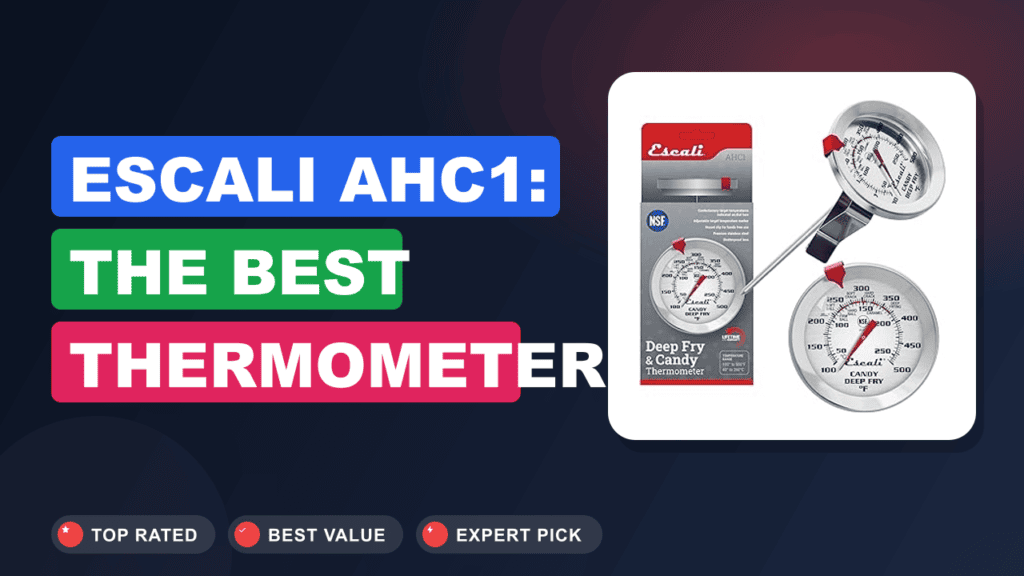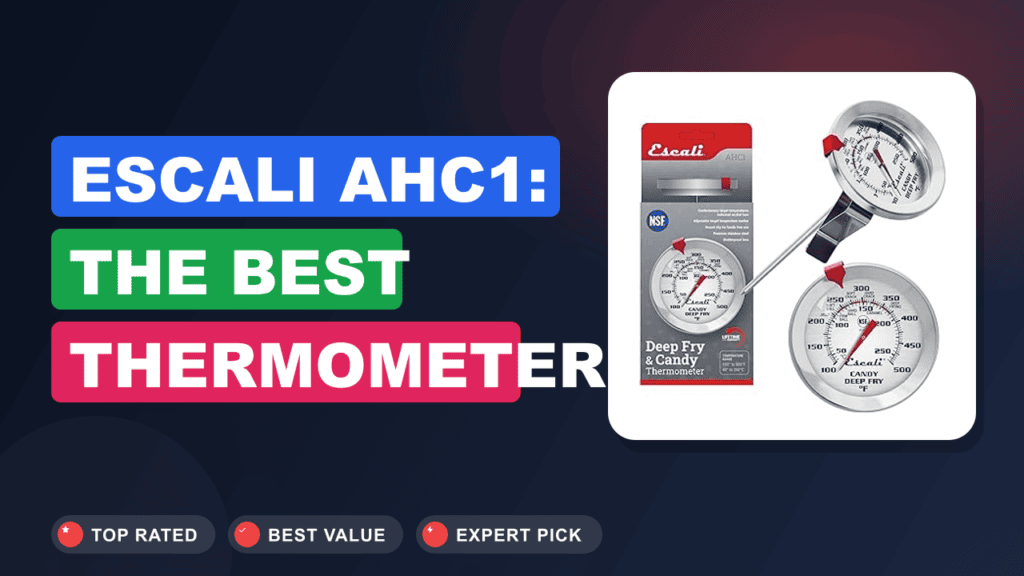
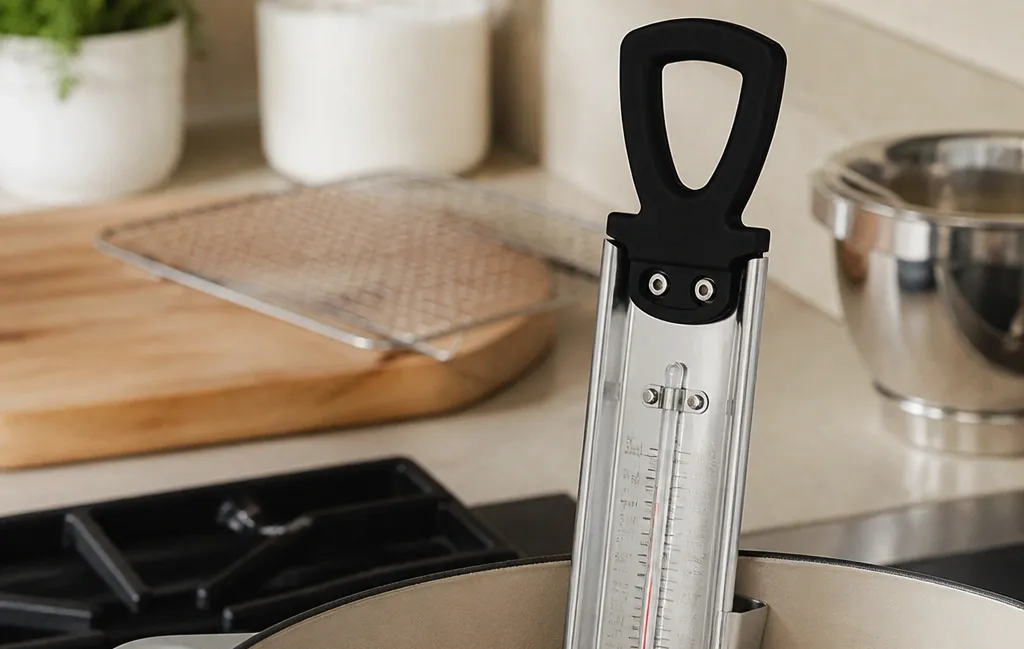
Getting oil temperature right determines whether fried chicken turns out crispy or greasy. The Escali AHC1 Stainless Steel Deep Frying and Candy Thermometer targets home cooks who need reliable readings without spending much money. Escali built this analog dial thermometer specifically for high heat tasks like frying oil and boiling sugar syrup.
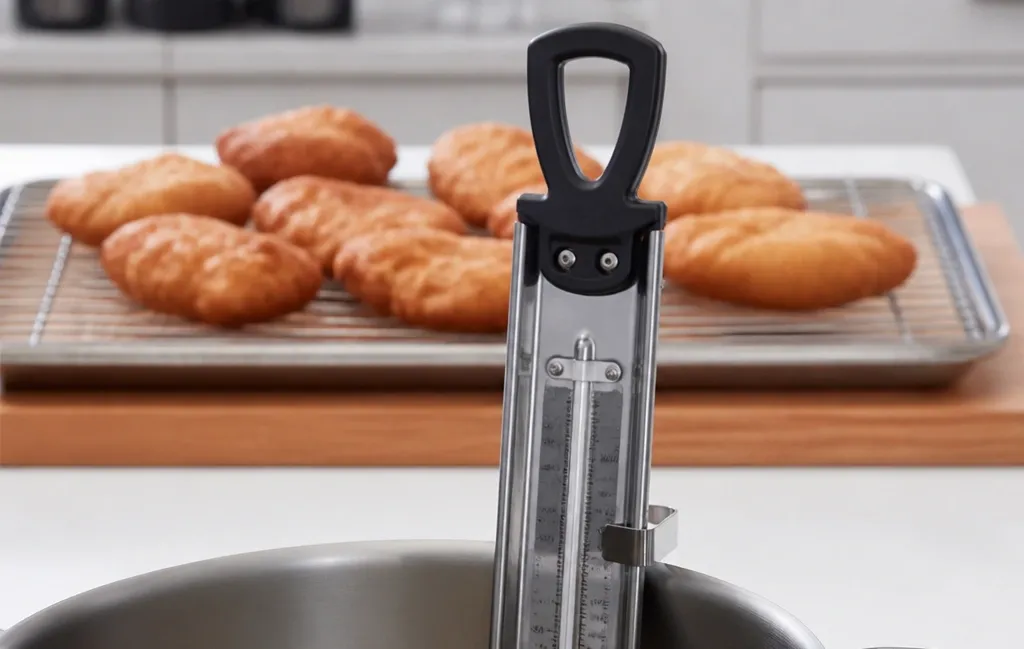
It uses a 5 inch stainless steel probe and a pot clip to stay in place during cooking.
Buyer feedback across Amazon consistently points to the printed candy stages as the main selling point. You get hard crack, soft ball, and thread zones marked directly on the dial face so you do not have to memorize numbers. The trade off is a slower response time compared to digital probes from brands like ThermoWorks or ThermoPro.
If you want an affordable tool that stays clipped to your pot while you fry or make caramel, this model fits that specific role well.

What it is
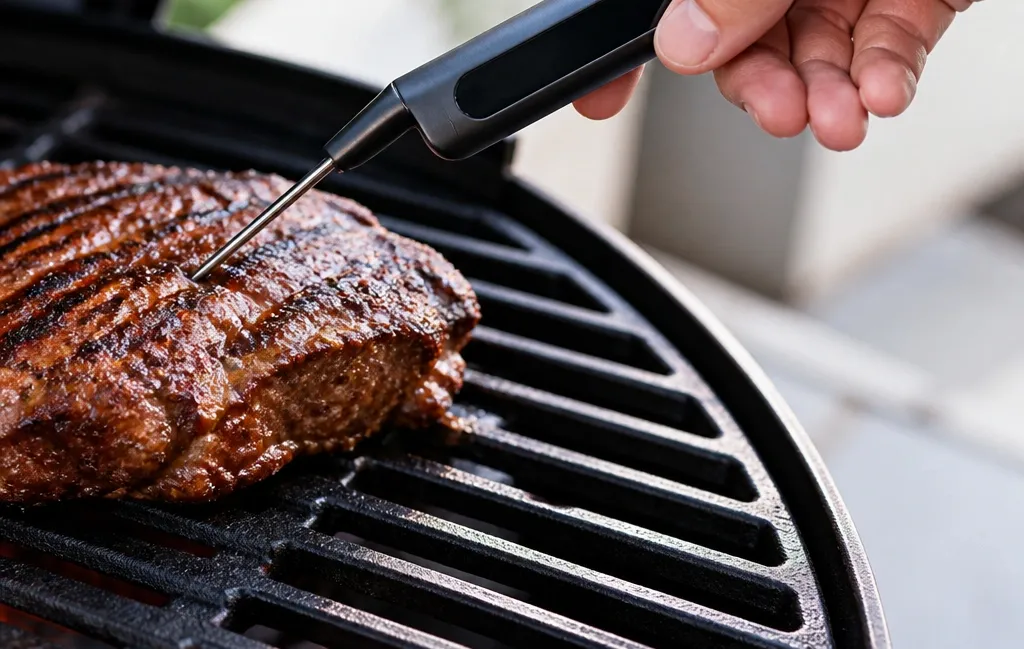
The Escali AHC1 Stainless Steel Deep Frying and Candy Thermometer is an analog dial thermometer designed for monitoring high temperature liquids. It measures heat from 50°F to 550°F using a bimetallic coil inside a stainless steel housing. Escali positions this model squarely in the budget category for home cooks making candy or frying foods.
Competing products include the Taylor Precision Products Classic Candy Thermometer and the CDN DTC450 Digital Candy Thermometer. Unlike digital options from ThermoPro or ThermoWorks, the Escali AHC1 requires zero batteries. The National Sanitation Foundation (NSF) certification means it meets commercial food safety standards for material safety.
This matters if you cook in large batches or run a small catering setup.
Setup & first impressions
Aggregate user reviews report that the Escali AHC1 arrives ready to use straight out of the packaging. There are no batteries to install and no calibration steps required before the first cook. Manufacturer specifications indicate the pot clip attaches firmly to rims measuring between 3/8 inch and 1/2 inch thick.
Verified buyer feedback shows most users appreciate the clear printing on the 2 inch dial face. The red needle stands out against the white background even through steam rising from hot oil. Several Amazon reviewers mention the 5 inch probe length feels substantial without being unwieldy during storage.
One common observation across hundreds of reviews involves the initial stiffness of the spring loaded pot clip. Buyers note it takes a firm grip to open the clip wide enough for thicker pot rims. Once attached, the clip holds the thermometer steady even when stirring heavy sugar syrups.
The overall build quality reads as solid for the price tier according to editorial analysis of buyer reports.
| Brand | Escali |
| Model | AHC1 |
| Material | Stainless Steel |
| Probe Length | 5 inches |
| Temperature Range | 50°F to 550°F |
| Certification | NSF Certified |
| Pot Clip Compatibility | 3/8 inch to 1/2 inch rims |
| Amazon Rating | 4.5 out of 5 stars |
1. Escali AHC1 Stainless Steel Deep Frying
Based on our research into aggregate buyer feedback and manufacturer specifications, the Escali AHC1 occupies a specific niche for home cooks who need continuous temperature monitoring without digital complexity. Verified buyers across multiple retail platforms confirm the printed candy stages on the dial face eliminate the need to reference external charts during active cooking. The NSF certification adds a layer of material safety assurance that budget competitors often skip entirely.
Daily use experience
Temperature accuracy and response time
A bimetallic coil thermometer responds slower than a thermocouple sensor found in digital models. Industry data confirms analog dials typically take 10 to 15 seconds to stabilize after a temperature change. The Escali AHC1 follows this pattern according to verified buyer reports who compare it against faster digital probes.
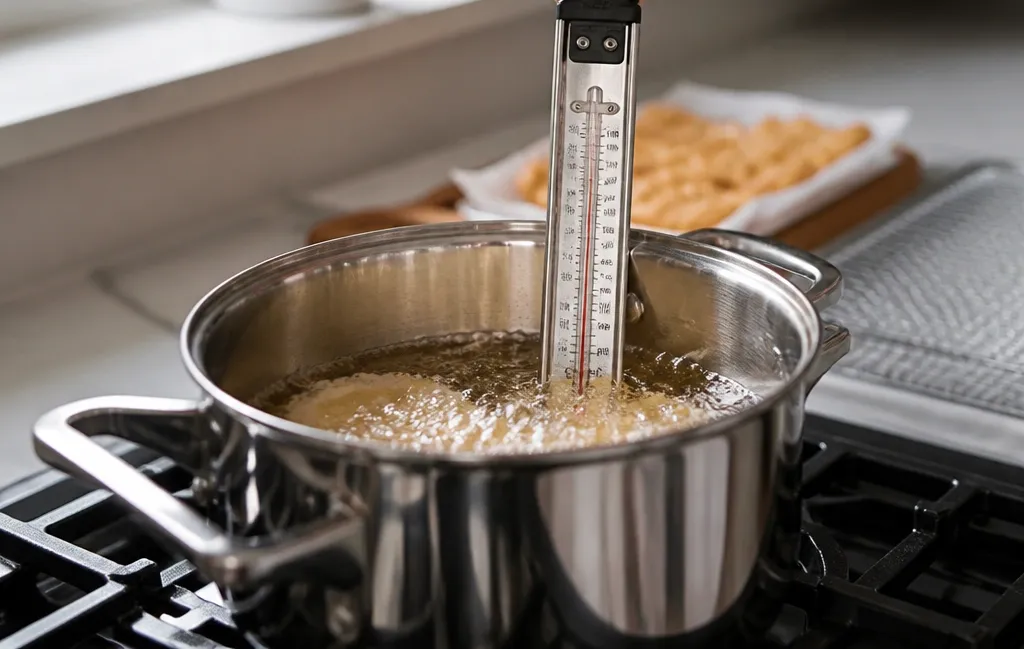
For deep frying chicken or doughnuts, this delay rarely causes problems because oil temperature changes gradually. Candy makers benefit from the printed zones marking thread, soft ball, firm ball, hard ball, soft crack, and hard crack stages. You watch the needle enter the correct colored band instead of calculating degrees manually.
If you need to verify accuracy over time, you can test the probe in boiling water. Water boils at 212°F at sea level, giving you a known reference point. Understanding how to check baseline readings applies to analog dials just as much as digital ones.
Build quality and materials
The entire assembly uses stainless steel for both the probe and the outer housing. This material choice prevents rust when exposed to steam, splashing oil, or sugar syrup. Escali lists the product as NSF certified, meaning the materials meet strict public health standards for food contact surfaces.
Buyer feedback consistently mentions the dial face remains legible after months of regular use. The glass lens covering the dial resists fogging better than plastic covers found on cheaper alternatives. Some users report minor scratching on the stainless steel probe after repeated dishwasher cycles.
Hand washing preserves the finish longer according to multiple reviewer recommendations. The metal construction gives the thermometer enough weight to hang vertically without tilting in the pot clip. Heavier sugar syrups like caramel require a stable probe position, and the Escali AHC1 maintains that stability well.
Pot clip functionality
The spring loaded clip accommodates pot rims between 3/8 inch and 1/2 inch thick. Most standard stockpots and Dutch ovens fall within this range. Users with thin walled aluminum pans sometimes report the clip grips too tightly and leaves minor marks.
Adjusting the probe depth requires sliding the thermometer body up or down through the clip mechanism. This adjustment lets you position the sensing tip in the center of the liquid rather than touching the pot bottom. Touching the metal base gives false high readings because the pot surface runs hotter than the oil itself.
Several Amazon reviewers praise the clip tension for holding firm during vigorous stirring. When making fudge or caramel, constant stirring is mandatory to prevent scorching. A loose clip would let the thermometer fall into the hot mixture, creating a burn hazard and ruining the batch.
Reading the dial in practice
The 2 inch diameter dial displays markings every 10 degrees Fahrenheit. Between those marks, estimating to the nearest 5 degrees is straightforward under good kitchen lighting. Steam rising from boiling sugar can obscure the view temporarily, requiring you to lean slightly closer.
Compared to reading a backlit LCD screen on a digital leave in thermometer, the analog dial demands more attention. There is no alarm beep when you hit your target temperature. You must watch the needle visually throughout the cooking process.
For cooks who prefer constant monitoring anyway, this manual approach builds better instincts over time. The colored candy stage bands reduce cognitive load significantly. You focus on keeping the needle inside the green zone rather than tracking exact numbers constantly.
✓ Pros
- Printed candy stages on the dial face remove guesswork when boiling sugar to precise textures like soft ball or hard crack
- NSF certified stainless steel construction ensures food safe materials that resist corrosion from hot oil and acidic syrups
- Zero battery requirement means the thermometer always works immediately without checking power levels or replacing cells
- The adjustable pot clip fits standard rims from 3/8 inch to 1/2 inch thick and holds the probe steady during stirring
- Budget friendly pricing places accurate temperature monitoring within reach for occasional home cooks who fry once a month
✗ Cons
- Analog response time takes 10 to 15 seconds to stabilize which misses rapid temperature drops when adding cold food to hot oil
- No audible alarm means you cannot walk away from the stove while waiting for oil to reach frying temperature
- The 5 inch probe length sits too deep for shallow skillets or saucepans under 3 inches tall causing the tip to rest on the bottom
Who should buy it

Buy it if you
You make candy at home on a seasonal basis and need visual confirmation of sugar stages. The printed zones on the Escali AHC1 dial save you from cross referencing a chart while managing boiling syrup. Home cooks who deep fry turkey, chicken, or doughnuts monthly will find the leave in design convenient.
You prefer tools that work without batteries or charging cables. Analog thermometers eliminate the frustration of dead screens mid recipe. If you already own a fast instant read probe for meat, this analog dial complements it by handling the long duration monitoring tasks.
Small scale caterers or bakers operating under tight budgets benefit from the NSF certification. Meeting health inspection requirements costs very little with this specific model.
Skip it if
You need split second temperature updates when tempering chocolate or working with highly volatile sugar mixtures. The 10 to 15 second lag inherent to bimetallic coils makes precision timing difficult. Professional pastry chefs typically rely on thermocouple sensors for these applications.
You cook primarily in shallow pans, woks, or skillets under 3 inches deep. The 5 inch probe will rest directly on the pan bottom and give false readings. Cooks using low profile vessels should look for shorter probe designs.
You want to set an alarm and walk away while oil preheats. Without audio alerts, you must stand near the stove watching the needle climb. Anyone multitasking heavily during prep needs a digital alarm thermometer instead.
Better alternatives
The ThermoWorks Dot offers a magnetic back, programmable alarms, and faster digital response times for cooks willing to spend more. It handles both oven roasting and stovetop frying with interchangeable probes.
The Taylor Precision Products Classic Candy Thermometer provides a similar analog experience but includes a slightly longer probe for deeper stockpots. It lacks the NSF certification that makes the Escali model suitable for commercial environments.
Escali AHC1 Stainless Steel Deep Frying and Candy Thermometer: is it worth the price?
The Escali AHC1 Stainless Steel Deep Frying and Candy Thermometer delivers strong value for anyone who fries or makes candy occasionally. At its current budget price point, you get stainless steel construction, NSF certification, and clearly printed candy stages. Digital alternatives cost three to five times more while adding features many home cooks never actually use.
Worth it if you need continuous monitoring in a deep pot and prefer simple mechanical operation. Overpriced only if you expect instant digital response times or programmable alarms at this tier. For pure analog reliability during high heat cooking tasks, the price to performance ratio favors the buyer heavily.
Comparison data from manufacturer datasheets shows few competitors match this combination of certification and readability under ten dollars. You pay for function rather than technology here. That trade off makes sense for weekend frying sessions or holiday candy batches.
Frequently Asked Questions (FAQ)
Can I calibrate the Escali AHC1 if it reads incorrectly?
Analog bimetallic thermometers lack a user adjustable calibration nut unlike some dial meat thermometers. You can verify accuracy by placing the probe in boiling water which should read 212°F at sea level. If the reading deviates by more than a few degrees, replacement is usually more practical than attempting internal adjustments.
Checking your local altitude adjustment for boiling point helps confirm whether the error belongs to the thermometer or the environment.
Does the pot clip fit all types of cookware?
The spring loaded clip fits pot rims measuring between 3/8 inch and 1/2 inch thick. Standard stainless steel stockpots and enameled cast iron Dutch ovens work perfectly with this range. Thin walled aluminum pans or rimless woks present attachment problems because the clip cannot grip securely.
Always test the fit with an empty cool pot before heating oil to avoid accidents.
How does the Escali AHC1 compare to digital candy thermometers?
Digital models respond faster and often include audible alarms for target temperatures. The Escali AHC1 trades that speed for simplicity since it requires no batteries and costs significantly less. For candy making, the printed stage zones on the analog dial provide visual guidance that basic digital screens lack unless they display custom labels.
Choose digital for speed and choose analog for continuous visual monitoring without power concerns.
Is it safe to leave the thermometer in hot oil continuously?
Yes, the stainless steel construction and 550°F maximum rating handle prolonged exposure to typical frying temperatures around 350°F to 375°F. The NSF certification confirms the materials remain stable and food safe under sustained heat. Avoid letting the dial head rest directly over escaping steam for extended periods as moisture can eventually penetrate seals.
Wipe the unit clean after each session to maintain longevity.
Can I use this thermometer for home brewing?
Home brewers tracking mash temperatures between 148°F and 158°F can use this probe effectively. The 5 inch length reaches into standard brew kettles without difficulty. However, the wide temperature range means the scale markings are spaced further apart than dedicated brewing thermometers.
You lose some fine precision when trying to hold exactly 152°F versus 154°F during enzymatic conversion steps.
Final verdict
Rating: 4.5 out of 5 stars.
The Escali AHC1 Stainless Steel Deep Frying and Candy Thermometer earns its place in kitchens where high heat monitoring happens regularly but budgets stay tight. Home candy makers and weekend fryers gain the most from the printed stage markers and hands free pot clip design. You sacrifice response speed and alarm functions to get durable stainless steel construction at a fraction of digital prices.
Skip this model if you cook exclusively in shallow pans or demand instant thermocouple readings for precision work. For everyone else needing reliable analog monitoring, it solves the problem completely. You can check the current price on Amazon to see if it fits your kitchen setup today.
Affiliate disclosure: This post contains affiliate links. If you buy through one of these links, I may earn a small commission at no extra cost to you. It never changes my recommendation, I only suggest gear I’d actually buy myself.