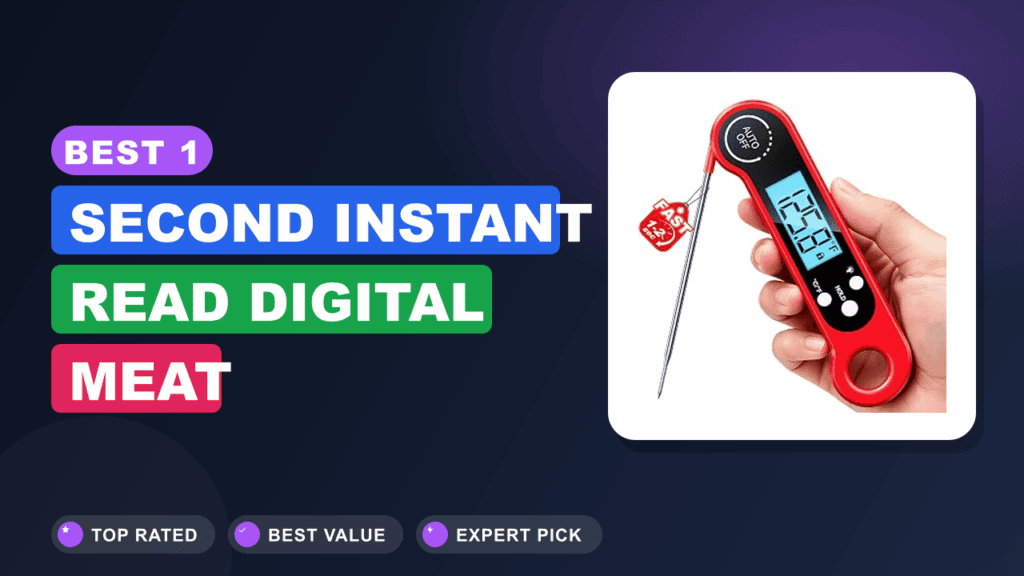
Choosing the right instant-read meat thermometer can make a real difference in your kitchen, ensuring food safety and perfectly cooked meals every time. Two popular options from ThermoPro, the TP03 and the TP19, often come up in discussions. While both aim to give you quick temperature readings, they cater to slightly different needs and preferences.
The ThermoPro TP19 is generally seen as an upgraded version of the TP03, offering several refinements that improve its performance and user experience. It's often faster, boasts better water resistance, and includes convenience features like an auto-rotating display that the more basic TP03 doesn't have. Deciding which one is right for you means looking closely at these differences and what matters most in your cooking.
What's Actually Different Between the TP03 and TP19
At first glance, both the ThermoPro TP03 and TP19 look similar: they're compact, foldable probe thermometers designed for quick temperature checks. However, their core distinctions emerge when you consider their internal components, design choices, and advanced features. The TP19 builds upon the TP03's established foundation, aiming for improved performance and a more polished user experience.
This often means a faster sensor, better protection against kitchen elements, and display enhancements that make it easier to read in various conditions. Understanding these underlying differences helps clarify why one model might suit your specific cooking style better than the other.
Reading Speed and Accuracy
When you're cooking, especially with meats, getting a fast and accurate temperature reading is key. Waiting too long can mean overcooking your food, or constantly opening the oven door, which isn't ideal for maintaining consistent temperatures.
The ThermoPro TP03 is known for being a solid, entry-level instant-read thermometer. It typically provides a temperature reading within 3 to 5 seconds. For most home cooks, this speed is perfectly adequate for checking everything from a chicken breast to a steak.
Its accuracy is generally rated at ±1.8°F (±1°C), which falls well within the acceptable range for ensuring food safety and achieving desired doneness levels. For instance, the USDA recommends specific internal temperatures for various meats to ensure they are safe to eat, and a thermometer like the TP03 helps you hit those targets reliably.
The ThermoPro TP19, on the other hand, steps up the game in terms of speed. It often boasts a reading time of 2 to 3 seconds, making it noticeably faster. While a second or two might not sound like much, in a busy kitchen, or when you're quickly checking multiple items on the grill, that speed adds up.
This quicker response means less heat loss from your oven or grill and less time hovering over hot food. The TP19 also maintains a high level of accuracy, typically ±0.9°F (±0.5°C), which is double the precision of the TP03. This higher accuracy can be appealing for precision cooking, such as making delicate custards or when you're aiming for very specific meat doneness like a medium-rare steak.
For cooks who value precision, even small shifts in reported accuracy can be an important consideration, especially if you're trying to figure out if your meat thermometer is lying.
Physical Design and Build Quality
The overall feel and construction of a kitchen tool often dictate its longevity and how pleasant it is to use. Both models are compact and have foldable probes, which is great for storage and safety.
The ThermoPro TP03 features a basic, straightforward design. It usually comes in a durable ABS plastic casing that feels lightweight. The stainless steel probe folds out from the side, locking into place for use and folding back for safe storage.
It has a fairly basic LCD display that shows the temperature clearly. There's often a magnetic back, allowing you to stick it to your refrigerator or oven for easy access. While functional, the TP03's design prioritizes utility and cost-effectiveness.
The probe itself is typically about 4 inches long, a standard size that works well for most cuts of meat. However, if your meat thermometer won't go deep enough into larger roasts, you might find the standard probe length limiting.
The ThermoPro TP19 presents a more refined and robust build. While still using ABS plastic, it often feels a bit more solid in hand. A key design upgrade is its larger, backlit LCD display.
This backlight significantly improves readability in dim kitchen lighting or during evening outdoor grilling sessions. Many users find a backlit display invaluable. Another notable feature on the TP19 is its auto-rotating display.
This means the temperature reading automatically flips depending on how you hold the thermometer, making it easy to read from any angle without craning your neck. The probe on the TP19 is also typically made of high-quality stainless steel and often features a slightly thinner tip than the TP03, which helps with easier insertion into food and minimizes juice loss. Like the TP03, it usually includes a strong magnet for convenient storage.
The improved design choices on the TP19 generally contribute to a more premium feel and better usability in a wider range of cooking environments.
Durability and Water Resistance
Any kitchen gadget that comes into contact with food needs to be easy to clean and able to withstand the occasional splash. This is where a thermometer's durability and water resistance become critical factors.
The ThermoPro TP03 is generally described as "splash-resistant" or capable of handling "light splashes." This means you can wipe it down with a damp cloth, and it should be fine if a few drops of water hit it during cooking. However, it's not designed to be submerged in water or rinsed under a running faucet. Exposing it to too much moisture can lead to internal damage or corrosion over time, which might result in inaccurate readings or even cause the thermometer to stop working.
Proper cleaning involves wiping the probe clean with warm, soapy water and then drying it thoroughly, while carefully keeping the main body of the thermometer dry. It's important to understand the limits of splash resistance, similar to how one might consider the waterproof capabilities of other devices like the ThermoWorks DOT.
The ThermoPro TP19 offers a significant improvement in this area. It typically features an IPX6 or IPX7 waterproof rating. An IPX6 rating means it can withstand powerful water jets, so you can confidently rinse it under a running tap without worry.
An IPX7 rating means it can be submerged in up to 1 meter of water for 30 minutes. This increased water resistance makes cleaning much simpler and more hygienic. You can wash the entire probe and even the main body without fear of damaging the electronics.
This enhanced durability also means the TP19 is better suited for outdoor cooking environments, where it might be exposed to rain or more significant splashes from cooking juices or cleaning spray. For cooks who value easy cleanup and a robust tool that can handle the rigors of a busy kitchen, the TP19's superior water resistance is a major advantage. It directly addresses one of the common pain points with more basic thermometers, which often fail due to moisture ingress.
Temperature Range and Versatility
The range of temperatures a thermometer can accurately read determines how versatile it is in the kitchen. Both the TP03 and TP19 are designed for meat, but their full capabilities might surprise you.
The ThermoPro TP03 typically measures temperatures from -58°F to 572°F (-50°C to 300°C). This broad range makes it suitable for a wide variety of cooking tasks. You can use it for:
- Checking the internal temperature of roasts, poultry, and fish.
- Testing the doneness of baked goods.
- Measuring the temperature of hot liquids like brewing water or warmed milk.
- Monitoring the temperature of oil for deep-frying, though care should be taken with the plastic body near high heat sources.
- Even checking the temperature of cold items, like chilled desserts or refrigerated ingredients.
This range covers almost everything the average home cook would need, making it a reliable general-purpose kitchen thermometer.
The ThermoPro TP19 usually offers the same or a very similar temperature range, also spanning from -58°F to 572°F (-50°C to 300°C). So, in terms of raw temperature limits, there isn't a significant difference between the two. The TP19's enhanced speed and accuracy, however, can make it more effective for tasks at the extremes of this range.
For instance, when deep-frying, where oil temperature needs to be precisely maintained, the faster readings of the TP19 can help you make quicker adjustments. Similarly, when melting chocolate or making candy, subtle temperature changes are critical, and the TP19's higher precision can be beneficial. Both thermometers are capable of handling various applications, but the TP19's overall performance refinements give it a slight edge in demanding, high-stakes cooking scenarios.
The general versatility means you're not limited to just meat; you can use these tools for many other culinary needs.
Convenience Features
Beyond the core functions of speed and accuracy, small convenience features can greatly improve the user experience and make a thermometer more pleasant to use day-to-day.
The ThermoPro TP03 is fairly minimalistic in its features. It focuses on doing one job well: providing a quick temperature reading. It usually has an auto-on feature when you unfold the probe and auto-off after a period of inactivity to save battery.
It often includes a "HOLD" button, which lets you lock the current temperature reading on the display, useful if you're pulling the probe out of hot food and want to look at the reading away from the heat. As mentioned, it typically has a magnetic back for storage. These are essential features for an instant-read thermometer, making it functional and easy to store.
For many home cooks, this simplicity is a positive, as it means less to learn and fewer buttons to press.
The ThermoPro TP19 takes these convenience features a step further, adding several refinements that improve its overall usability.
- Auto-Rotating Display: This is a standout feature. No matter how you hold the thermometer, the display rotates automatically to ensure the digits are always upright and easy to read. This is especially useful when checking food in awkward positions, like inside a hot oven or on a crowded grill.
- Larger, Backlit Display: While the TP03 has a clear LCD, the TP19 often boasts a larger display with a backlight. This makes it much easier to read in low-light conditions, such as early morning grilling or dimly lit kitchens. The backlight typically activates when the probe is unfolded or a button is pressed.
- Improved Magnetic Back: While both have magnets, the TP19's magnet often feels stronger, providing a more secure hold on metal surfaces.
- Advanced Calibration: Some TP19 models offer a user calibration feature. This allows you to fine-tune the thermometer's accuracy if it ever starts reading inconsistently. This can be a huge benefit for long-term reliability and ensuring your readings are always trustworthy. Knowing how to perform a calibration, even a simple ice bath test, is important for any thermometer.
These additional features, particularly the auto-rotating and backlit display, contribute significantly to the TP19's enhanced user experience, making it a more versatile and comfortable tool for a broader range of cooking scenarios.
Power Source and Battery Life
The type of battery a device uses and how long it lasts can impact its long-term cost and convenience. You don't want your thermometer dying in the middle of a critical cooking session.
The ThermoPro TP03 typically runs on a single AAA battery. AAA batteries are widely available, inexpensive, and easy to replace. While the exact battery life can vary based on usage, a single AAA battery usually provides hundreds of hours of operation or lasts for many months, even a year or more, for average home use.
The thermometer's auto-off function helps conserve power. The fact that it uses a common battery type means you likely already have spares at home, so replacing it is never a hassle.
The ThermoPro TP19 also commonly uses a single AAA battery. This is a deliberate choice that maintains the ease of replacement and broad availability seen with the TP03. Despite having more advanced features like a backlight and auto-rotating display, the TP19 is designed to be energy-efficient.
Its battery life is comparable to the TP03, offering extended use before needing a fresh battery. For a deeper dive into battery longevity with other ThermoPro devices, you might explore topics like the battery life of the ThermoPro TempSpike Plus. Both models benefit from using a standard battery, which means you won't have to hunt for specialized coin cells or worry about proprietary charging systems.
This contributes to their overall user-friendliness and low maintenance.
Price and Value Proposition
For many people, the cost of a kitchen gadget plays a significant role in their purchasing decision. The difference in price between the TP03 and TP19 often reflects the added features and refinements of the latter.
The ThermoPro TP03 is positioned as a budget-friendly, entry-level instant-read thermometer. It's often one of the most affordable reliable options on the market. Its value proposition is straightforward: it delivers fast, accurate temperature readings for the lowest possible price.
For someone who only needs a thermometer occasionally, or who is new to cooking and doesn't want to invest heavily, the TP03 offers excellent value. It gets the job done without any unnecessary frills, making it a practical choice for everyday cooking. Its lower price point also makes it an attractive backup thermometer or a gift for a casual cook.
The ThermoPro TP19 usually costs a bit more than the TP03. The higher price reflects its enhanced features: faster readings, better accuracy, superior water resistance, a backlit and auto-rotating display, and often a more robust build quality. For serious home cooks, grill masters, or anyone who uses a thermometer frequently, the added cost is often justified by the improved user experience and durability.
The convenience features like the rotating display and backlight make a real difference during actual cooking, especially in varying conditions. While it costs more, many users find that the TP19's combination of performance and features offers a strong value proposition for its price segment. It provides a more "premium" experience without jumping into the much higher price points of professional-grade thermometers.
Ultimately, the "value" depends on how much you prioritize these advanced features and how often you'll truly benefit from them.
Quick-Reference Comparison Table
| Feature | ThermoPro TP03 | ThermoPro TP19 |
|---|---|---|
| Reading Speed | 3-5 seconds | 2-3 seconds |
| Accuracy | ±1.8°F (±1°C) | ±0.9°F (±0.5°C) |
| Temperature Range | -58°F to 572°F (-50°C to 300°C) | -58°F to 572°F (-50°C to 300°C) |
| Display | Standard LCD | Large, Backlit LCD |
| Display Rotation | Manual (fixed orientation) | Automatic 180° rotation |
| Water Resistance | Splash-resistant (not submersible) | IPX6/IPX7 waterproof (rinse under tap, possibly submersible) |
| Probe Length | ~4 inches | ~4 inches (often thinner tip) |
| Build Material | ABS plastic, stainless steel | ABS plastic, stainless steel (often more robust) |
| Battery Type | 1x AAA | 1x AAA |
| Calibration Feature | No user calibration | Some models offer user calibration |
| Magnetic Back | Yes | Yes (often stronger) |
| Price Point | Lower | Higher |
Which One to Choose
Deciding between the ThermoPro TP03 and TP19 comes down to understanding your specific cooking habits, priorities, and budget. Both are excellent tools for checking internal food temperatures, but they excel in different situations.
If you're a casual home cook who occasionally checks the temperature of roasted chicken, baked fish, or a steak, the ThermoPro TP03 is likely all you need. It delivers fast and accurate readings at an affordable price, without overcomplicating things. It's a fantastic entry-level option that will reliably get the job done for everyday meals.
You'll appreciate its simplicity, compact design, and ease of storage. If you're on a tight budget, the TP03 offers exceptional value for money, providing the core functionality without the premium cost of extra features.
However, if you're a frequent cook, a serious griller, or someone who values precision and convenience, the ThermoPro TP19 is worth the extra investment. Its faster reading speed means less time with the oven door open or hovering over a hot grill, which can make a big difference when you're cooking for a crowd. The higher accuracy is a boon for delicate tasks or for achieving very specific levels of doneness.
The backlit, auto-rotating display is a game-changer for visibility, especially in low-light conditions or when you need to read the thermometer from an awkward angle. And the superior water resistance means easier, more thorough cleaning, adding to its longevity and hygiene. If you find yourself washing kitchen tools often, or cooking outdoors, the TP19's IPX rating will be a significant advantage.
This model offers a more refined and robust user experience, making your cooking tasks just a little bit smoother.
Consider your cooking frequency, the environments you cook in, and how much you value features like a rotating screen or enhanced durability. For basic needs, the TP03 is a reliable companion. For those seeking a more advanced, convenient, and durable tool, the TP19 provides a noticeable upgrade.
You can also explore the specific product page for the ThermoPro TP03 to learn more about its features.
Edge Cases, Exceptions, and "It Depends" Factors
While the general guidance helps, there are always specific scenarios or preferences that can shift the balance when choosing between these two thermometers.
Commercial or High-Volume Use: If you're a professional chef, caterer, or doing very high-volume cooking, you might find both the TP03 and TP19, while excellent for home use, still fall short of the heavy-duty demands of a commercial kitchen. Commercial environments often require even more robust build quality, continuous monitoring capabilities, or specialized probes, though the TP19's faster response time and water resistance are steps in the right direction. For such uses, you might look at a different class of thermometers entirely.
Specific Diet or Allergy Concerns: For individuals who must adhere to very strict dietary requirements or prepare food for someone with severe allergies, pinpoint accuracy and consistent readings are paramount. In these cases, the TP19's higher stated accuracy (±0.9°F) and potential for user calibration might offer greater peace of mind than the TP03's (±1.8°F). The ability to re-calibrate ensures that if you ever suspect your thermometer is off by 10 degrees, you can address it.
Outdoor Cooking Enthusiasts: Grilling, smoking, and BBQ often involve challenging conditions like grease, smoke, and varying light. Here, the TP19 truly shines. Its backlit display is invaluable when grilling after dusk, and the auto-rotating screen makes checking temperatures easy when leaning over a hot grill.
The IPX waterproof rating means it can handle unexpected drizzles or a quick rinse after a messy session. While the TP03 works outdoors, the TP19 makes the experience much more pleasant and hassle-free.
Fragile or Thin Cuts of Meat: When cooking very thin fish fillets or delicate cuts, the slightly thinner tip often found on the TP19's probe can make a difference. It creates a smaller insertion hole, minimizing juice loss and having less impact on the food's structure. For most everyday cuts, this won't be a major factor, but for culinary finesse, it's worth considering.
You should also ensure your probe insertion is correct, checking for issues like the meat thermometer touching bone which can lead to inaccurate readings.
Backup Thermometer Needs: Some cooks like to have a secondary, inexpensive thermometer as a backup. In this case, the TP03's lower price point makes it an ideal candidate for a reliable spare that you won't worry too much about if it gets lost or damaged.
In essence, the "it depends" factor boils down to how often you cook, the complexity of your dishes, your cooking environment, and your personal budget for kitchen gadgets. Both models are capable, but the TP19 simply offers a more refined and feature-rich experience that caters to more demanding users. To avoid issues like inconsistent readings, it's always good practice to ensure your thermometer is functioning correctly.
Frequently Asked Questions
Is the ThermoPro TP19 really worth the extra money over the TP03?
For many users, yes, the TP19 is worth the extra cost. It provides noticeable upgrades in reading speed, accuracy, and overall convenience with features like a backlit, auto-rotating, and waterproof display. If you cook frequently or value a more robust and user-friendly experience, the additional investment pays off in saved time and reduced frustration.
Can I calibrate the ThermoPro TP03 or TP19?
The ThermoPro TP03 generally does not offer a user calibration feature. However, some models of the ThermoPro TP19 do include a calibration function, which lets you adjust its accuracy if you notice inconsistencies over time. It's always a good idea to check the specific model's manual for calibration instructions.
Are both thermometers suitable for deep frying and candy making?
Yes, both the ThermoPro TP03 and TP19 have a wide temperature range that covers the temperatures needed for deep frying and candy making. However, remember that they are instant-read thermometers, meaning they are best for quick spot checks. For continuous monitoring of oil or candy, a different type of thermometer, like a probe thermometer with a pot clip, might be more suitable.
How do I clean these thermometers after use?
The ThermoPro TP03 is splash-resistant, so you should wipe the probe clean with warm, soapy water and a damp cloth, then dry it completely. Avoid submerging the main body. The ThermoPro TP19 is waterproof (typically IPX6/IPX7), meaning you can rinse the entire probe and even the body under running water for easier and more thorough cleaning.
Always dry it completely before storing.
What is the advantage of an auto-rotating display?
An auto-rotating display, found on the TP19, automatically adjusts the orientation of the temperature reading based on how you hold the thermometer. This makes it much easier to read the display from any angle, which is particularly helpful when checking food in awkward positions in an oven, on a grill, or for left-handed users.
Where can I find replacement probes if mine gets damaged?
Both the TP03 and TP19 typically have integrated, non-replaceable probes. If the probe itself is damaged, you generally need to replace the entire thermometer. Some multi-probe thermometers, like certain ThermoWorks models, offer probe replacement options, but this is less common for compact instant-read units.
What's Worth Remembering
Choosing between the ThermoPro TP03 and TP19 ultimately comes down to your cooking style and how much you're willing to spend for a few extra features. The TP03 is a reliable, no-frills workhorse that gets the job done for basic needs. It's an excellent value for its price.
The TP19 takes that solid foundation and adds a layer of convenience and durability with its faster readings, improved accuracy, waterproof design, and a far more user-friendly display. If you spend a lot of time cooking, especially grilling, or simply appreciate kitchen gadgets that offer a smoother experience, the TP19's upgrades are genuinely impactful. Both are great options, but the TP19 generally offers a more refined and versatile tool for the enthusiastic home cook.