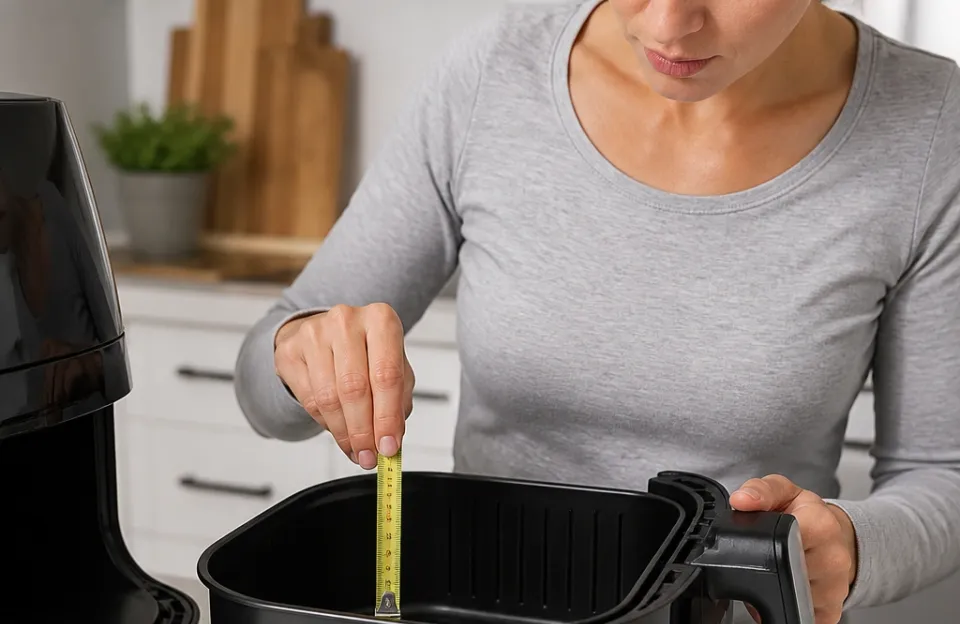
Frozen chicken legs can go straight into an air fryer without thawing, and they generally take about 30 to 40 minutes at 350°F to 400°F, depending on their size and your appliance. Timing is only a starting point, though. Every piece needs to reach 165°F in the thickest part away from the bone before you serve it.
This guide walks through a two-stage method: a gentler first phase that thaws the surface so seasoning will stick, then a hotter phase that browns the skin and finishes the meat. It also covers probing technique, airflow, and what to do when the outside browns before the center is safe.
Why the Air Fryer Suits Frozen Chicken Legs
Air fryers are essentially countertop convection ovens that cook food by rapidly circulating hot air. That moving air reaches the surface of a frozen leg quickly, starting the browning process while the interior is still cold.
Cooking poultry from frozen is acceptable, but it takes roughly one and a half times as long as cooking thawed meat. That longer window is exactly why temperature control matters more than the clock. The air fryer does not remove the need for food safety rules; it simply changes how fast heat gets to the center.
What the Air Fryer Does Not Change
An air fryer does not let you skip the danger zone. The danger zone is the range between 40°F and 140°F, where foodborne bacteria multiply and can reach dangerous levels. Bacteria grow most rapidly in that range, doubling in number in as little as 20 minutes.
What the appliance does offer is a fast, contained cooking environment. The safety standard stays the same regardless of how the chicken is cooked: all poultry, including legs, thighs, and wings, must reach a safe minimum internal temperature of 165°F (73.9°C) as measured with a food thermometer. That temperature should be reached before the food is removed from the heat source.
Before You Start
A few quick decisions make the cook smoother.
Preheat or not? Preheating helps the cooking start at the intended temperature, especially in basket-style models. If your manual specifies a preheat, follow it; if not, add a few minutes to the first stage and rely on the thermometer.
Thaw first? You do not have to. Frozen-state cooking is acceptable for poultry. If you do thaw in the refrigerator first, expect the legs to cook considerably faster and start checking temperature earlier.
Equipment: a digital instant-read thermometer, tongs for flipping, and a single-layer arrangement in the basket. Wash hands with soap and water for 20 seconds before and after handling raw poultry, and clean and sanitize surfaces before and after preparation. Keep raw legs away from cooked and ready-to-eat foods, and never place cooked chicken back on a plate that held raw meat.
Step-by-Step Cooking Method
- Preheat the air fryer to 350°F if your model calls for preheating.
- Arrange the legs in a single layer with space between them so air can circulate. Do not stack them.
- Initial cook at 350°F for about 10 minutes. This phase thaws the surface without scorching it.
- Season once the surface softens. Pull the basket out, brush the legs lightly with oil, and apply salt, pepper, garlic powder, paprika, or a dry rub. Spices cannot cling to a solid frozen surface, and applying them too early risks burning them before the meat is done.
- Raise the temperature to 400°F and cook for another 20 to 25 minutes, flipping the legs halfway through so both sides brown evenly.
- Probe each piece in the thickest part of the meat, away from the bone. Continue cooking in short increments until every leg reads at least 165°F.
- Rest for a few minutes before serving so the juices settle.
Time and Temperature Reference
These figures are a baseline, not a guarantee. Air fryer cooking times vary because of differences in appliance size and power, but the safe internal temperature is always the same. No single manufacturer setting covers every model, so treat the timer as an estimate and the thermometer as the decision-maker.
| Stage | Action | Temperature | Approximate Duration |
|---|---|---|---|
| Initial cook | Air fry from frozen to thaw the surface | 350°F | About 10 minutes |
| Seasoning | Apply oil and dry rub | Not applicable | 1 to 2 minutes |
| Main cook | Brown the skin and finish the meat, flipping halfway | 400°F | 20 to 25 minutes |
| Rest | Let juices settle | Off | A few minutes |
Checking Doneness with a Thermometer
Appearance and color are not reliable indicators of safety or doneness. Research indicates that the color of the meat and the color of the juices are not accurate indicators of doneness either. Using a food thermometer is the only sure way of knowing food has reached a safe internal temperature.
Insert the probe into the thickest part of the meat, away from the bone. Bone conducts heat faster than muscle tissue and can give you a falsely elevated reading. The probe should be surrounded by meat on all sides for an accurate reading.
For whole poultry, FSIS advises checking the internal temperature in the innermost part of the thigh and wing and the thickest part of the breast. With individual legs, the equivalent approach is to check the thickest part of each drumstick and to test more than one piece, since sizes differ within a package.
If the Skin Browns Before the Center Is Safe
This is the most common failure mode with frozen legs: the exterior darkens while the interior is still cold. Skin color develops long before heat reaches the bone.
If you see this happening, lower the air fryer temperature by about 25 degrees and keep cooking. The lower setting lets heat continue moving toward the center without charring the outside. Keep probing every few minutes. Do not serve the chicken based on how it looks; only a reading of 165°F or above confirms it is done.
Seasoning Timing
Dry rubs need a surface to grip, so wait until the first stage has thawed the exterior. Garlic powder, onion powder, smoked paprika, and a little brown sugar form a classic savory crust.
Wet glazes such as barbecue sauce or honey garlic should go on near the end of cooking. Sugary sauces applied early will caramelize and eventually blacken before the meat is fully cooked. If you want a sticky finish, brush the glaze on during the final few minutes and let the hot air set it.
Airflow, Crowding, and Batch Cooking
Overcrowding the basket can prevent enough air circulation to properly cook the food, so large amounts should be cooked in batches. Legs that touch or overlap leave cold spots, and the pieces pressed together tend to steam rather than brown.
If your batch does not fit in one layer, cook it in two rounds. The time per batch stays consistent, and the results are far better than forcing everything in at once and extending the cook time. Crowding is also a food-safety issue, not just a texture one, because uneven heat means uneven temperatures.
Troubleshooting Common Problems
Uneven pieces: Drumstick sizes vary widely. Check each piece individually and remove the smaller ones as they reach 165°F while the larger ones keep cooking.
Soft skin: Surface moisture is usually the cause. After the first stage, blot the legs with a paper towel before adding oil and seasoning, and make sure the basket is not crowded. A few extra minutes at the higher temperature can help drive off residual moisture.
Appliance differences: Basket-style air fryers generally move air more aggressively than toaster-oven-style models, which have more interior space to heat. Treat any appliance-specific timing as a starting point only.
Pink near the bone: Properly cooked chicken can show pink color near the bone and in thigh meat even when it has reached the safe temperature of 165°F. This coloring often comes from myoglobin, a protein that stores oxygen in muscle tissue. Conversely, chicken can look brown throughout and still be below the safe internal temperature. The thermometer reading decides, not the color.
Parchment liners: If you use a liner, make sure it does not block airflow, and note that some liner guidance is not recommended for toaster-oven-style air fryers. For this method, an unlined basket or a perforated liner is simpler and keeps the air moving.
Food Safety and Storage
- Keep raw poultry separate from cooked and ready-to-eat foods.
- Refrigerate leftovers within 2 hours; otherwise they can enter the danger zone. Never leave food out of refrigeration for more than 2 hours, or more than 1 hour if the ambient temperature is above 90°F.
- If you are cooking a raw, stuffed, breaded chicken product rather than plain legs, do not cook it in the air fryer; follow the manufacturer’s cooking instructions instead.
Common Mistakes to Avoid
- Skipping the flip. Unturned legs stay pale and soft on the underside.
- Seasoning a frozen surface. The rub slides off and burns.
- Cramming the basket. Poor airflow means uneven, potentially unsafe cooking.
- Trusting the timer over the thermometer. Color and juices are unreliable.
- Judging by drumstick size on the package. Check each piece individually.
Conclusion
Frozen chicken legs in the air fryer are a practical weeknight option: a 10-minute thaw stage at 350°F, seasoning once the surface softens, then 20 to 25 minutes at 400°F with a flip halfway through. The exact time will shift with the size of the legs and the power of your appliance.
The one fixed number is 165°F, measured in the thickest part of the meat away from the bone. Once you find the settings that work for your machine, keep them as your routine and let the thermometer confirm each batch. For related timing questions, see this guide to cooking chicken legs in the air fryer.