For fresh meatballs about 1.5 inches across, independent recipe guides suggest roughly 10 to 12 minutes at 375°F, shaking the basket halfway through. Smaller meatballs need about 8 to 10 minutes, while larger ones need about 12 to 15 minutes. Timing is only a starting point, though: meatballs made from ground beef, pork, or lamb must reach 160°F internally, and meatballs made from ground poultry must reach 165°F, checked with a food thermometer.
Safe Internal Temperatures for Meatballs
The doneness target depends on the meat, not the cooking method. Ground beef, pork, and lamb need a minimum internal temperature of 160°F (71.1°C). Ground poultry, including turkey and chicken meatballs, needs 165°F (73.9°C). These are the same whether you cook in an air fryer, a skillet, or an oven.
Color and texture are unreliable indicators of whether meat is safely cooked. A food thermometer is the only reliable way to confirm that meat, poultry, seafood, and egg products have reached a safe temperature for any cooking method. Insert the probe into the center of a meatball from the middle of the basket, since edge pieces can cook faster.
If your meatballs include a filler such as breadcrumbs, eggs, or grated vegetables, the raw mixture still needs to pass the same temperature threshold for the meat it contains.
How Meatball Size and Density Change Cooking Time
Size is the biggest variable after meat type. A 1-inch meatball has far less distance from surface to center than a 2-inch meatball, so the outside browns well before the middle is safe in the larger version.
Independent recipe guides give these starting ranges at 375°F for fresh meatballs:
- Small, about 1 inch: roughly 8 to 10 minutes
- Medium, about 1.5 inches: roughly 10 to 12 minutes
- Large, about 2 inches: roughly 12 to 15 minutes
Density matters too. A loosely packed meatball cooks through faster than a densely compacted one of the same width, and meatballs with a lot of binder or a cheese center behave differently again. Weigh or scoop portions evenly so all the meatballs in the basket finish at roughly the same time. If your meatballs vary in size, group similar sizes together and cook larger ones in a separate batch.
Fresh vs. Frozen Meatballs: Timing and Temperature Adjustments
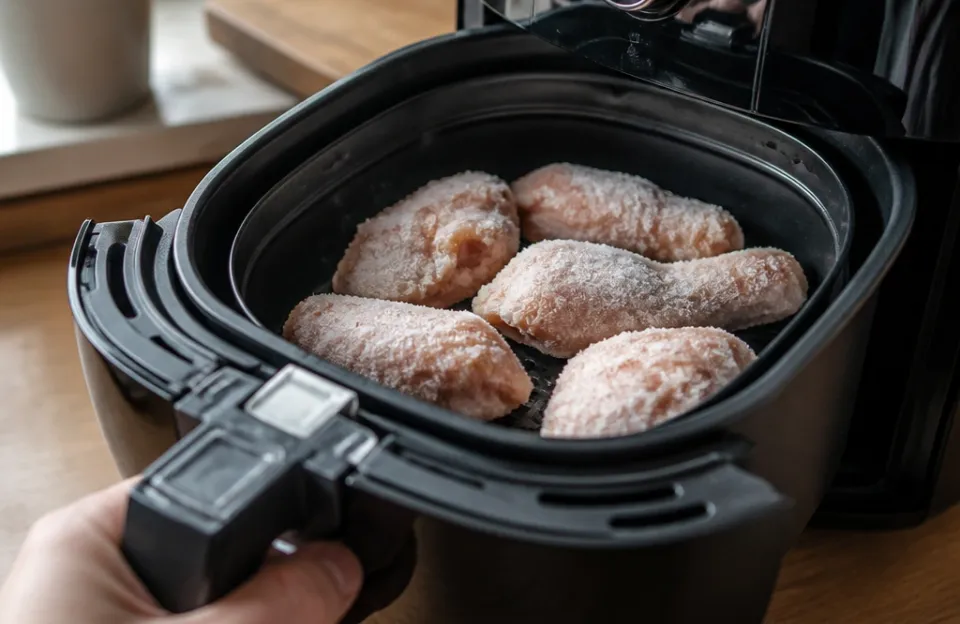
Frozen meatballs can go into the air fryer straight from the freezer without thawing, according to independent recipe guides, which suggest roughly 10 to 17 minutes at 375°F depending on size. Treat that range as a starting point only: a large frozen raw meatball needs considerably more time than a small one, and the center must still hit its safe temperature.
The more important distinction is between raw frozen meatballs and pre-cooked frozen meatballs:
- Frozen raw meatballs must be cooked to the safe minimum for their meat: 160°F for ground beef, pork, or lamb, and 165°F for ground poultry.
- Frozen pre-cooked meatballs only need reheating, and leftovers of any type should be reheated to 165°F (73.9°C).
When the package provides cooking instructions, follow them, since manufacturers know their product’s size and formulation. Use the thermometer to confirm the target either way.
How Air Fryer Capacity and Design Affect Results
Air fryers are essentially countertop convection ovens, and they cook food faster than larger ovens while using less energy. Because they rely on moving hot air, overcrowding the basket can prevent enough circulation to properly cook the food. When you are cooking a large amount, it is often best to work in batches rather than piling everything in at once.
Cooking times vary between air fryers because of differences in appliance size and power, but the safe internal temperature is the same. A compact 2-quart basket model and a large oven-style air fryer will not produce identical results from the same timer setting. Start at the lower end of any range, then check the internal temperature and add minutes as needed.
Arrange meatballs in a single layer with a little space between them. If they are touching, the sides that meet will steam rather than brown, and the center of the pile will lag behind.
Quick Reference Table: Air Fryer Cooking Times for Meatballs
The times below are starting points drawn from independent recipe guides, confirmed with a thermometer. Your appliance may need more or less time.
| Meatball Type | Suggested Temperature | Starting Time | Safe Internal Temperature |
|---|---|---|---|
| Fresh, small (about 1 inch) | 375°F | 8 to 10 minutes | 160°F (beef, pork, lamb) or 165°F (poultry) |
| Fresh, medium (about 1.5 inches) | 375°F | 10 to 12 minutes | 160°F (beef, pork, lamb) or 165°F (poultry) |
| Fresh, large (about 2 inches) | 375°F | 12 to 15 minutes | 160°F (beef, pork, lamb) or 165°F (poultry) |
| Frozen, raw | 375°F | 10 to 17 minutes, depending on size | 160°F (beef, pork, lamb) or 165°F (poultry) |
| Frozen, pre-cooked | Follow package instructions | Follow package instructions | 165°F to reheat |
For poultry meatballs, independent guides suggest checking at 10 minutes because lean turkey and chicken can dry out quickly.
Step-by-Step: Cooking Meatballs in an Air Fryer
- Preheat if your model recommends it. Independent recipe guides suggest 3 to 5 minutes at 375°F, which helps set the exterior quickly and reduces sticking. If your manual says preheating is unnecessary, follow the manual.
- Prepare even-sized meatballs. Roll them to a consistent width so they finish together.
- Arrange in a single layer. Leave small gaps so hot air can circulate. Cook in batches if needed.
- Set the temperature and start at the low end. Air fryer foods generally cook in 5 to 25 minutes at 350°F to 400°F, so meatballs fall comfortably inside that window.
- Shake the basket halfway through. A gentle shake at the midpoint rolls small and medium meatballs into a new position for more even browning.
- Check the internal temperature. Use a food thermometer and confirm 160°F for ground beef, pork, or lamb, or 165°F for ground poultry. If the center is below target, return the meatballs for 1 to 2 minutes and check again.
- Rest briefly before serving. A short rest lets the juices settle and makes the meatballs easier to handle.
- Refrigerate leftovers within 2 hours to keep them out of the temperature danger zone, the 40°F to 140°F range where bacteria multiply to dangerous levels.
Troubleshooting: Burning, Sticking, Dryness, and Foil Safety
Burning outside, cold inside. This usually means the temperature is too high for the meatball’s size, or the basket is overcrowded. Lower the temperature slightly and extend the cook time, and check the center with a thermometer rather than relying on the crust.
Sticking. A preheated basket and a lightly oiled surface help. Avoid pressing meatballs down or moving them before the first side has set.
Dryness. Dry meatballs usually come from lean meat combined with overcooking. Check the temperature at the low end of the range and pull them as soon as they hit target, since carryover heat continues cooking them briefly.
Wet sauces and glazes. Adding wet sauces before air frying can cause smoke from dripping, and sugar-based sauces can burn easily at high temperatures. Brush on glazes near the end of cooking or toss meatballs in sauce after they come out.
Foil. Some recipes suggest tenting meatballs with foil to slow browning. If you use foil, keep it well away from the heating element and never let it block airflow. Loose foil can be drawn into the element in some models. When in doubt, skip the foil and lower the temperature instead.
Reheating Leftover Meatballs Safely
Leftovers of any type should be reheated to 165°F (74°C). In an air fryer, a moderate temperature with a short cook time works well: check the internal temperature rather than relying on a fixed number of minutes. Refrigerate leftover meatballs within 2 hours of cooking, and reheat only the portion you plan to eat.