Reheat refrigerated fried shrimp in a preheated air fryer at 350°F for about 3 to 5 minutes in a single layer, flipping once, until the coating is crisp and the center reaches 165°F. The single-layer rule matters more than any exact timer, because crowded shrimp steam each other and the breading never recovers. Frozen leftovers need longer: start at 350°F for 6 to 8 minutes and check early. Exact times will vary with your model’s wattage and basket size, so treat every number here as a starting point, not a guarantee.
Why the Air Fryer Revives Leftover Fried Shrimp
An air fryer is essentially a countertop convection oven that cooks faster and uses less energy than a full-size oven. That design matters for leftovers: rapid hot-air circulation crisps food and is specifically suited to reheating without sogginess.
A microwave takes a different route. It heats the moisture inside the shrimp first, and that steam softens the coating from underneath. A regular oven avoids the steam problem but takes long enough to preheat that the shrimp may dry out before the crust firms up. The air fryer reaches temperature quickly and drives dry heat across the surface, which is the combination you want.
Temperature and Timing Starting Points
Set the air fryer to 350°F and use the following as starting points based on shrimp size. These are practical estimates for refrigerated leftovers, not manufacturer-verified settings.
| Shrimp Size | Temperature | Starting Time (Refrigerated) |
|---|---|---|
| Small (popcorn shrimp) | 350°F | 2 to 3 minutes |
| Medium to large | 350°F | 3 to 4 minutes |
| Jumbo or extra large | 350°F | 4 to 5 minutes |
USDA notes that foods generally require 5 to 25 minutes at 350°F to 400°F in an air fryer, and that times vary with the size and power of the appliance even though the safe internal temperature does not change. If your shrimp are refrigerator-cold, piled more than one layer deep, or larger than expected, add a minute and check again rather than assuming the table is exact.
Refrigerated Versus Frozen Leftovers
| Starting Point | Temperature | Time | Notes |
|---|---|---|---|
| Refrigerated fried shrimp | 350°F | 3 to 5 minutes | Flip once at the halfway mark |
| Frozen fried shrimp | 350°F | 6 to 8 minutes | No thawing needed; check early |
Frozen leftovers can be reheated without thawing first, which streamlines the process but extends the time. Start at the lower end of the frozen range and add time in short increments, because the coating can scorch while the center is still cold.
Step-by-Step Reheating Instructions
- Preheat. Run the air fryer at 350°F for about two minutes so the shrimp hit hot air the moment they go in.
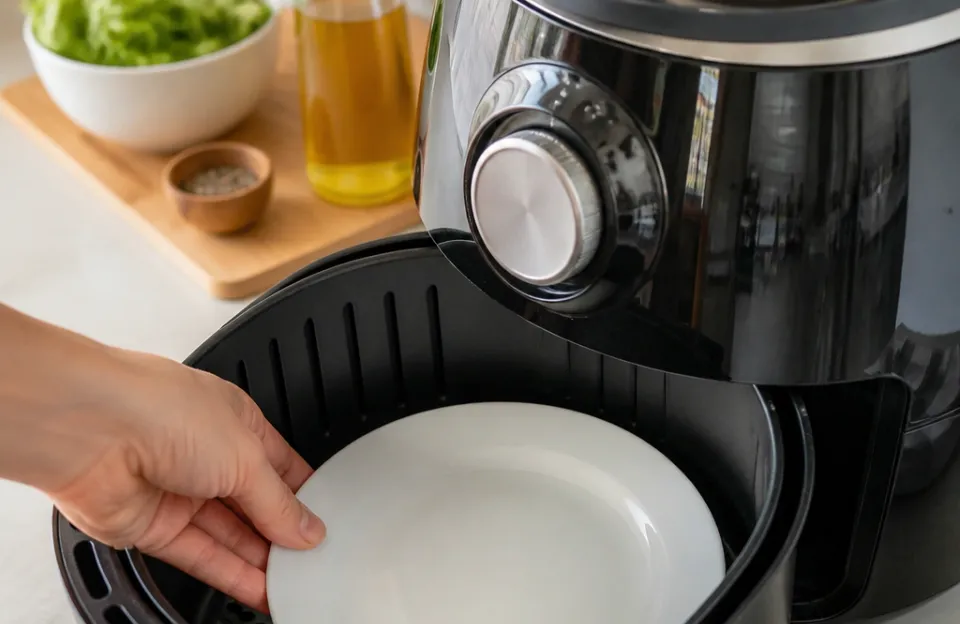
- Arrange in a single layer. Spread the shrimp out so they do not touch or overlap. Overcrowding prevents enough air circulation to heat food properly, so cook large batches in rounds instead of piling them up.
- Flip at the halfway mark. Shake the basket gently or turn the shrimp once so both sides crisp evenly.
- Check the internal temperature. Insert a food thermometer into the thickest part of a piece and confirm it reaches 165°F. USDA advises following manufacturer instructions and always verifying safe internal temperature with a thermometer when air frying.
- Remove immediately. Once the shrimp are crisp and hot, take them out. Leaving them in the basket lets residual heat soften the coating.
How to Judge Doneness and When to Stop
Use two checks together, because neither one alone is enough.
- Texture: The coating should feel dry and crisp to the touch, not soft or slick.
- Temperature: A thermometer reading of 165°F in the thickest piece is the reliable safety signal.
Stop cooking as soon as both conditions are met. Shrimp are already cooked once before reheating, so extra time in the basket only toughens the meat. If the crust is crisp but the center reads below 165°F, return the shrimp for 30 to 60 seconds and recheck rather than extending the timer blindly. And remember that appearance and smell cannot confirm safety on their own: food can make you sick even when it does not look, smell, or taste spoiled.
Handling Different Breading Types
The coating on your shrimp determines how much attention the heat needs.
- Panko and coarse breadcrumbs: The most forgiving. The rough texture holds up well, and you can let these go to the upper end of the time range if you prefer extra crunch.
- Tempura and thick batters: More delicate. These can stick to the basket, so a light mist of cooking spray on the basket itself (not the shrimp) helps. Heavy oil on the coating makes the result greasy rather than crisp.
- Coconut or coarse-flake coatings: These brown quickly. Check at the earliest time in the range and pull them as soon as the coating is crisp and the center is hot.
Whichever coating you have, avoid stacking. Breading that cannot dry in moving air turns soft no matter how long you cook it.
Common Mistakes That Cause Soggy or Rubbery Shrimp
- Overcrowding the basket. Stacked shrimp block airflow, so the middle pieces stay soft while the outer ones overbrown.
- Adding too much oil. Fried shrimp already carry oil from the first fry. Extra spray weighs down the coating.
- Skipping the thermometer. Reheating is a balance between a crisp crust and tender seafood. Without a temperature check, you are guessing at both.
- Leaving shrimp in the basket after the timer. Trapped heat keeps working on the coating and softens it.
- Reheating more than you will eat. Pull out only the portion for one meal and return the rest to the refrigerator promptly.
Safe Cooling, Storage and Reheating Limits
How you store the shrimp determines how well they reheat, and food-safety rules apply from the moment they leave the fryer.
Cool leftovers in shallow containers for quick cooling, then refrigerate them within 2 hours of cooking; if the room or outdoor temperature is above 90°F, that window shrinks to 1 hour. The two-hour rule applies to leftovers, takeout, and doggie-bag food alike. Keep the refrigerator at or below 40°F and the freezer at 0°F.
USDA states leftovers can be kept in the refrigerator for 3 to 4 days or frozen for 3 to 4 months. That is the general leftovers window; apply it to your shrimp and label the container with the date.
One correction to a common habit: do not leave fried shrimp sitting out at room temperature to “cool down” before refrigerating. Room-temperature holding time counts against the two-hour limit, and bacteria grow rapidly between 40°F and 140°F. A brief few minutes on the counter while you transfer them to containers is fine, but the refrigerator should follow quickly.
When to Discard Leftover Shrimp
Throw away perishable food that has been left at room temperature for more than 2 hours, or more than 1 hour when the temperature is above 90°F. No reheating method makes that food safe again.
Beyond the time limits, use the FDA’s discard rule: anything that looks or smells suspicious should be thrown out, and if you are unsure or the food looks questionable, throw it out. For shrimp specifically, that means skipping any batch with a sour odor, slimy surface, or dull, discolored patches. The cost of one discarded portion is far lower than the cost of foodborne illness.
Finally, reheat only what you plan to eat. The supplied guidance does not support reheating shrimp multiple times, and repeated heat-and-cool cycles degrade both texture and safety margins. Portion out single servings before reheating.
Air Fryer Maintenance for Better Results
A clean basket and heating element make a real difference to reheating quality. Old grease or stuck-on crumbs from a previous meal can smoke and impart a burnt taste, and built-up residue can interfere with airflow. Wipe the basket and rack with warm, soapy water after each use, and check the element area for splatter before you start. A clean interior lets the hot air reach the shrimp without carrying over stale flavors.
Final Decision: Is the Batch Done and Safe to Serve?
Run through this quick checklist before you plate:
- Shrimp arranged in a single layer and flipped once.
- Coating dry and crisp to the touch.
- Thermometer reads 165°F in the thickest piece.
- Shrimp removed from the basket immediately after the check.
- Leftovers cooled in shallow containers and refrigerated within 2 hours.
If all five boxes are ticked, the batch is ready. If the shrimp were out too long, look or smell off, or you are simply unsure, discard them. For related leftover-reheating guidance, see how to reheat fried chicken in the air fryer, which follows the same single-layer, moderate-heat approach.
With a preheated basket, a single layer, and a thermometer check, leftover fried shrimp come back crisp in about the time it takes to set the table.