For raw plain chicken strips in an air fryer, start at 380°F (193°C) for 10 to 12 minutes, flipping halfway through. The strips are safely cooked only when the thickest part reaches 165°F (74°C), measured with a food thermometer before you remove them from the basket. Treat the timer as a starting point, not a guarantee: air fryer size and power vary, so cooking times vary too, while the safe internal temperature stays the same.
Why the Air Fryer Works for Chicken Strips
An air fryer is essentially a countertop convection oven. It cooks food faster and uses less energy than a larger oven. For chicken strips, that means intense circulating heat and a crisp exterior in a short time, which is why the appliance suits thin cuts so well.
The small chamber also helps. Strips have a lot of surface area relative to their thickness, so they cook much faster than a whole breast. Most air-fried foods take somewhere between 5 and 25 minutes at 350°F to 400°F, which puts chicken strips comfortably in the faster end of that range.
Prep for Even Cooking
Uniformity is the main factor in even cooking. If your strips are unevenly sliced, the thin ones dry out while the thick ones stay undercooked in the center. Aim for strips of roughly the same width, about one inch, and check the thickness of store-bought tenders before you start.
Pat the chicken dry with a paper towel before seasoning. Surface moisture turns to steam in the basket and slows browning, so a dry surface gives you a better crust and a more predictable cook.
Handling raw poultry safely matters just as much as the knife work. Wash your hands with soap and water for 20 seconds before and after preparing food, and clean and sanitize surfaces before and after preparation. Keep raw chicken away from cooked and ready-to-eat foods, and never put cooked strips back on the plate that held the raw meat. Raw poultry can carry Salmonella, Campylobacter or other pathogens, and thorough cooking kills them. Store raw or thawing poultry on the bottom shelf of the refrigerator, on a plate, so drips cannot fall onto food below. If you are also cooking other cuts, our guide to fresh chicken tenders in the air fryer covers similar prep principles.
Recommended Times and Temperatures
Use the table below as a starting point, then confirm doneness with a thermometer. The plain-strip baseline matches the answer above; breaded and frozen products shift the timing.
| Chicken Preparation Style | Temperature | Total Cooking Time | Notes |
|---|---|---|---|
| Plain / Seasoned Strips | 380°F (193°C) | 10–12 minutes | Flip at the halfway point |
| Breaded / Coated Strips | 380°F (193°C) | 10–12 minutes | Single layer with space between pieces |
| Frozen Breaded Strips | 380°F (193°C) | Start checking at 12–15 minutes | Follow package instructions; verify with a thermometer |
When package instructions exist, follow them: they are written for that specific product and take priority over general timing advice. One important exception: raw, stuffed breaded chicken breast products should not be cooked in an air fryer at all, and the manufacturer’s cooking instructions should always be followed. That warning covers a narrow product category, not ordinary breaded strips.
The Cooking Sequence
- Prep. Cut the strips to an even thickness, pat them dry, and season. Breaded strips should rest on a wire rack for a few minutes so the coating adheres.
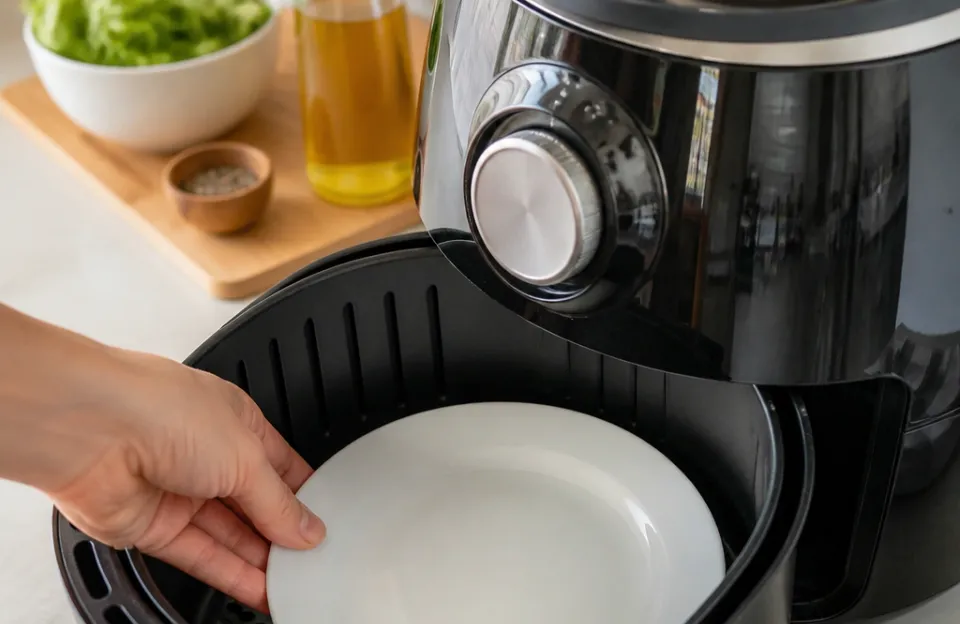
- Arrange. Place strips in a single layer with a little space between each piece. Overcrowding prevents enough air circulation to cook the food properly, so cook large amounts in batches.
- Cook. Set the air fryer to 380°F (193°C) and start with the lower end of the time range.
- Flip. Turn the strips halfway through so both sides brown evenly.
- Check. Insert a digital thermometer into the thickest part of the largest strip. Continue cooking until it reads 165°F (74°C).
- Rest. Let the strips sit for a minute or two before serving.
If your model has a preheat setting, using it is reasonable, but follow your manufacturer’s instructions for your specific appliance.
How to Verify Doneness Safely
Never rely on time or appearance alone. Cook all food to the minimum internal temperature as measured with a food thermometer before removing it from the heat source. For all poultry, including breasts, legs, wings, ground poultry, giblets and stuffing, that minimum is 165°F (73.9°C).
Insert the probe into the thickest part of the largest strip, avoiding the basket and any bone. If the reading is below 165°F, return the strips to the basket and check again after a couple of minutes. You may prefer a higher temperature for texture or personal preference, which is fine as long as you do not go below the minimum.
Some people are at higher risk from undercooked poultry, including babies and small children, pregnant women, older adults and people with compromised immune systems, so they should be especially careful. The CDC notes that illness linked to chicken can also come from cooked chicken that never reached 165°F. For formal guidance, see the USDA Food Safety and Inspection Service resources on poultry.
Common Mistakes and Troubleshooting
- Overcrowding the basket. Air cannot circulate between packed strips, so they steam instead of crisping. Cook in batches.
- Uneven strip sizes. A mix of thin and thick strips guarantees uneven results. Cut them consistently.
- Too much oil. A light spritz is enough. Excess oil pools in the basket and can cause smoking.
- Brown outside, raw inside. Lower the temperature slightly and keep cooking until the thermometer reads 165°F. The internal temperature, not the crust color, decides doneness.
- Smoking during cooking. Usually this means leftover fat or debris in the basket, or oil dripping onto the heating element. Clean the basket thoroughly between uses.
- Sweet glazes burning. Sugary sauces can scorch at 380°F. Brush them on near the end of cooking instead.
Breading and Coatings
For breaded strips, set up a standard station: flour, egg wash, then breadcrumbs. Press the crumbs on firmly, then let the coated strips rest on a wire rack for about 5 to 10 minutes so the breading adheres before cooking.
Keep the strips in a single layer, and check the internal temperature early, since breading can brown well before the center is done. If the coating looks dry partway through, a light mist of oil helps it crisp.
Frozen Raw Strips
You do not have to thaw raw chicken strips before air frying, and cooking from frozen avoids the mess of partially thawed meat. Timing is less predictable, though, because frozen strips stay cold in the center while the outside browns.
No official source sets a fixed time increase for frozen strips in an air fryer, so skip any percentage shortcut and rely on the thermometer. Start checking at the upper end of the range in the table above, and follow package instructions when they exist. If the outside browns before the center reaches 165°F (74°C), lower the temperature and continue cooking until it does.
Handling “It Depends” Factors
No two air fryers perform identically. A high-wattage unit with a large basket will cook faster than a small, lower-powered model. Check your chicken a couple of minutes earlier the first time you cook strips in a new appliance, and note the result for next time.
Basket design matters too. Wire racks allow air to circulate from below, while solid perforated trays may need more diligent flipping. Either way, the thermometer decides when the strips are done.
Finally, marinades and rubs change browning. High-sugar glazes brown and burn quickly at 380°F, so add them in the final minutes of cooking.
Storing and Reheating Leftovers
Refrigerate leftover strips within 2 hours of cooking, or within 1 hour if the room temperature is above 90°F; otherwise bacteria can multiply in the range between 40°F and 140°F. Cool large amounts quickly by dividing them into shallow containers so they reach 40°F or below as fast as possible. Leftovers keep in the refrigerator for 3 to 4 days or in the freezer for 3 to 4 months.
The USDA food safety guidance for leftovers is the reference to follow here. To reheat, the safe minimum internal temperature is 165°F (73.9°C), so warm the strips until a thermometer confirms that reading. An air fryer at 350°F for a few minutes restores crispness better than a microwave; check the temperature rather than guessing. Hot food should be held at 140°F or warmer until serving, and frozen leftovers can be reheated without thawing in a saucepan or microwave.
Keeping Your Kitchen Safe
Beyond the thermometer, hygiene is the main safeguard. Wash hands for 20 seconds before and after handling raw chicken, sanitize the prep surface, and keep raw and cooked foods apart. Use separate boards for raw poultry and ready-to-eat ingredients, and clean utensils before reuse.
Clean the air fryer basket after every use. Rendered fat and debris left in the basket smoke during the next session, and stuck-on residue is harder to remove later. Once the basket cools, wash it with hot, soapy water and avoid abrasive pads that damage the non-stick coating.
Before Your Next Batch
The reliable approach is simple: set 380°F (193°C), start at 10 to 12 minutes, flip halfway, and let a digital thermometer reading of 165°F (74°C) tell you when the strips are done. Keep the pieces uniform, leave space between them in the basket, and follow package instructions for breaded or frozen products.
Once those basics are second nature, adjust seasoning and timing to your taste. The first few batches are the time to rely on the thermometer; after that, you will know how your air fryer behaves and can judge the rest by sight and touch.