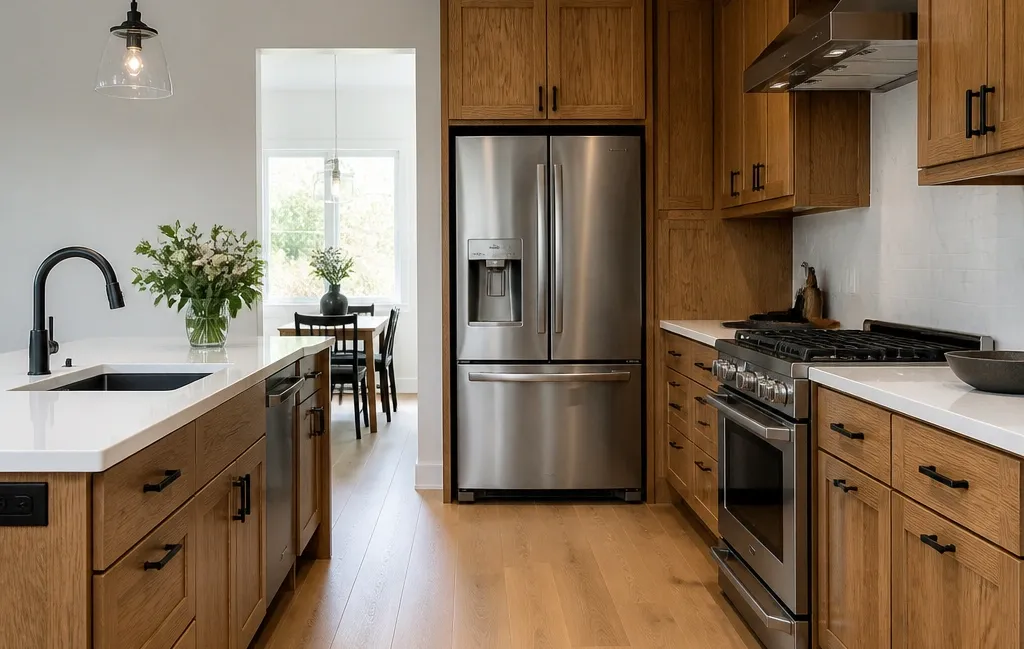
Oak cabinetry remains one of the most enduring choices in kitchen design, and in 2026, homeowners are pairing it with flooring that respects its natural warmth while meeting the demands of modern life. Whether your cabinets feature a classic honey stain, a raw white oak finish, or a deep espresso tone, selecting the right floor is about balancing undertones, durability, and visual weight.
A common mistake is treating the floor as an afterthought. In practice, the flooring acts as the foundation for the entire room’s color palette. Because oak carries a prominent grain pattern and distinct warmth, the material you choose must either ground that energy with cool neutrals or complement it with rich, contrasting textures. This guide breaks down the most effective kitchen flooring ideas with oak cabinets for 2026, helping you avoid costly mismatches and build a space that feels intentional from the ceiling to the subfloor. You can also read our guide on inch base kitchen cabinet with drawers.
Understanding Your Oak Cabinet Undertones
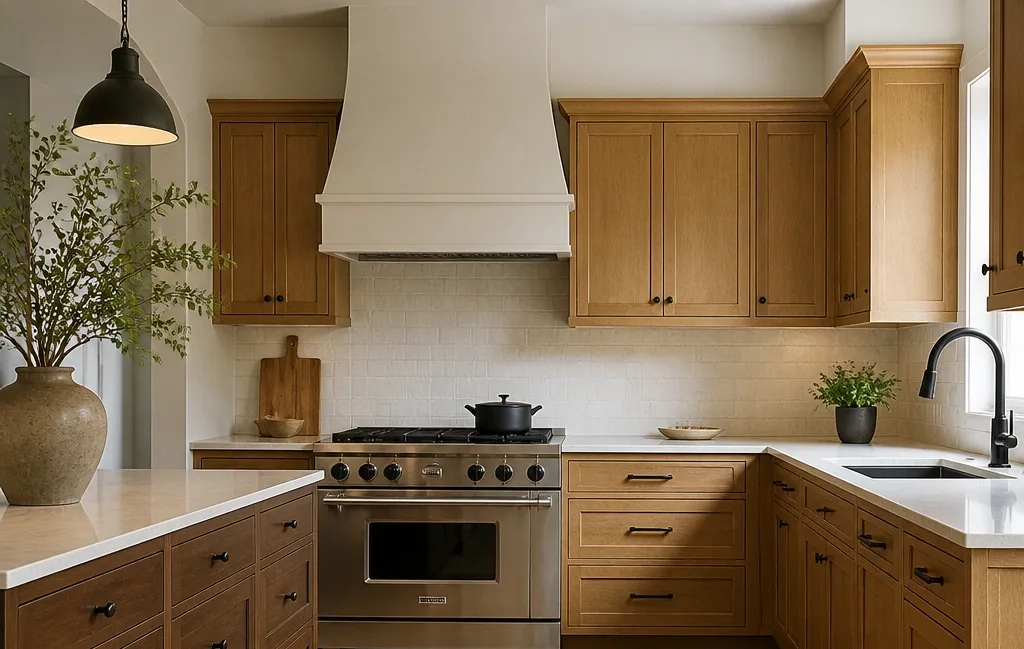
Before looking at flooring samples, you need to identify the specific undertone of your oak cabinets. Oak is not a single color; it shifts dramatically based on the species (red oak vs. white oak), the cut (plain-sawn vs. quarter-sawn), and the finish applied.
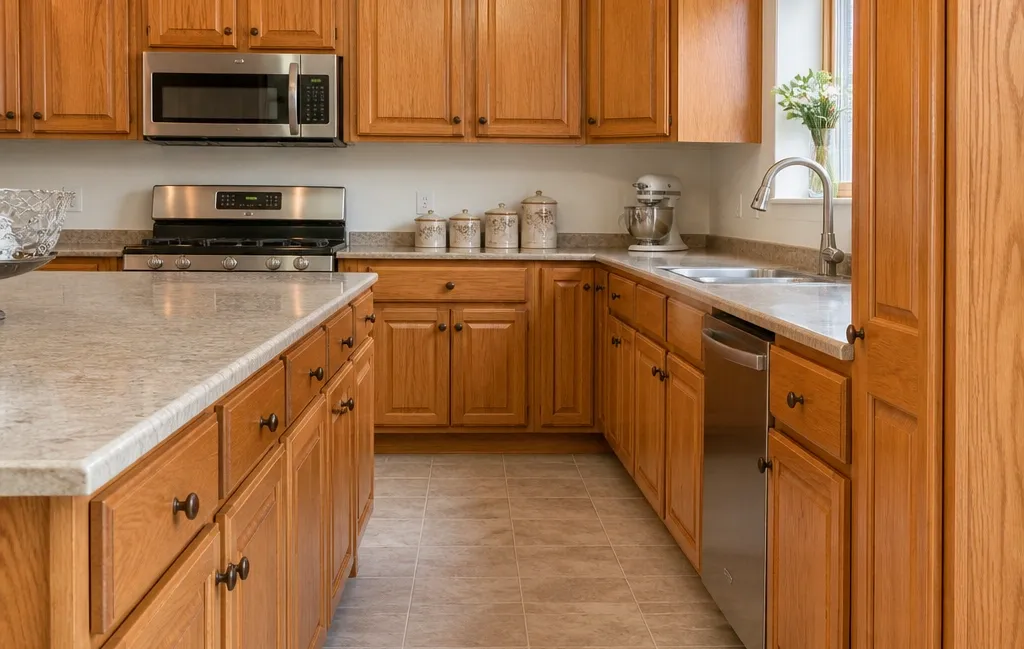
Golden or honey oak, which dominated kitchens in the 1990s and early 2000s, leans heavily into yellow and orange undertones. If you have this style, choosing a floor with red or pink undertones—like certain cherry woods or terracotta tiles—will create a visual clash that makes the room feel dated and overly warm. Instead, you need flooring that neutralizes that heat. You can also read our guide on how to get rid of sticky residue on kitchen cabinets.
Natural white oak or lightly whitewashed finishes are highly versatile in 2026. They carry subtle green or gray undertones that pair effortlessly with cooler flooring materials like slate, concrete-look porcelain, or blue-gray luxury vinyl. If your cabinets are stained dark brown or espresso, the heavy grain of the oak becomes muted. In these cases, you have the freedom to use lighter, airier floors to prevent the kitchen from feeling like a closed-in cave.
The scale of the grain also matters. Plain-sawn oak has a wide, cathedral-like grain pattern that is visually busy. If your cabinets feature this cut, opt for flooring with a tight, uniform texture. Pairing a heavily grained cabinet with a heavily grained floor creates visual clutter, especially in smaller kitchens where every surface competes for attention. You can also read our guide on how to touch up paint on kitchen cabinets.
The Best Flooring Colors for Oak Cabinets in 2026
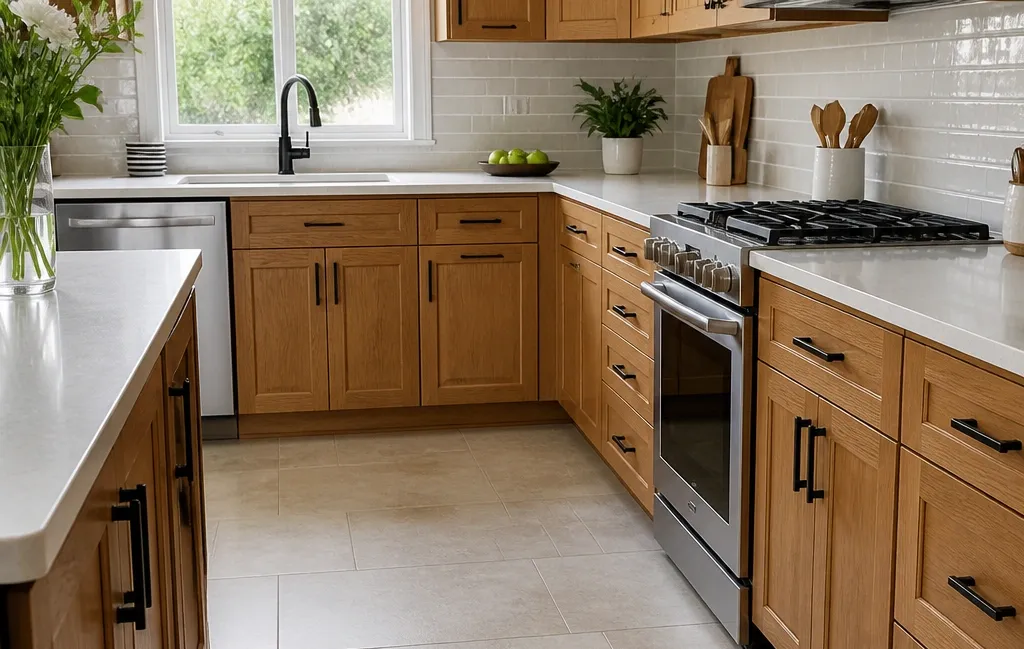
Color selection is the fastest way to harmonize or ruin a kitchen’s aesthetic. When working with oak, the golden rule is contrast: go significantly lighter or significantly darker than the cabinetry. A “near-miss” match—where the floor is almost the same shade as the cabinets but slightly off—is the most frequent design error we see. It looks accidental rather than curated.
Light and Airy Options
Lighter floors bounce natural light around the room, making them ideal for kitchens where heavy oak cabinetry might otherwise dominate the space. You can also read our guide on how to hang kitchen cabinets on wall.
- Cream-colored travertine: Adds organic texture without competing with the wood grain.
- White-washed luxury vinyl plank (LVP): Offers a modern farmhouse look while remaining completely waterproof.
- Soft gray porcelain tile: Acts as a cooling agent against warm honey oak.
Dark and Grounded Options
Dark floors anchor the room, giving the kitchen a sophisticated, furniture-like quality. This approach works exceptionally well if you prefer deeper toned wooden surfaces throughout your home.
- Charcoal slate: Provides rugged texture that complements the organic nature of oak.
- Espresso-stained hardwood: Creates a dramatic boundary between the floor and lighter oak cabinets.
- Dark walnut LVP: Delivers high-end contrast with minimal maintenance.
If you are planning a layout update alongside your new floors, double-check the standard base unit clearance before installation. Adding thick stone tile or multiple layers of underlayment can raise your floor height, altering how your cabinet doors clear the ground and potentially requiring adjustments to your toe kicks.
Top Flooring Materials That Complement Oak
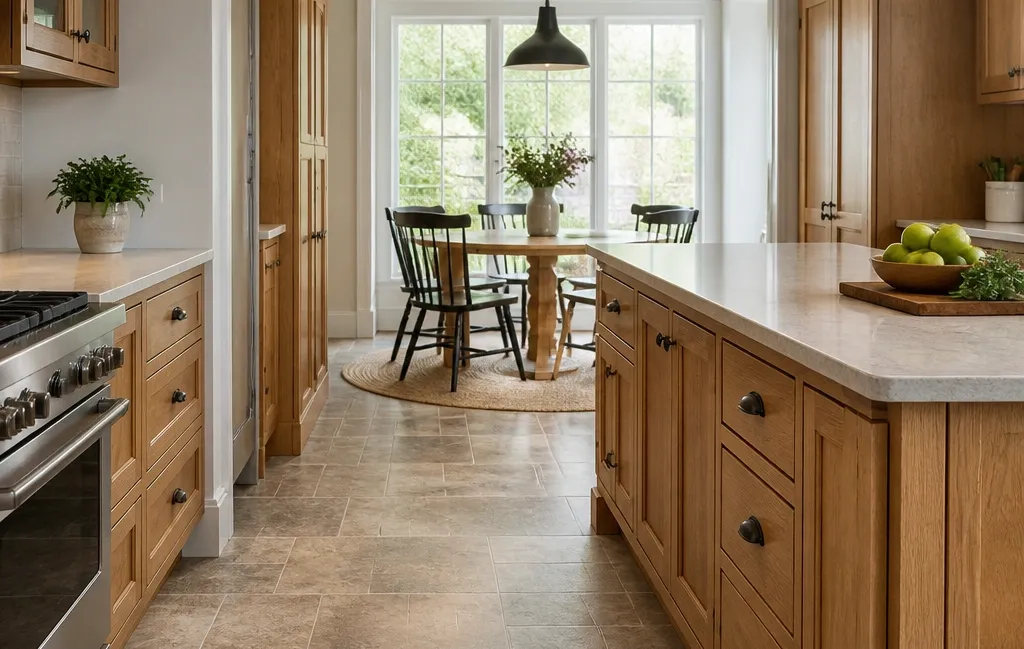
In 2026, the best kitchen flooring ideas with oak cabinets prioritize materials that handle water, dropped utensils, and heavy foot traffic without sacrificing style. According to the National Wood Flooring Association, proper material selection and acclimation are critical to preventing long-term structural issues, particularly in moisture-heavy environments like kitchens.
Porcelain and Ceramic Tile
Porcelain remains a top-tier choice for oak kitchens because it is virtually impervious to water. Modern manufacturing allows porcelain to accurately mimic natural stone, poured concrete, or even wood planks. For oak cabinets, large-format tiles (12×24 inches or larger) are currently the standard. They reduce the number of grout lines, creating a cleaner visual field that prevents the room from feeling overly busy when paired with textured wood cabinetry. Matte or honed finishes generally look more organic and cohesive with oak than high-gloss glazes.
Luxury Vinyl Plank (LVP) and Tile (LVT)
LVP has evolved significantly. High-quality rigid core vinyl is now the go-to for families needing waterproof performance without the cold, hard feel of tile. If you want the appearance of hardwood beneath your oak cabinets but need something that will survive a leaking dishwasher, LVP is the practical answer. In 2026, look for embossed-in-register (EIR) textures, where the physical grain of the plank perfectly matches the printed wood image, providing authentic depth.
Natural Stone
Slate, limestone, and travertine bring an earthy luxury that naturally aligns with oak’s organic origins. Slate offers a rugged, cleft texture that suits rustic or transitional oak kitchens beautifully. However, be honest about the trade-offs: natural stone requires periodic sealing to prevent oil and wine stains, and it can be uncomfortably cold underfoot unless paired with radiant heating.
Engineered Hardwood
Solid hardwood in kitchens is risky due to moisture fluctuations, but engineered hardwood provides a stable alternative. It features a real wood veneer over a plywood core, resisting expansion and contraction better than solid planks. When pairing engineered wood with oak cabinets, choose a different species entirely—such as hickory or maple—to ensure the grains don’t fight each other.
Charcoal slate grounds honey oak cabinets, creating a striking, high-contrast traditional kitchen.
Using Gray Floors to Modernize Golden Oak
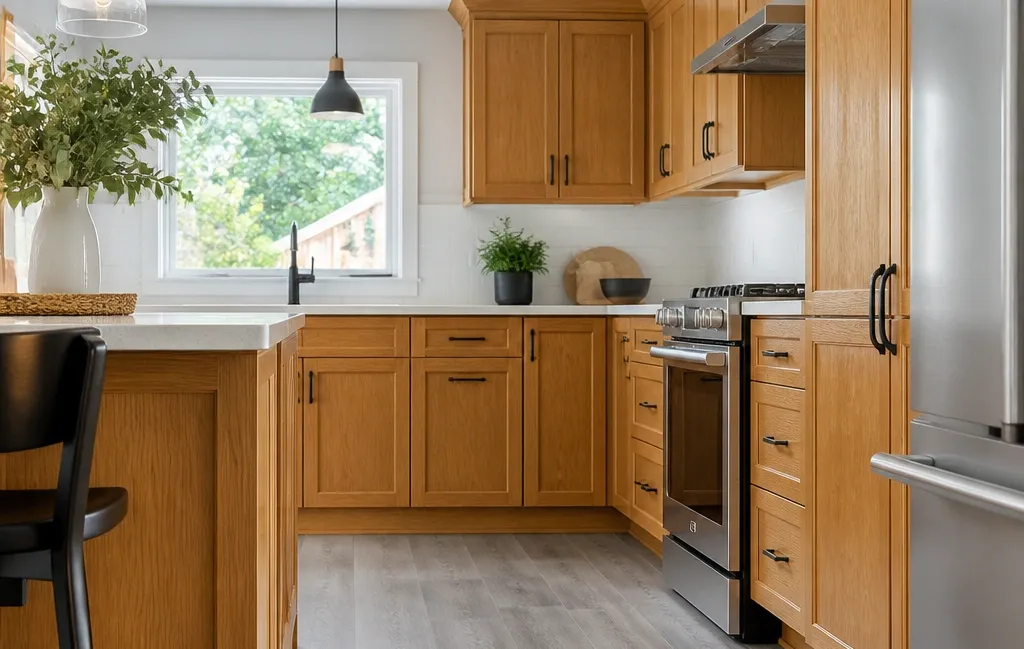
Gray is frequently overlooked as a partner for oak, but it is arguably the most effective tool for updating older, yellow-leaning cabinetry. Because golden oak radiates intense warmth, a cool, mid-tone gray floor acts as a visual stabilizer. It pulls the room out of the 1990s and into 2026 without requiring you to paint or replace the cabinets.
The key is selecting the right gray. Avoid “greige” (gray-beige) tones that contain too much yellow or brown. These muddy shades will simply blend into the warmth of the oak, defeating the purpose of the contrast. Instead, look for true grays or blue-grays with crisp, cool undertones. This transition allows you to confidently introduce modern elements like stainless steel appliances or stark white quartz countertops.
When finalizing your appliance layout alongside your new gray floors, consider how your daily cooking flow interacts with the space. For instance, deciding between a compact countertop cooker and a traditional range often dictates how much durable floor space you need directly in front of your prep zones. Matte gray floors hide scuffs from moved appliances far better than glossy alternatives.
Concrete and Industrial Styles for Oak Kitchens
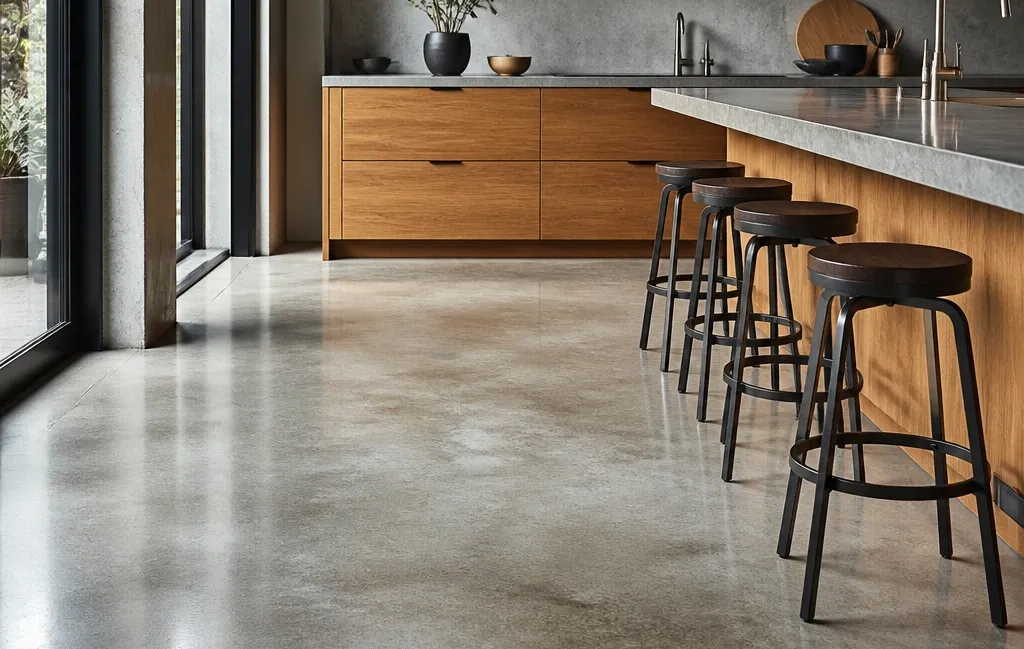
Concrete flooring—whether real polished concrete or a highly realistic porcelain lookalike—provides a sharp, industrial contrast to the soft, organic warmth of oak. This combination is a hallmark of contemporary and Scandinavian-inspired kitchens in 2026, where the focus is on clean lines, mixed textures, and functional beauty.
This pairing works best when the oak cabinets feature simple, flat-panel or Shaker-style doors. If your cabinets have ornate, raised-panel detailing, a concrete floor can create a stylistic mismatch. But with minimalist cabinetry, the concrete turns the oak into a warm focal point set against a sleek, utilitarian backdrop.
Real poured concrete can crack and feels very cold, so many homeowners opt for concrete-effect LVP or large-format porcelain tiles. These synthetic alternatives deliver the exact aesthetic benefit while offering softer underfoot comfort and easier installation over existing subfloors.
Common Mistakes to Avoid When Pairing Floors and Oak
Even with the right materials, execution matters. Here are the most frequent pitfalls to sidestep during your renovation:
- Ignoring lighting conditions: Oak changes color drastically depending on the light. Honey oak can look bright orange in direct afternoon sun and dull brown under warm LED bulbs. Always lay flooring samples next to your cabinets and observe them at morning, noon, and night before purchasing.
- Clashing undertones: Never mix cool-toned wood floors (like ash or gray-washed oak) with warm-toned cabinets (like honey oak). The resulting friction makes the room feel unsettled. Keep the temperature consistent or use a non-wood neutral (like gray tile) to bridge the gap.
- Over-patterning the space: Intricate mosaic tiles or high-contrast geometric patterns rarely suit oak kitchens. The wood grain already provides significant visual texture. Let the cabinetry be the star and keep the floor geometry quiet and uniform.
- Forgetting the transition strips: If your kitchen flows into a living room with different flooring, plan your transition strips early. Bulky metal reducers can ruin a seamless design. Look for flush, color-matched T-moldings or Schluter strips that sit level with both floor surfaces.
Practical Installation Tips for Kitchen Renovations
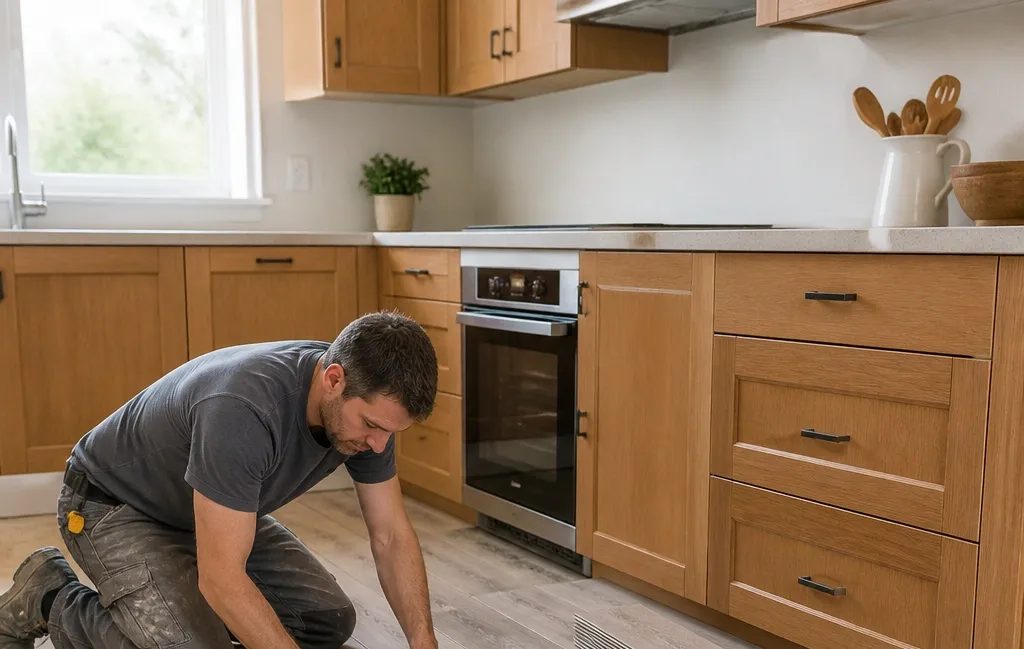
Selecting the material is only half the project; installing it correctly ensures longevity. When renovating an existing kitchen, your primary constraint is often floor height. If you are laying thick porcelain tile over an existing subfloor, you may create a tripping hazard or a jarring step-down into the adjoining dining room.
Luxury vinyl plank is significantly thinner than tile or engineered wood. If you need to keep the flooring flush across an open-concept floor plan, thinner materials offer a major logistical advantage.
Equally important is subfloor preparation. Any imperfections in the subfloor will telegraph through LVP or cause tiles to crack. Ensure your subfloor is level to within 3/16 of an inch over a 10-foot span before installation begins. Furthermore, wood-based products (including engineered wood and some LVP cores) require acclimation. Leave the unopened boxes in the kitchen for 48 to 72 hours prior to installation so the material adjusts to the room’s ambient humidity.
Finally, consider your daily maintenance reality. If you spend hours cooking and entertaining, prioritize pre-finished, non-porous materials. Unsealed limestone might look stunning in a showroom, but it will absorb spilled olive oil and lemon juice rapidly. For active households, porcelain, LVP, or sealed engineered hardwood provide the best balance of aesthetic impact and daily livability. And when you are outfitting your newly floored kitchen with precision tools, having a reliable digital probe stored safely away from heavy foot traffic zones protects both your gear and your pristine new floors.
White-washed vinyl planks maximize light reflection in compact kitchens featuring oak cabinetry.
Frequently Asked Questions
What floor color looks best with golden oak cabinets?
Golden oak carries strong yellow and orange undertones. To balance this warmth, select cool-toned flooring such as soft gray, blue-gray, or crisp white. These shades provide a neutral backdrop that makes the golden wood feel like a deliberate design choice rather than a dated relic. Avoid beige, tan, or yellow-based wood stains, as they amplify the yellow in the cabinets and wash out the room.
Should my hardwood floors match my oak cabinets exactly?
Attempting a perfect match between your hardwood floors and oak cabinets is rarely recommended. Variations in wood batches, aging, and lighting make an exact match nearly impossible, and a near-match looks accidental. Instead, aim for deliberate contrast. Go significantly darker for a grounded, formal look, or significantly lighter for an airy, modern feel.
Is slate tile a good choice for kitchens with oak cabinets?
Yes, slate is an exceptional companion for oak. Its earthy, rugged texture harmonizes naturally with the organic grain of the wood, making it ideal for rustic, craftsman, or transitional kitchens. Be aware of the trade-offs: slate requires regular sealing to prevent staining from kitchen spills, its uneven surface can be difficult to sweep, and it feels colder underfoot than vinyl or wood.
Can I use white tile floors with oak cabinets?
White tiles are a highly effective way to brighten an oak kitchen, particularly if the cabinets are dark or honey-stained. White provides a crisp, clean contrast that prevents the space from feeling heavy. For the most cohesive result, opt for a matte or honed finish. High-gloss white tiles can sometimes appear too clinical or sterile against the natural warmth of oak.
How do I make an older oak kitchen look modern in 2026?
Focus on cooling down the room’s overall temperature. Installing a cool-toned, large-format gray tile or a matte concrete-look floor instantly pushes the kitchen into contemporary territory. Pair this with updated hardware—swap ornate brass knobs for sleek matte black or brushed nickel pulls—and install a light, neutral countertop like white quartz to bridge the gap between traditional wood and modern surfaces.
What flooring works best in a small kitchen with oak cabinets?
In a small kitchen, the goal is to reduce visual weight and maximize light. Use light-colored, uniform flooring—such as pale gray porcelain or cream luxury vinyl—that extends continuously into adjoining hallways. Avoid busy patterns, dark colors, or thick grout lines, which chop up the floor plane and make the room feel enclosed. A continuous, light floor tricks the eye into perceiving more square footage.
Conclusion
Finding the right kitchen flooring ideas with oak cabinets in 2026 comes down to understanding undertones, prioritizing contrast, and respecting the practical demands of a working kitchen. You do not need to fight the natural warmth of oak to achieve a fresh, updated space. By selecting cool grays, crisp whites, or deeply contrasting dark stones, you allow the cabinetry to remain the architectural focal point while the floor provides a durable, beautiful foundation.
Your immediate next step should be gathering three to four large flooring samples—never rely on small swatches or phone screens. Bring them into your kitchen, place them directly against your oak cabinets, and observe how they interact under both natural daylight and your evening artificial lighting. Once you confirm the undertones harmonize, you can move forward with your purchase and installation with total confidence.