You are standing over a thick-cut pork chop or a beautiful prime rib, ready to check the internal temperature, only to realize your digital meat probe is missing. Digging through the kitchen drawer, you pull out a long glass tube with a metal clip on the side—your candy thermometer. It measures heat, so it should work, right?
In an absolute emergency, yes, you can use a candy thermometer for meat. However, it is rarely the right tool for the job. While a candy thermometer is technically capable of reading temperatures in the safe cooking range, its physical design, temperature scale, and response time make it difficult to get a reliable reading from a solid piece of protein. Most analog candy thermometers start their scales at 100°F or higher, meaning they cannot track the early stages of cooking, and their blunt glass bulbs are never meant to pierce muscle fiber. You can also read our guide on chicken breast vs chicken thigh temperature whats the difference.
Understanding exactly why these tools differ—and when you might safely swap them—will save your dinner, protect your equipment, and keep your food safe. In practice, confusing a sugar thermometer with a protein thermometer is one of the most common mistakes home cooks make when trying to improvise in the kitchen.
Why the Distinction Between Thermometers Matters
The physics of cooking sugar syrup and the physics of roasting a chicken are entirely different, and thermometers are engineered to match those specific environments. A candy thermometer is built to monitor a steady, rising heat in an open pot of boiling liquid. A meat thermometer is built to penetrate dense solids and provide a quick, precise snapshot of the coolest part of the protein. You can also read our guide on how to check meat temp without thermometer.
When you use the wrong tool, you are fighting against both convenience and accuracy. In food safety, a 10-degree margin of error is the difference between a perfectly cooked meal and a potential health risk. The USDA food safety guidelines emphasize that accurate temperature measurement is the only reliable way to ensure harmful bacteria have been destroyed, which means your tool must be precise where it matters most.
The Issue of Temperature Ranges
The most immediate hurdle is the scale printed on the glass or dial. Candy thermometers are designed to measure the specific stages of sugar syrup, such as the "soft ball" stage (235°F) or the "hard crack" stage (300°F). Because of this, many analog candy thermometers do not even show markings below 100°F or 150°F.
If you are trying to check a medium-rare steak, which finishes at roughly 130°F to 135°F, you will likely find that the temperature barely registers at the very bottom of the candy thermometer’s scale. This makes it incredibly difficult to see the fine two- or three-degree increments needed to pull the meat off the heat at the exact right moment. By contrast, dedicated meat probes center their scales precisely around the 120°F to 200°F range where proteins finish cooking.
Physical Design and the Probe Problem
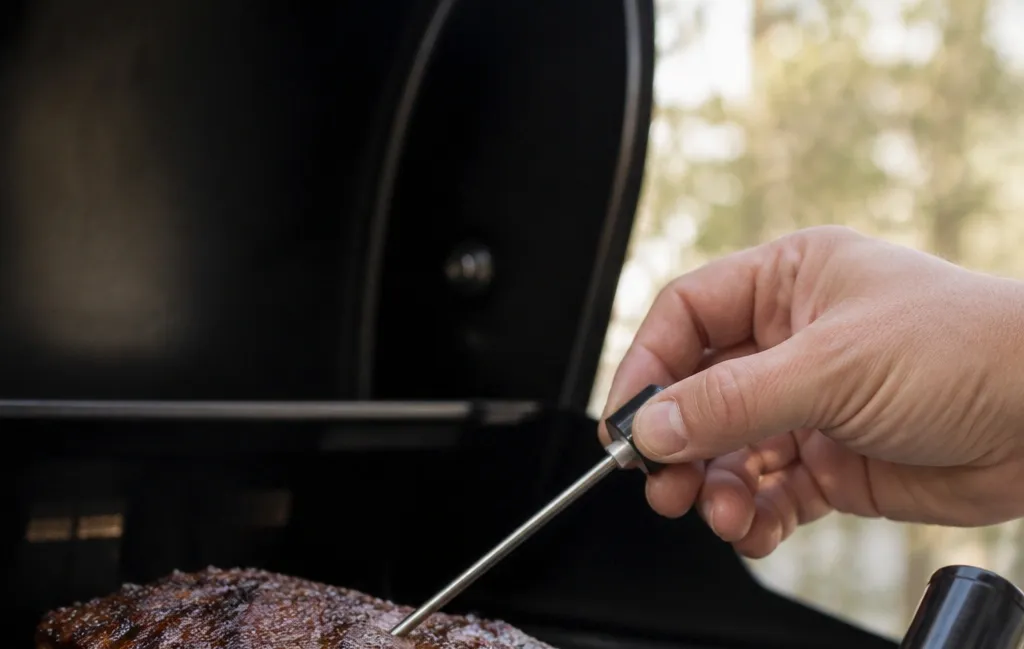
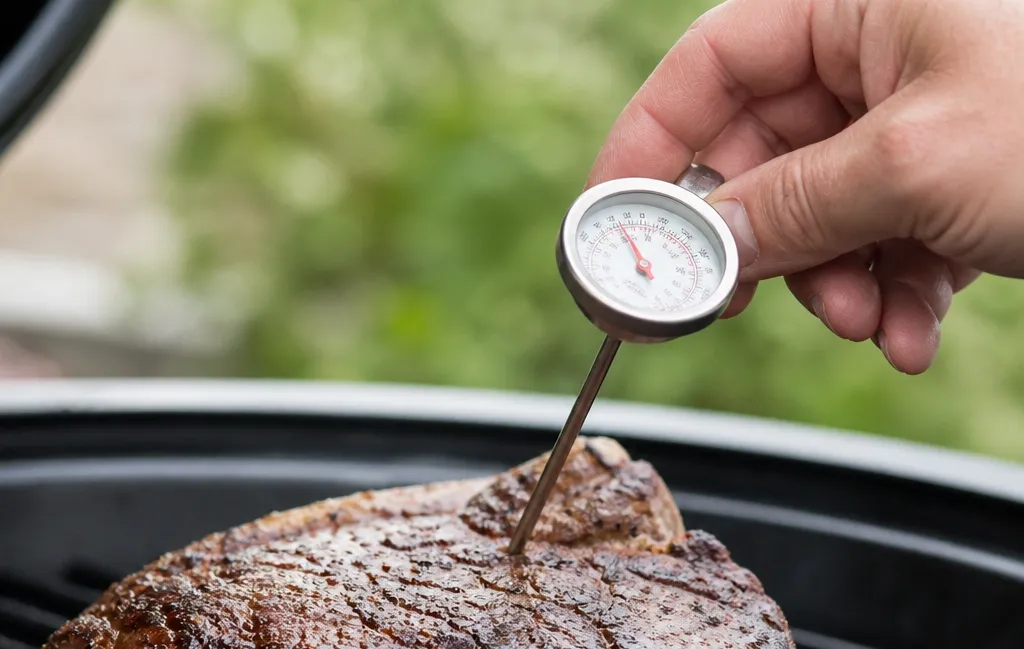
Meat thermometers almost always feature a sharpened, tapered metal probe. This shape is necessary to slide cleanly through tough connective tissue and dense muscle fibers without tearing the meat apart or letting all the internal juices escape.
Candy thermometers, particularly the traditional glass "paddle" style, have a rounded or blunt bulb at the bottom. Trying to force a blunt glass tube into a piece of meat is physically difficult and potentially dangerous. If the glass snaps under pressure while you are pushing it into a roast, you ruin the dinner and create a severe safety hazard with microscopic glass shards embedded in the food.
Can a Candy Thermometer Give an Accurate Meat Reading?
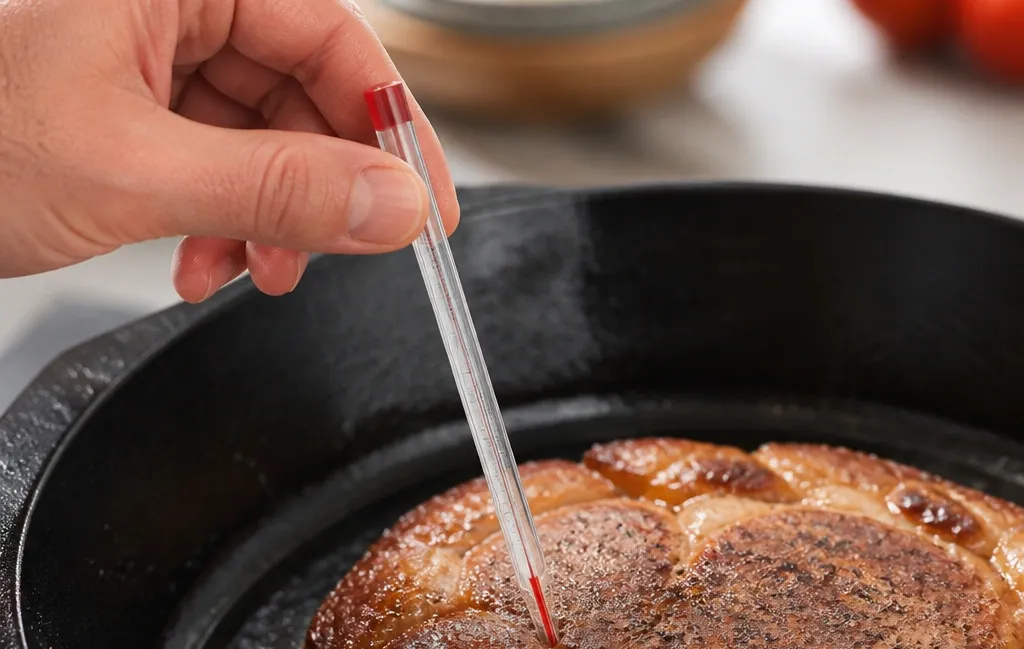
If you manage to create a pilot hole with a skewer and carefully slide the candy thermometer in, can you trust the number? The answer is a tentative yes, but with major caveats regarding sensor placement and thermal lag.
In a quality meat thermometer, the sensor is located in the very tip of the metal probe (or within the first half-inch for leave-in models). This allows you to pinpoint the exact geometric center of the meat, which is always the last place to reach temperature. In a candy thermometer, the sensor bulb is much larger—often spanning half an inch to a full inch. If that entire bulb is not fully encased in the center of the meat, or if any part of it touches a bone or fat pocket, the reading will be wildly inaccurate.
A common mistake is assuming the number you see instantly reflects the meat's core temperature. If you suspect your readings are drifting or behaving erratically, you may be dealing with inconsistent readings caused by using the wrong tool for the environment. Understanding how to spot faulty temperature data is just as important as taking the measurement itself.
Heat Conductivity Differences
Metal probes are excellent conductors of heat, allowing for a response time of two to five seconds in modern digital models. Glass candy thermometers are significantly slower because glass acts as an insulator. They are designed to sit in a boiling pot of sugar and move gradually as water evaporates over several minutes.
When you stick a room-temperature glass thermometer into a hot piece of meat, it may take 30 to 60 seconds to reach the actual temperature. During that minute, your meat is continuing to cook from residual heat (carryover cooking), and you might easily overshoot your target doneness while waiting for the liquid inside the glass tube to catch up.
Safety Risks of Using Candy Thermometers for Meat
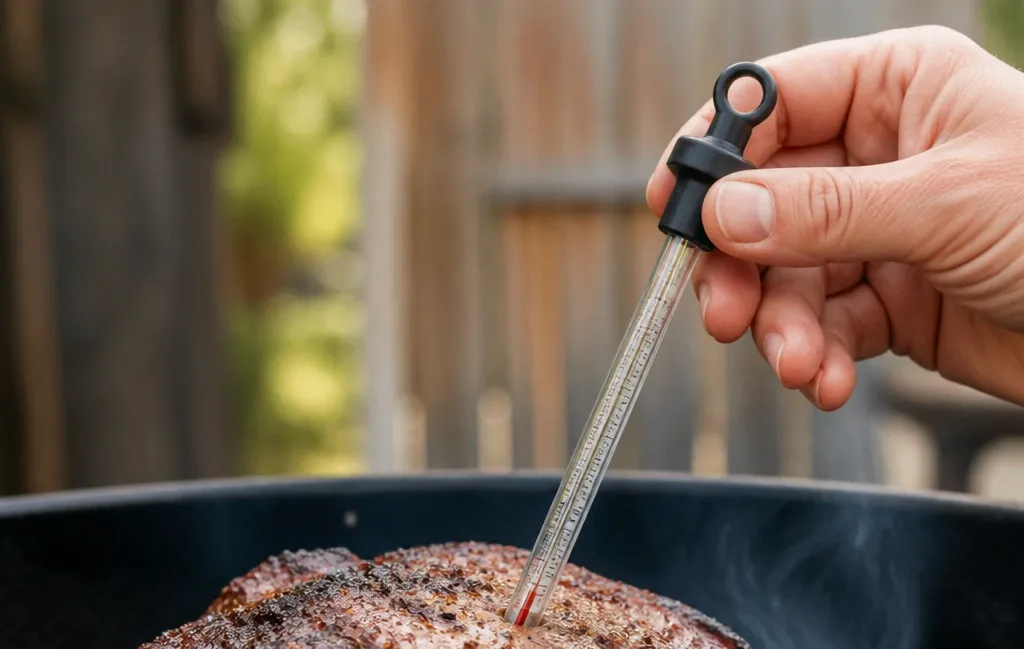
Beyond the difficulty of getting an accurate reading, there are genuine physical and food safety concerns you must consider before improvising with glassware in your kitchen.
The Breakage Factor
Most traditional candy thermometers are made of lab-grade glass. While they are designed to withstand 400°F ambient heat in a pot, they are not designed for impact, lateral pressure, or torsion (twisting). Meat is thick, dense, and highly resistant. If you try to lever the thermometer to get a better view of the scale while it is wedged tightly in a roast, the glass can shatter.
Mercury and Liquid-in-Glass Hazards
Older vintage candy thermometers may contain mercury, though virtually all modern ones manufactured today use a dyed alcohol solution (usually red or blue). While food-grade thermometers should not contain toxic heavy metals, you still do not want colored alcohol or shattered glass contaminating your food. If a break occurs, the entire cut of meat must be discarded immediately.
Surface Area and Moisture Loss
Because you have to make a much larger hole to fit a blunt candy thermometer into meat, you create a wide exit ramp for internal juices. Every time you check the temperature, you puncture a channel that allows moisture to bleed out. Repeated checks with a thick glass probe will result in a noticeably drier finished product compared to using a thin, sharp metal needle.
How to Use a Candy Thermometer for Meat in an Emergency
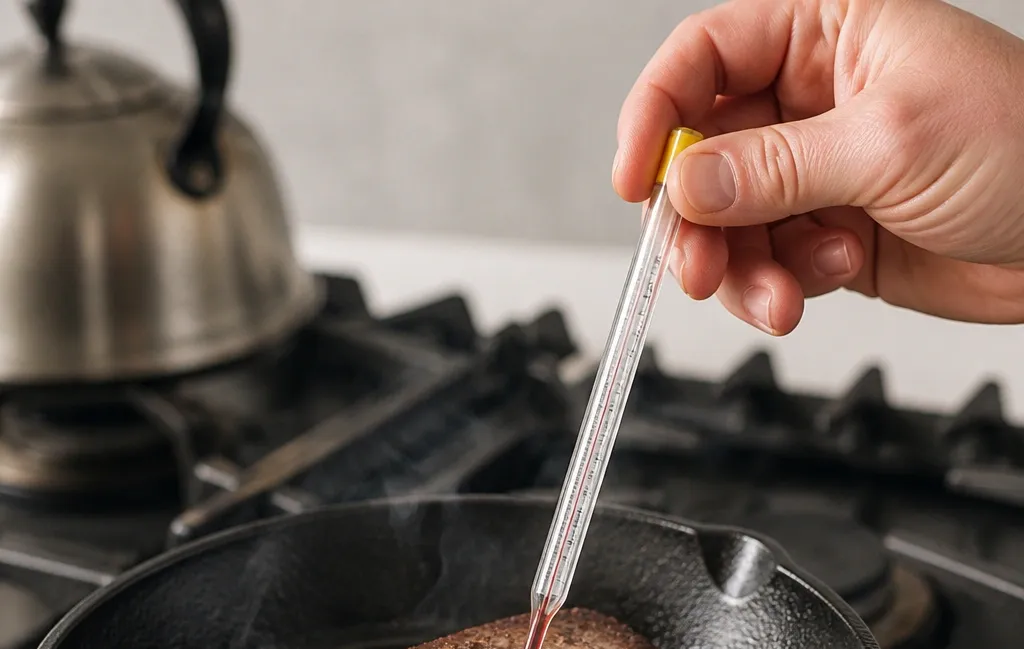
If you are in a pinch, your primary probe has failed, and you absolutely must use a glass candy thermometer, follow these steps to minimize the risks and maximize your chances of an accurate reading.
- Create a pilot hole first: Never push glass directly into raw meat. Use a small paring knife, a trussing needle, or a metal skewer to poke a path into the thickest part of the cut. This prevents the glass from snapping under lateral pressure.
- Angle your insertion: Insert the thermometer at a slight angle so the entire bulb is encased in the center of the meat. If the tip is poking out the other side, resting on the pan, or touching a bone, you are reading the air or metal temperature, not the food.
- Wait out the thermal lag: Since glass takes longer to adjust, you must leave it inserted for at least 45 to 60 seconds. Do not pull it out after ten seconds, or you will get a false low reading.
- Keep your face clear: If the meat is under tension (like a tightly tied roast), there is a small chance the glass could pop under pressure. Keep your eyes and face back from the thermometer as you read the scale.
- Sanitize thoroughly afterward: Candy thermometers often have metal clips, backing plates, or housing crevices that can trap raw meat juices. Scour the entire device with hot, soapy water immediately after use to prevent cross-contamination.
If you are currently relying on a specific brand or model for your daily cooking, knowing how to properly handle and insert that particular tool ensures you get consistent results every time. Mastering basic probe technique eliminates a lot of guesswork.
Comparing Types: Digital vs. Analog Candy Thermometers
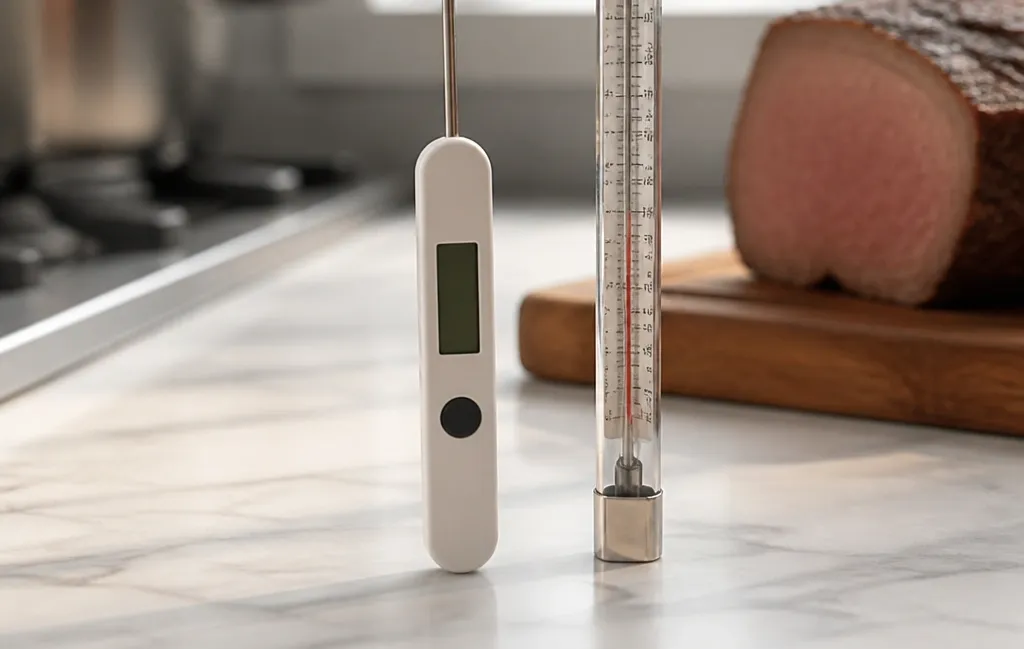
The answer to whether you can use a candy thermometer for meat depends heavily on the specific type of thermometer sitting in your drawer. Not all candy thermometers are fragile glass tubes.
Digital Multi-Purpose Probes
If your "candy thermometer" is actually a high-end digital instant-read probe marketed for baking, the answer is generally yes. Many modern digital thermometers are designed for dual use. If it features a thin, pointed metal probe and a wide temperature range (e.g., -40°F to 500°F), the underlying technology does not care if the box said "candy" or "meat." These digital sensors are the exception to the rule. Upgrading to a reliable digital model removes the fragility issue entirely and gives you precision across both baking and grilling tasks.
Traditional Glass Tube Thermometers
These are the most common and inexpensive candy thermometers. For these, the answer is no, unless it is a dire emergency. They are too fragile, too slow, and too blunt for solid proteins.
Bimetallic Dial Thermometers
Some candy thermometers use a mechanical dial attached to a long, thick metal probe. These are slightly safer than glass because they will not shatter, but they are often calibrated for much higher temperatures. A meat thermometer dial usually tops out at 220°F, while a candy dial might go to 500°F. Consequently, the critical "meat range" (130°F to 165°F) will be compressed into a tiny sliver on a candy dial, making it nearly impossible to read accurately.
USDA Safe Cooking Temperatures You Must Hit
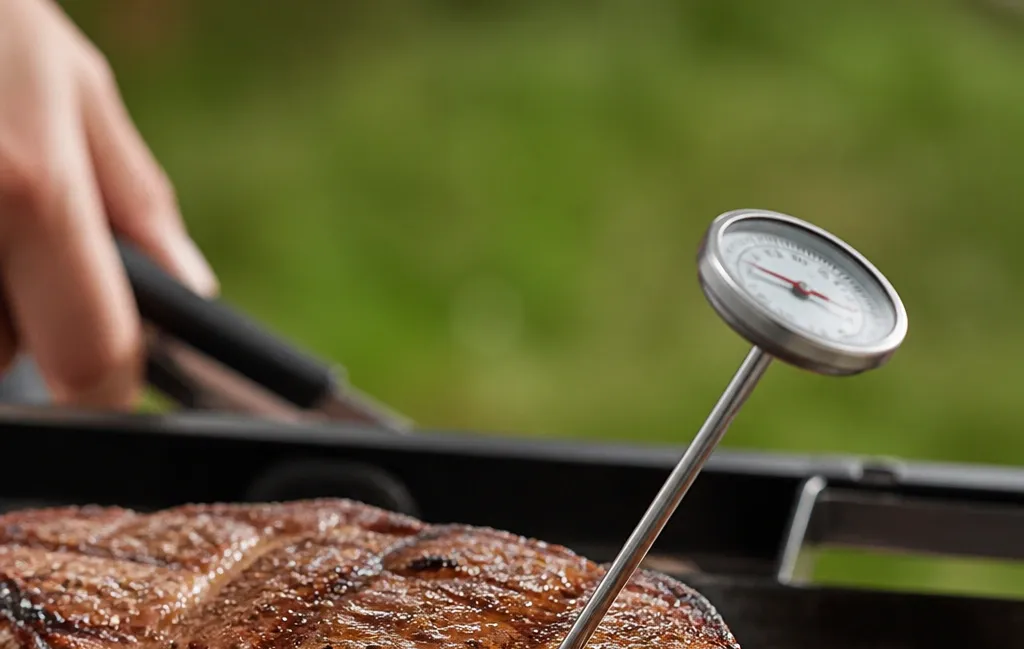
Regardless of the tool you use, the ultimate goal is reaching a safe internal temperature to destroy pathogens. According to the USDA food safety guidelines, the following minimum internal temperatures are required for safe consumption:
- Poultry (whole chicken, turkey, ground poultry): 165°F
- Ground meats (beef, pork, lamb): 160°F
- Whole cuts of beef, pork, veal, and lamb: 145°F (followed by a mandatory 3-minute rest time)
- Fish and seafood: 145°F
A candy thermometer's accuracy at these relatively "low" temperatures—compared to boiling sugar at 300°F—can be questionable due to the compressed scale. Always err on the side of caution. When cooking poultry, ensuring every cut reaches the proper heat is especially critical, so referencing a detailed breakdown of safe poultry temperatures helps guarantee nothing is undercooked.
Edge Cases: When a Candy Thermometer Actually Helps With Meat
There are a few scenarios where a candy thermometer is genuinely useful during meat preparation, even if it is not being stabbed directly into a roast.
Deep Frying Meat
If you are making fried chicken, Scotch eggs, or deep-fried turkey, the candy thermometer is actually the superior tool. In this case, you are not measuring the meat; you are measuring the oil. A candy thermometer’s built-in clip allows it to hang safely on the side of the pot so you can maintain a steady 350°F or 375°F frying temperature. Using a standard short-stemmed meat thermometer for this can be dangerous, as they are not designed to be clipped to the rim of a vat of boiling oil.
Monitoring Poaching Liquids
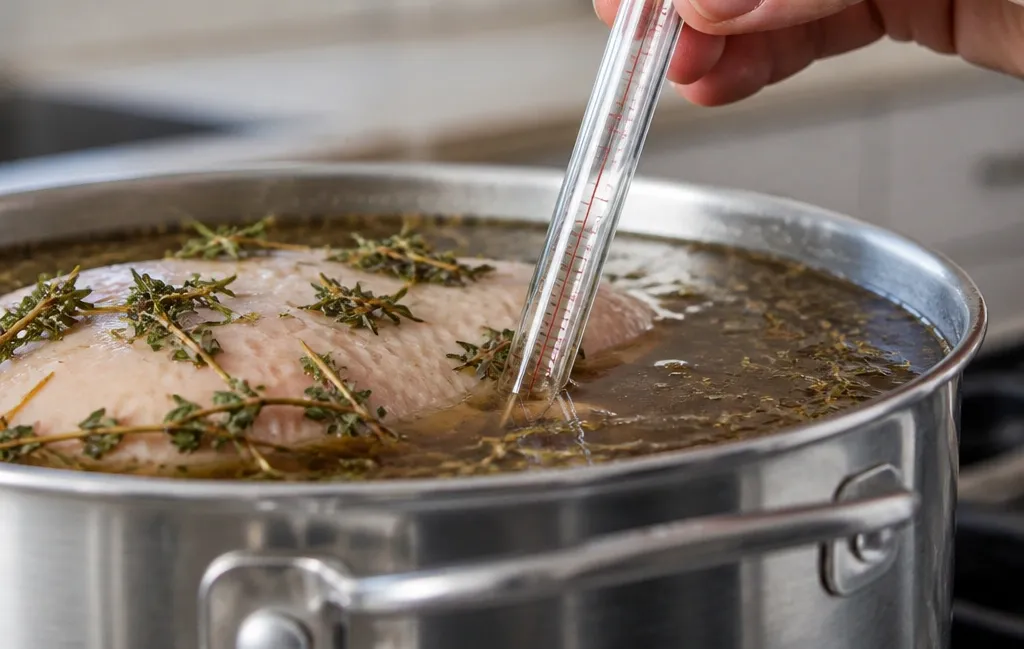
If you are gently poaching a whole chicken or simmering brisket in a large volume of liquid, the candy thermometer can help you monitor the bath temperature. This ensures your poaching liquid stays at a gentle 180°F rather than escalating into a rolling boil, which seizes proteins and results in tough, dry meat.
Common Mistakes When Swapping Thermometers
If you decide to use your candy thermometer for your roast, avoid these pitfalls that routinely lead to ruined food or broken equipment:
- Ignoring the protective base guard: Many candy thermometers have a metal foot or guard at the bottom to keep the glass bulb from touching the hot floor of a pot. If you stick this into meat, that metal guard will stop you from reaching the true center of the roast, leaving the coldest part of the meat unchecked.
- Reading through the oven door: Most glass candy thermometers are absolutely not "oven-safe" for ambient heat. If you leave it in the meat while it sits inside a 400°F oven, the trapped air expands and the glass can explode. Only use it for quick, manual checks outside the oven.
- Assuming calibration is perfect: Thermometers drift over time. If you haven't used your candy thermometer in a year, it might be off by five degrees or more. This is less of a problem when boiling sugar (where visual cues like bubble size help), but a massive problem when checking if chicken is safe to eat. Testing your gear periodically ensures your baseline numbers are trustworthy.
Quick-Reference Comparison Table
| Feature | Dedicated Meat Thermometer | Traditional Candy Thermometer |
|---|---|---|
| Tip Shape | Pointed/Sharp (Easy entry) | Blunt/Bulb (Difficult entry) |
| Primary Material | Stainless Steel | Glass or Heavy Metal |
| Typical Temp Range | 0°F to 220°F | 100°F to 400°F+ |
| Response Time | 2–6 seconds | 30–60+ seconds |
| Durability/Safety | High (Impact resistant) | Low (Glass breakage risk) |
| Best Application | Steaks, Roasts, Poultry | Caramel, Fudge, Jelly, Frying Oil |
Comparing the physical specs reveals why these tools are rarely interchangeable for direct probing.
A traditional glass candy thermometer next to a pointed stainless steel meat probe showing the difference in tip design.
Image source: Original article
Frequently Asked Questions
Can I use a meat thermometer for making candy?
You can, but only if the temperature range goes high enough. Most dedicated meat thermometers stop at 200°F or 220°F. Since most candy recipes require the sugar to reach 235°F to 300°F, a standard meat thermometer will simply max out and stop reading once the sugar gets hot enough. Attempting to force it beyond its rated limit can permanently damage the sensor.
Why is my candy thermometer reading lower in meat than I expected?
This is almost always due to "thermal lag." Glass is an insulator, not a conductor. It takes a long time for the heat from the meat to penetrate the glass and expand the liquid inside the tube. If you pull it out after five seconds thinking it is fast like a digital probe, it has not reached the actual temperature yet.
Is it safe to use a digital candy thermometer for meat?
Yes, provided the probe is metal, pointed, and the device is rated for the temperature. Many modern "all-purpose" digital kitchen thermometers are marketed as candy/meat hybrids because the underlying thermistor or thermocouple sensor handles a wide range of tasks effortlessly. Just ensure you sanitize the probe thoroughly between uses.
Can I leave a candy thermometer in the meat while it cooks in the oven?
Usually, no. Unless it is specifically labeled as "oven-safe," the high ambient heat of the oven can cause the glass to fail, the backing plate to warp, or the plastic housing to melt. Only specialized, leave-in metal meat probes are designed for constant exposure to roasting temperatures. If you prefer monitoring your cook remotely without opening the oven door, exploring wireless options allows you to track temperatures safely from a distance.
What happens if the glass candy thermometer breaks inside my roast?
If the glass shatters while inserted in the meat, the entire dish must be thrown away immediately. Do not attempt to pick out the shards or salvage the surrounding portions. Microscopic glass fragments spread rapidly through the juices of the meat, posing a severe ingestion hazard.
Conclusion
While a candy thermometer can technically measure heat, using it to check a roast is like using a screwdriver to pry up a nail—it might eventually work, but it is the wrong tool, and you risk breaking something in the process. The blunt glass bulb, delayed response time, and compressed low-temperature scale make it fundamentally unsuited for accurately gauging the doneness of solid proteins.
However, if you are an avid baker who also loves to fry chicken or poach fish, a high-quality digital multi-purpose thermometer bridges the gap perfectly. These modern tools are fast, accurate, and durable enough to handle both a delicate filet mignon and a bubbling pot of caramel without any of the risks associated with glass breakage or thermal lag.
If you find yourself without a proper meat probe tonight, use the emergency steps outlined above—create a pilot hole, wait a full minute for the glass to adjust, and sanitize everything afterward. But for your next kitchen upgrade, invest in a dedicated tool. Browse our top-rated picks for grilling and roasting to find a reliable probe that guarantees safe, perfectly cooked meals every single time.