A 4-quart air fryer hits the sweet spot for one to three people. It holds about two chicken breasts, a pound of fries, or enough roasted vegetables for a couple of side dishes without hogging your entire counter. If you cook solo, share a kitchen with one other person, or just want a smaller appliance for quick weeknight meals, this size makes sense.
This buying guide breaks down exactly what to look for when shopping for 4-quart air fryers. We will cover basket shapes, wattage differences, control types, and the specific tradeoffs that separate a machine you use daily from one that gathers dust next to the toaster.
What a 4-Quart Capacity Actually Holds
Manufacturers measure air fryer capacity in quarts, referring to the total volume inside the cooking chamber or basket. A 4-quart model gives you roughly 16 cups of space. That sounds like a lot until you realize food needs room for hot air to circulate.
Piling ingredients to the brim blocks airflow and leaves you with soggy spots instead of crisp edges.
In practice, a 4-quart basket comfortably fits two medium potatoes cut into wedges, about 12 standard chicken wings laid flat, or a single layer of pork chops. You can roast a small batch of broccoli or green beans easily. Trying to cook dinner for four adults in one go usually requires running multiple batches.
If you frequently cook frozen foods straight from the bag, a 4-quart unit handles a standard 16-ounce bag of fries perfectly. Anything larger than that needs to be split up. Understanding these real-world limits prevents disappointment when the appliance arrives on your countertop.
Basket Shape and How It Changes Cooking
The shape of the cooking drawer matters just as much as the volume. Most 4-quart air fryers come in either a square basket or a round one. Square baskets give you more usable surface area.
You can fit four chicken thighs side by side in a square drawer, while a round one might force you to overlap them. Overlapping leads to uneven browning.
Round baskets tend to match the circular path of the fan above them, which some brands claim improves heat distribution. In reality, the difference is minor if you shake the basket halfway through cooking. The main reason to prefer a square basket is simple geometry.
Your food is mostly rectangular or irregular, and a square footprint accommodates it better.
Pay attention to the depth of the basket too. A wide, shallow 4-quart drawer lets you spread food out in a single layer. A narrow, deep one forces you to stack ingredients.
Stacking works fine for things like french fries or tater tots where you plan to shake them often. It fails completely for breaded chicken or delicate fish fillets. Checking how long root vegetables need in a shallow versus deep basket will quickly show you why surface area wins.
Wattage, Heating Speed, and Electrical Draw
Most 4-quart air fryers run between 1400 and 1700 watts. Higher wattage means the heating element gets hotter faster, reducing preheat times and recovering temperature quickly when you drop cold food into the basket. A 1700-watt unit will generally crisp the outside of a chicken breast faster than a 1400-watt one set to the same temperature.
You should also consider your kitchen's electrical setup. Older homes or apartments sometimes have 15-amp circuits shared across multiple outlets. Running a 1700-watt air fryer alongside a microwave or coffee maker on the same circuit can trip the breaker.
A 1400-watt model draws less power and plays nicer with crowded kitchen circuits.
Wattage also affects noise indirectly. Higher-powered fans push more air to distribute the extra heat, which can make the unit louder. If your kitchen flows directly into a living room or you cook late at night, check user reviews specifically mentioning fan noise before buying a high-wattage model.
Digital Touchscreens Versus Manual Dials
Air fryers in the 4-quart range usually offer either digital touch controls or analog dials. Both work well, but they behave differently over time.
Digital models give you exact temperatures and precise timers down to the minute. They often include preset buttons for common foods like poultry, seafood, or baked goods. The downside is complexity.
Touchscreens can become unresponsive if your fingers are wet or greasy. If the electronic control board fails after three years, the whole unit becomes useless because the brain is dead.
Analog dials are mechanical. You turn a knob to set the temperature and twist a timer dial that ticks down audibly. They lack precision.
Setting an analog dial to exactly 375 degrees relies on guesswork, and the mechanical timer might shut off a minute early or late. However, they rarely break. When the timer mechanism eventually wears out, it is a cheap, simple part.
For someone who wants zero fuss and doesn't mind estimating settings, manual dials last longer.
| Control Type | Precision | Durability | Ease of Use with Wet Hands | Typical Price Impact |
|---|---|---|---|---|
| Digital Touchscreen | Exact degrees and minutes | Moderate (electronic failure risk) | Poor | Adds $15 to $40 |
| Analog Dials | Estimated ranges | High (mechanical parts) | Excellent | Base price |
Nonstick Coatings and Long-Term Wear
Every 4-quart air fryer basket uses a nonstick coating to prevent food from welding itself to the metal mesh or solid base. The type of coating varies. Standard PTFE coatings (often referred to by brand names like Teflon) provide excellent release when new.
Over months of high heat and scrubbing, they wear thin. Once the coating chips, food sticks aggressively, and the exposed metal can rust.
Ceramic-based nonstick coatings handle higher temperatures without degrading as quickly. They don't contain PTFE or PFOA. The tradeoff is that ceramic coatings sometimes lose their slickness faster than PTFE if washed in a dishwasher, even if the manufacturer claims they are dishwasher safe.
Hand washing with a soft sponge extends the life of any coating significantly.
Some premium models use stainless steel baskets without any coating. These require you to use oil or parchment liners to prevent sticking, but they never chip or peel. If you worry about coating degradation, an uncoated steel basket paired with perforated parchment rounds solves the problem entirely.
Safety Certifications and Build Quality
Look for safety marks on the box or product description. In the United States, UL certification means the appliance passed independent testing for electrical and fire safety. ETL marks indicate similar compliance.
Buying an uncertified air fryer from an unknown marketplace seller carries real risks, including faulty wiring or plastic housings that melt under sustained heat.
Build quality shows up in the weight and the hinge. A heavier 4-quart air fryer usually has thicker insulation and a sturdier base, meaning it won't slide around the counter when you pull the heavy basket out. Test the drawer mechanism if you buy in-store.
It should glide smoothly and click firmly into place. A loose drawer lets hot air escape, dropping the internal temperature and increasing the burn risk near the handle.
The exterior material matters too. Stainless steel shells stay cooler to the touch than thin black plastic ones. If you have young children in the kitchen, a cool-touch exterior prevents accidental burns when they brush against the machine while it runs.
Noise Levels in Small Kitchens

Air fryers rely on a high-speed fan to circulate heat. That fan makes noise. In a large kitchen, a 4-quart air fryer humming at 60 decibels blends into the background.
In a studio apartment or a galley kitchen right next to your desk, it sounds like a loud hair dryer running for twenty minutes.
Higher-end models sometimes use brushless motors or better acoustic insulation to dampen the sound. Budget options rarely bother with this. If noise is a dealbreaker, search reviews specifically for words like "loud," "hum," or "fan noise." Manufacturers almost never list decibel ratings in their spec sheets, so buyer feedback is your only reliable source here.
Cleaning Access and Dishwasher Compatibility
A 4-quart basket is small enough to wash in a standard sink, unlike massive 8-quart ovens that barely fit under the faucet. Still, check how the basket separates from the outer drawer. Some models have a button guard that prevents you from accidentally pressing the release while carrying it.
Others require you to press a bare latch that can slip if your hands are greasy.
Dishwasher compatibility is heavily advertised but practically flawed. The harsh detergents and extreme heat inside a dishwasher strip nonstick coatings much faster than hand washing. The outer plastic drawer might warp if placed on the bottom rack near the heating element.
If longevity matters to you, wash the inner basket by hand with warm soapy water and a nylon brush. Skip the metal scouring pads entirely.
Grease management is another factor. When cooking fatty items, grease drips through the crisper plate into the bottom of the drawer. If the gap between the plate and the bottom is too shallow, the grease smokes.
Models with deeper drip zones keep the fat further away from the heating element, reducing smoke and making cleanup easier. Rendering fat properly requires that deeper drip zone to avoid setting off your smoke alarm.
Compact Models Worth Considering
Several established brands build reliable machines in this specific size class. Here is how the most common 4-quart air fryers compare based on their design choices.
Ninja AF101 Air Fryer
The Ninja AF101 uses a 4-quart ceramic-coated basket. It operates at 1550 watts, keeping it safe for most standard kitchen circuits while still reaching 400 degrees Fahrenheit quickly. The control panel is digital, offering four distinct functions: air fry, roast, reheat, and dehydrate.
The ceramic coating avoids traditional PTFE, which appeals to buyers worried about chemical degradation. The basket is wide rather than deep, allowing good airflow around proteins. One limitation is the exterior finish.
The matte plastic shell shows fingerprints and grease splatters easily, requiring frequent wiping down. It also lacks a dedicated preheat indicator light, so you have to estimate when the chamber reaches temperature. You can read more about how this specific Ninja model performs during daily use.
Cuisinart Compact Air Fryer
Cuisinart builds several smaller units, and their 4-quart basket models typically lean toward analog dials. This keeps the interface incredibly simple. Turn one knob for heat, turn the other for time.
The housing is often stainless steel or a mix of steel and heavy plastic, giving it a slightly more premium look than all-plastic competitors.
The tradeoff with Cuisinart's analog approach is the lack of presets. You need to know your own temperatures and times. The mechanical timer ticks loudly, which some users find annoying in open-plan spaces.
The basket shape tends to be round, which slightly reduces the usable floor space compared to square alternatives. If you prefer a straightforward machine without digital menus, this fits well. Those interested in Cuisinart's broader lineup will notice their smaller models follow this same mechanical philosophy.
Bella Slim 4-Quart Options
Bella focuses heavily on footprint reduction. Their smaller air fryers are designed to fit tight counters or slide under low cabinets. They usually feature digital touchscreens and run around 1400 to 1500 watts.
The lower wattage helps with energy draw in dorms or older apartments.
The primary limitation here is the shallower basket. To keep the overall height down, Bella sometimes sacrifices basket depth. This works great for fries, wings, or reheating pizza.
It struggles with taller items like stuffed peppers or thick cuts of meat. The nonstick coating is standard PTFE, requiring careful hand washing to maintain. Bella's design philosophy prioritizes storage convenience over maximum cooking volume.
| Model | Wattage | Controls | Basket Shape | Primary Limitation |
|---|---|---|---|---|
| Ninja AF101 | 1550W | Digital | Square/Wide | Shows fingerprints easily |
| Cuisinart Compact | Varies | Analog Dials | Round | Loud ticking timer |
| Bella Slim | ~1400W | Digital | Shallow | Limited vertical space |
When a 4-Quart Size Falls Short
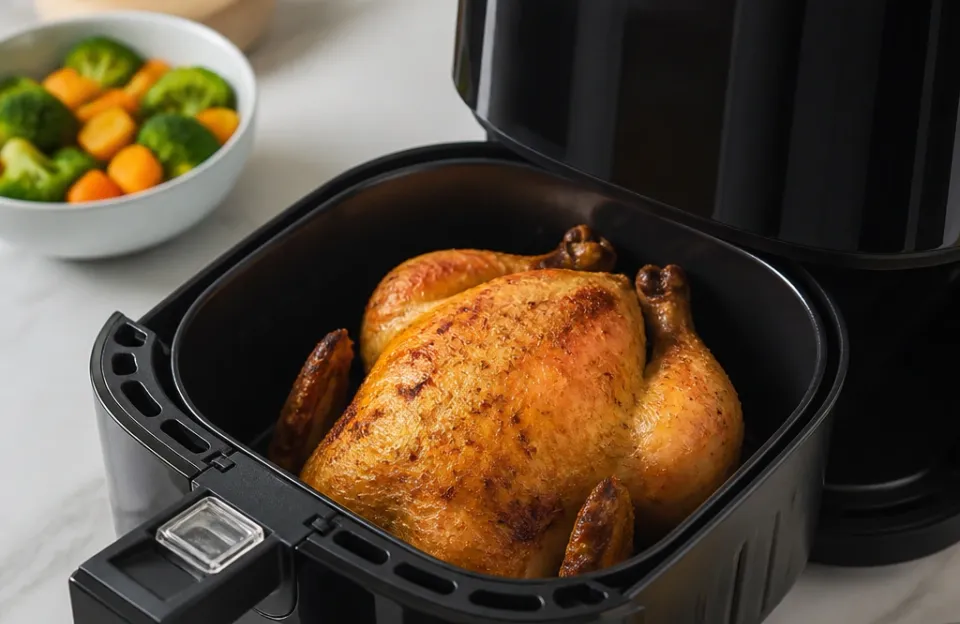
A 4-quart air fryer is highly capable, but it has hard physical limits. If you regularly meal prep for the week, you will spend hours running back-to-back batches. Cooking a whole chicken is impossible; you need at least a 6-quart unit for a small bird.
Families of four eating together at the same time will find the portions too small unless the meal is just a side dish.
It also struggles with baking. While you can bake a couple of muffins or a small batch of cookies, the proximity of the food to the top heating element means the tops brown much faster than the bottoms bake through. Using a lower temperature helps, but it extends the cooking time significantly.
If you want to bake cakes or breads regularly, a toaster oven style air fryer works better than a basket model.
For those wondering about fitting larger cuts of meat into smaller appliances, a 4-quart basket simply cannot accommodate a standard loaf pan. You would need to form the meat directly on the crisper plate, which changes the texture and shape of the final dish.
Matching the Appliance to Your Cooking Style
Choosing the right 4-quart air fryer depends on what you actually cook. If you mostly reheat leftovers, crisp up frozen snacks, or cook single servings of protein, the basic analog models save you money and counter space. They do exactly what you need without extra buttons.
If you experiment with different temperatures, dehydrate fruit, or want precise timing for delicate items like fish, a digital model pays off. The ability to set 325 degrees instead of guessing between the "medium" and "high" marks on a dial prevents overcooking.
Consider your cleaning habits too. If you refuse to hand wash dishes, look specifically for models advertising heavy-duty ceramic coatings rather than standard nonstick. Even then, expect the coating to degrade faster than if you used a soft sponge.
Buying replacement baskets is possible for popular brands like Ninja, but cheaper models rarely sell spare parts. When the basket dies, the whole machine goes to the landfill.
Think about where the exhaust vent points. Most basket air fryers vent hot air out the back. If you push the machine flush against a wall or under a wooden cabinet, that constant blast of heat can damage paint or warp wood over time.
Leave at least five inches of clearance behind the unit.
Finally, don't ignore the cord length. Many compact 4-quart models come with surprisingly short power cords, sometimes under three feet. If your outlets are far from your preferred workspace, you will need to rearrange your kitchen layout or live with an extension cord, though manufacturers advise against using extensions with high-wattage heating appliances due to fire risk.
Frequently Asked Questions
Can I fit two chicken breasts in a 4-quart air fryer?
Yes, two average-sized boneless chicken breasts fit comfortably side by side in a 4-quart basket. Make sure they don't overlap. Overlapping blocks the hot air circulation needed to cook the meat evenly.
If the breasts are exceptionally thick, you might only fit one along with some vegetables.
Does a 4-quart air fryer use a lot of electricity?
They typically draw between 1400 and 1700 watts while actively heating. Because they cook food much faster than a conventional oven, the total energy used per meal is actually quite low. Running one for 20 minutes costs only a few cents depending on your local electricity rates.
Why does my 4-quart air fryer smoke when I cook burgers?
Smoke happens when rendered fat drips down and hits the hot base of the drawer or splashes onto the heating element. Adding a tablespoon of water to the bottom of the drawer beneath the crisper plate cools the dripping grease instantly, preventing it from smoking. Trimming excess fat before cooking also reduces this issue.
Are digital controls better than manual dials for beginners?
Digital controls remove the guesswork, which helps beginners replicate recipes accurately. If a recipe calls for 380 degrees for 12 minutes, a digital screen lets you input exactly that. Manual dials require you to estimate both the temperature mark and the timer tick, leading to more trial and error early on.
How long do the nonstick baskets usually last?
With daily use and hand washing, a standard nonstick basket lasts about one to two years before showing significant wear. Dishwasher use cuts that lifespan in half. Ceramic coatings can last slightly longer if cared for properly, but they eventually lose their slickness too.
Is a 4-quart model too small for meal prepping?
For bulk meal prepping, yes. Cooking enough chicken or vegetables for five days of lunches requires running the machine four or five times consecutively. A 4-quart size excels at cooking fresh, immediate meals for one or two people rather than batch processing large quantities.
Getting the Right Fit for Your Counter
Picking out 4-quart air fryers comes down to balancing your available space with your cooking habits. The capacity is perfect for small households, quick dinners, and kitchens where counter real estate is limited. Focus on the basket shape, the durability of the coating, and whether you prefer the simplicity of dials or the accuracy of a digital screen.
Once you match those details to how you actually cook, you will end up with a machine that stays plugged in and gets used every day.